Put the first bowl on a route that already exists
Water bowls are often placed where they look like part of a set. The matching dishes land side by side on the kitchen floor, and the person who fills them can take care of everything in one stop. The cat may still walk through three other rooms before it visits that corner again. To set up two useful stations, begin with the cat's ordinary route. Watch which door it uses after waking, where it stops on its way from the living room, and what path it takes back after the household gets busy.
Put one bowl beside that route, at a point where the cat can slow down and stand comfortably. Give it a little separation from the main path for shoes and chair legs. The bowl may fit under a counter overhang or next to a short wall, but check the space from the cat's height. Look in the direction the animal will be facing and notice what it will hear behind itself. A place a person can stand for a few seconds may feel much busier to an animal with its head down near the floor.
Some cats pass the same place every morning and only use the room later in the day. Think about how the doors change as people come and go. A bowl in a bedroom can be easy to reach until someone shuts the door for a call. Make at least one station available during that stretch, and keep both bowls in places you can reliably reach for cleaning. A water station can be convenient for the cat and still sit a short walk away from the sink.
Give the second bowl a different job
The second bowl should offer a real choice. On another floor, it can serve a cat that spends a good part of the day upstairs. On the same floor, it can sit on the far side of a room that sometimes gets noisy. A home with a long hall might use one bowl near the end where people spend most of their time and another at the quiet end, where the cat waits when the vacuum is running. Two bowls spaced a foot apart share almost all of the same access problems.
Use the second location to avoid an awkward social route. If one cat often stays in a hallway, a second cat may pause before crossing it. A bowl in a separate room with its own approach lets the second cat reach water without having to pass the first one. Check whether a bowl sits at the end of a corridor where another animal can stand in the only exit. Aim for a location where the drinking cat can step away in more than one direction.
Set up the second station in a place you will see during an ordinary day. A corner of the guest room may be quiet, but a bowl there can be easy to miss once the door closes. A spot near the laundry basket or the chair where you put down a book is easier to remember. Choose a location where you can lift the bowl without moving a lamp cord, pulling out a cabinet drawer, or leaning over a basket of clean clothes.
Choose the bowl by how it behaves when used
A stable bowl that washes easily is a good place to begin. Set it down with a little water in it and tap the rim lightly from the side. If it slides across tile or rings loudly against the floor, test a flat nonslip mat. The dish should sit squarely on the mat with room left over for drips. A high lip on a tray can help contain spilled water, but look at where the cat puts its feet. A tray that catches a paw on approach adds an obstacle the cat meets every time it visits.
Shape and depth are easy to test when you already own two bowls. Use a wide, shallow bowl at one station and a slightly deeper bowl at the other. Keep both filled and watch what happens over several normal days. If you are curious about the bowls themselves, exchange them between the two stations and watch again. A cat that repeatedly visits the same part of the house despite the swap may be choosing location. A cat that follows one bowl to a new spot may prefer something about the bowl or how it sits.
If the cat pushes a lightweight bowl or scoops water with a paw, start by stabilizing the setup. Try a heavier dish or a larger flat mat instead of putting furniture against the bowl. Avoid leaving water where a splash can reach power cords or damage a surface you cannot easily dry. A plain floor-level setup also leaves room to see when the bowl has collected crumbs or dust. You want to notice the condition of the water before you have to lift the dish.
Make a water round part of something you already do
Pick a time when you already walk from one part of the home to the other. It might be after breakfast, when you open the curtains in both rooms, or in the evening when you turn off lights. Take the bowls to the sink, wash them, rinse them well and refill them with fresh water. Empty and wash a bowl sooner if it has crumbs, dust or hair in it. A small second set of clean bowls can make the routine easier if one of the stations is far from the kitchen.
When a station sits upstairs, carry fresh water there in a small pitcher or a closed bottle if that is easier than climbing with a full dish. A filled bowl can slosh when you turn a corner, especially when you are carrying something else. Set the washed bowl back in its usual place before pouring. If two people share the water round, agree which time belongs to whom. A simple agreement is more useful than trying to infer whether someone washed a dish from how much water happens to be in it.
Take a look underneath the mat during the round. A mat may feel dry on the surface while water from a spill remains beneath it. Lift it and let the floor dry if necessary. Move the station a few inches away from the wall if it is hard to clean behind it. Over time the best position may turn out to be the one that stays tidy enough to check quickly, rather than the place where the tray fits perfectly between two fixed objects.
Keep a fountain easy to check
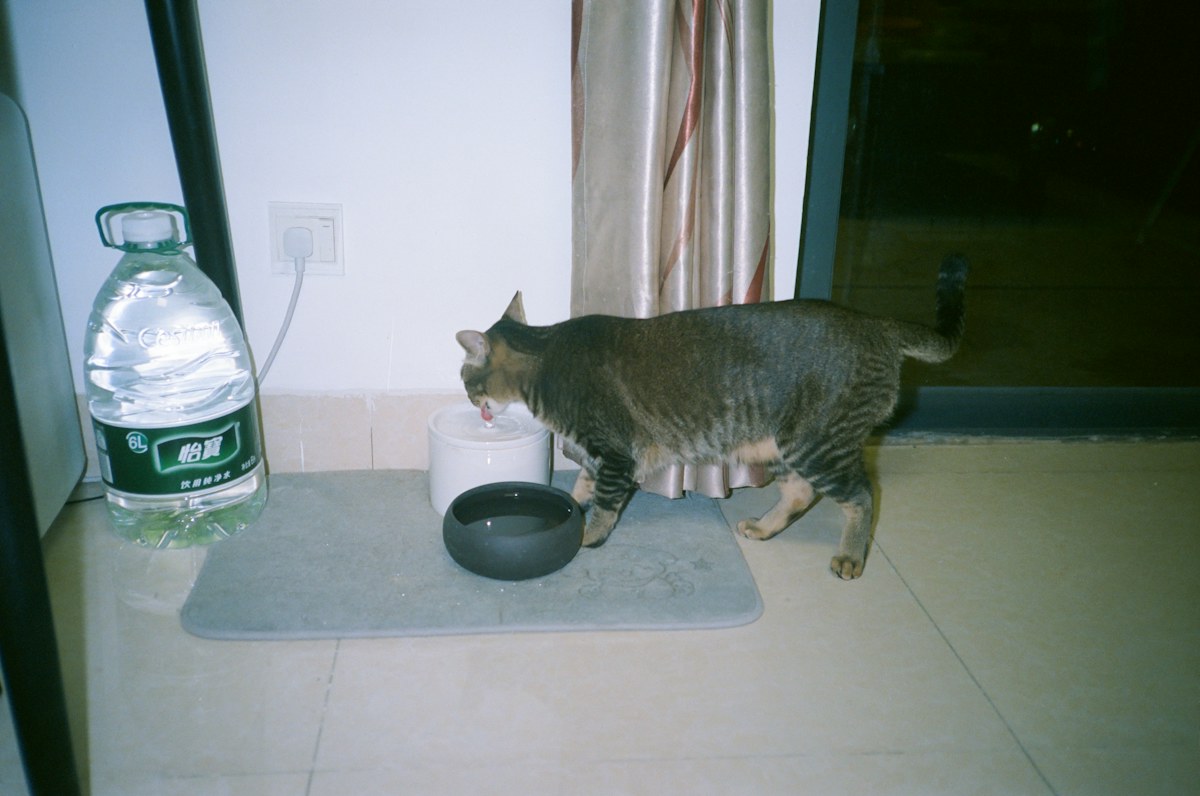
If one station uses a fountain, set it up in a place where you can comfortably lift the reservoir and reach the power connection according to the instructions. Keep its cord out of the walking path. Listen to it from the approach a cat normally takes. A pump that seems faint from the sofa may be more noticeable beside the bowl. Check that the fountain rests on a flat surface and clean it as directed, including the parts that are out of sight when it is assembled.
Keep the other station as a simple bowl. That gives the cat a choice of surfaces and maintains access during cleaning or a power interruption. A second station can also help when a fountain is temporarily moved for guests or work in the room. If one of the cats plays with moving water, check the floor around the fountain after it has been in use. The water may travel well past the edge of a small tray. Use a larger washable mat if that keeps the route safe and dry.
Give changes a few days of ordinary household life before judging them. A cat may investigate the sound of a new fountain and then return to a familiar bowl. Another may use it only when the room is quiet. Keep the basic bowl available and change one thing at a time, whether that is the fountain's location, the dish shape or the mat. When all three change at once, it is harder to see what helped.
Check how the stations work when the house is busy
An early check is to walk from a cat's favorite resting place to each bowl during an ordinary busy hour. Take note of a door that is usually closed, a person cooking in the narrow part of a kitchen or a dog that waits at the entrance to the room. If you have to work around several obstacles, move one bowl to a calmer location. Give a bowl space away from litter and consider locating it separately from food if those setups compete for floor space or regularly make a mess.
Choose a small change when a station goes unused. Rotate the mat, move the bowl out from beneath a noisy appliance, or try it on the side of the chair with more room to turn. A bowl that sees occasional use can still be useful if it remains accessible and fresh. It may be the easier choice when the usual room is busy. If a cat suddenly changes how much it drinks or shows other changes in its usual behavior, seek advice from a veterinarian instead of assuming the new station explains it.
By the end of a week you should be able to describe the difference between the two spots. One may serve the route between sleeping and play. The other may stay quiet while people cook, work or visit. Both should be easy to wash and refill. Leave them in the positions that give the cats dependable access even when nobody is thinking about where the water bowls are.