Start with a place to stand
The brush usually gets the blame when grooming goes badly, but the floor can be part of the problem. A dog standing on slick tile has to keep readjusting its feet while someone leans over it. An enthusiastic dog may step forward to see the brush and then drift until it is half off a rug. Before replacing a tool, try putting a low, nonslip mat in a quiet part of the room. Leave room to sit or kneel beside the dog, with an open path out on the other side.
Look at the coat in daylight while the dog is standing normally. Use your fingers to part a small area on the side of the shoulder. Check how much coat there is between the surface and the skin, and notice whether the strands hang separately, curl together or form a dense layer. The coat may be short along the back and longer around the ears or hind legs. The tool that makes sense on the broadest part of the body may be too large or stiff for a narrow patch.
Choose the working surface of the brush
A smooth coat often needs a light brush with soft bristles or a flexible grooming mitt. The purpose is to lift loose hair from a surface you can already reach. Pass the tool gently in the direction the coat lies, and stop if the dog moves away from the pressure. A mitt gives you a broad contact area, which can work well on the trunk. On a narrow leg, a small soft brush is easier to place without catching the edge of a joint.
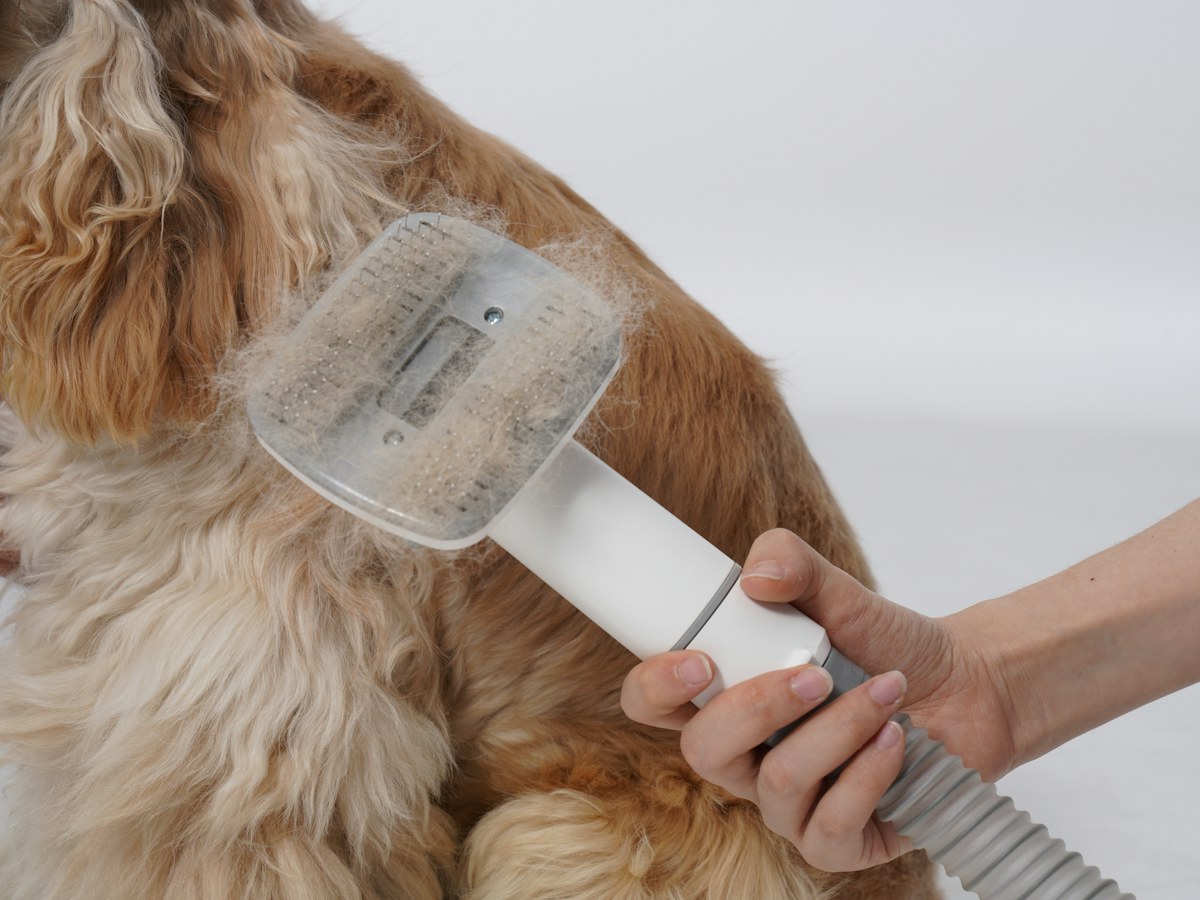
For a longer coat, look for a pin brush that glides through strands without needing to be dragged. A comb can help you check a section after brushing it. Pick a comb with smooth, rounded teeth, and use the wider end first if there are two spacings. A slicker can be useful on some longer or denser coats, but it should do its work with a light hand. If the brush pins feel abrasive against the back of your hand with a light pass, they may be too sharp for the way you plan to use them.
A dense coat can hide loose hair underneath a top layer that looks orderly. Ask a groomer to show you how far a tool should reach for your dog's particular coat. Avoid buying an aggressive shedding tool simply because it collects more hair on each pass. A tool that cuts or catches healthy strands can leave the coat uneven, and repeatedly working one patch adds friction. The brush you can guide accurately is the better starting point. If your dog has a clipped, wiry, curly or unusually thick coat, a groomer can show you what to use between appointments.
Work a small patch at a time
Start at the shoulder or the side of the chest if the dog is comfortable with touch there. Let the brush follow the lay of the coat. Use a shorter stroke than you think you need, then lift the brush clear and reset. A broad sweep may work along the back but can drag the moment it reaches a change in coat direction. Around the legs, look at where the hair lies before deciding whether to brush down, back or slightly outward. Keep your wrist relaxed so the pressure does not increase at the end of the stroke.
On a long coat, part the hair with your free hand and work on the exposed section. If the ends are lightly tangled, hold the strands gently near their base without pulling on the skin. Ease the loose ends apart with your fingers before trying a brush or comb. Work from the tips inward, a little at a time. You will know the section is clear when a comb travels through it without catching. If the comb stops, take it out and look at the obstruction before trying again.
Pay attention to places where a collar, harness or leg moves against the coat. Behind the ears, under the collar line and along the edges of the chest can be harder to see than the back. Move a collar only in a secure indoor space, and brush one small area at a time. Thin skin in folds or around the ears is easy to catch if the tool slips. When a patch is hard to reach, stop and change the position of your own body before asking the dog to turn or stand a different way.
When a tangle is too close to the skin
A loose tangle can feel like several strands twisting together. A tight mat feels more like a compact pad. If the skin moves when you gently touch the pad, or you cannot see where hair ends and skin begins, leave it alone and arrange help from a groomer. A close mat can draw skin up into the hair. Scissors placed underneath can cut the skin before you can see it. Skip repeated attempts with a brush when a spot is tight or the dog is pulling away.
If there is a sore-looking patch or the dog suddenly objects to an area it previously let you touch, stop working that area and ask a veterinarian about any skin or comfort concerns. A grooming session gives you a chance to notice changes, but you do not need to work through discomfort to see more. When booking help for matting, describe roughly where the spot is and whether the dog tolerates being touched there. That lets the groomer tell you how to approach the appointment safely.
After a muddy or rainy walk, wipe off what you can gently and wait until the coat is suitable for the brush you use. Softening dry dirt with a damp cloth may be easier than scraping a brush across grit. Long hairs carrying burrs or seeds deserve a closer look before brushing. Hold the surrounding coat steady if you can remove a loose bit without pulling. Let a professional help if debris is caught tight near the skin or in a sensitive spot.
Stop before the dog needs to insist
Set aside enough time to put the brush down after a few strokes. Let the dog see the tool beside you and choose whether to stand near it. When the dog is comfortable, try one short stroke and lift your hand away. Offer a suitable small reward if the dog likes one, or simply pause and let it choose whether to stay. A dog that stands loosely and returns when the brush lifts is easier to read than a dog held in one position while the work goes on.
Build sessions around the areas your dog can already tolerate. One day might cover the side of the shoulder and a few passes along the back. A later session can add a small section near the tail. If the dog turns its head away, changes its footing repeatedly or keeps trying to leave, give it space. Check whether you have moved to a more sensitive area or whether the tool has started to catch. Shorten the next session accordingly. Leaving after a few calm passes gives you a place to start next time.
The convenient time to brush might be right after a walk, while the brush is still by the door. The convenient time for the dog may be later, after it has had a chance to settle. Try a few different moments. Some dogs do well with a short session on a mat before the household gets busy. Others settle better after a quieter period in the evening. Pick a routine you can repeat without making the dog stop eating, sleeping or moving past other people to reach the mat.
Keep the tool ready for the next session
Pull loose hair out of the brush before it builds up into a second layer over the pins. Look for bent tips, cracked rubber and grit caught at the base. Follow the care instructions for the material. A brush with a cushioned pad or wooden body may have different cleaning limits from a washable rubber mitt. If you wash a tool, let it dry completely before putting it in a closed container. A small tray near the brush can keep a comb from sliding to the back of a drawer.
Set your schedule by checking what has changed since the last session. A short coat can feel the same after several days, while a longer fringe may start catching as soon as the dog has worn a harness on a couple of walks. The ASPCA's dog grooming guide and the American Kennel Club's grooming tool guide describe how brush choices and frequency vary by coat. Use their coat examples as a starting point, and let your groomer show you what that means for the dog in front of you.
Before you put everything away, note one place that was easy and one place that needs a different approach. You might keep the bristle brush for the back but try a smaller tool at the chest, or move the mat so the dog can turn toward the hallway. Those are adjustments you can make at the next short session. The useful result is a coat you can work through gently and a dog that is comfortable staying for a few more passes.