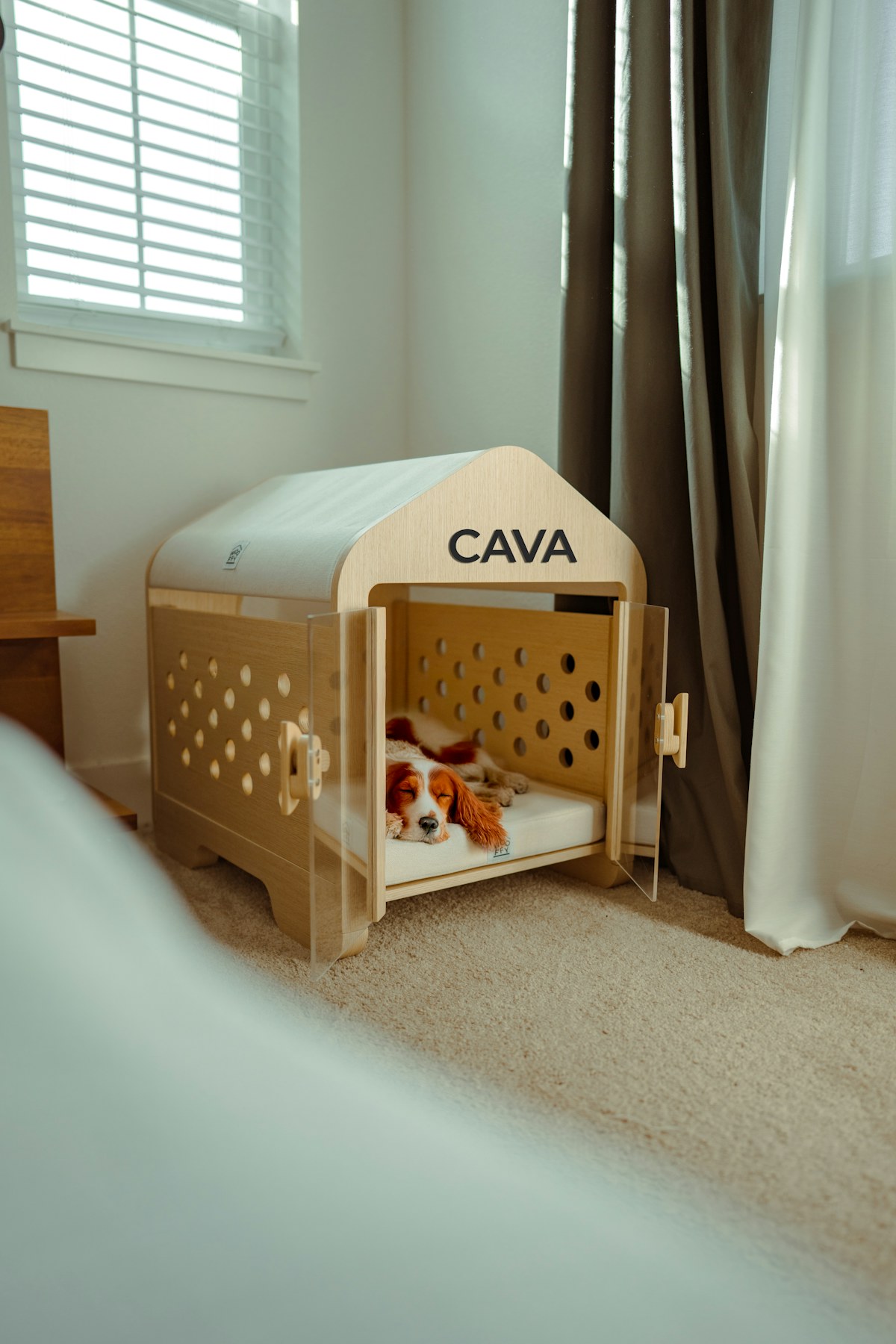
A crate can fit beautifully under a table and still be in an awkward place for a dog. Perhaps the door opens across a walkway, or people have to reach over the crate every time they use the table. The space behind a sofa may be quiet when nobody is home, then fill with sound when the television goes on. The first decision is where the crate will stand during an ordinary day. That decision is easier to make if you think about the door, the floor and the activities nearby before asking the dog to spend time in it.
Use a crate of a suitable type and size for your dog and follow the maker's setup and safety directions. This guide concerns the place it occupies in a room and the early introduction with the door open. If a dog panics in a crate, tries to force a way out or is distressed by being alone, ask a veterinarian or qualified behavior professional for help. The same is true if you need to use a crate before the dog is ready. A different corner of the room cannot resolve every kind of distress.
Take a tour of the room at dog height
Set the empty crate in one possible location and open its door all the way. Check where the door ends up. It can block a route or stick into the area where the dog needs to turn, even when the crate itself takes up little space. Look for a position where the entrance can remain accessible while the room is in use. Try walking past with something in your hands, like a basket you carry each day. If you automatically step around the crate and into a second person's path, you may want to try another spot before the dog gets familiar with that one.
Consider air flow and temperature through the day. A patch of direct sun may reach the crate hours after you put it there. A heater, fireplace or drafty outside door can make the temperature less steady than it is elsewhere in the room. Check the spot when those things are in use. Keep openings clear of curtains, tablecloths, cables and loose objects that could be pulled inside. If the crate sits under furniture, leave the ventilation and clearances the maker calls for. A comfortable resting area needs air around it even if the room is small.
Make sure the crate stands level and feels stable. Press gently near the door to see whether the structure shifts on the floor. If the floor is smooth, use a suitable nonslip surface under the crate where that is compatible with the setup. Make any adjustments while the crate is empty. Once the door and floor stay in place, you can see how the dog approaches without wondering whether a rattle or a movement in the crate changed their mind.
Choose what the dog sees and hears from the entrance
A crate near a place where the family sits may suit a dog who likes to rest close by. A site directly beside the busiest passage can bring constant movement to the opening. Look for a position with a view into the room and some space between the crate and passing feet. A dog should be able to lie down without the household needing to step over the door. Test the spot during an everyday activity, such as bringing dishes from the table or hanging up coats. The quiet edge of a busy room can work well if the activity stays a little way away.
The sounds in a room can be uneven. The television speaker beside the crate may be louder there than it is on the sofa. A washing machine can shake the floor during part of its cycle. A door that is usually quiet may bang when a window is open. Spend a few minutes in the proposed place and listen to the room while other people use it. If the dog starts to investigate only after the appliances go off, you have a reason to compare a quieter position before changing the crate or the bedding.
Leave space for the dog to move away from the entrance. If children or another pet can stand directly in front of it, the dog may have to wait for the path to clear. Agree with the household that the crate is a resting space. Give the dog a chance to come out on their own. Keep play, handling and greetings away from the doorway. A separate comfortable bed in the room can remain useful for a dog who wants to rest nearby but prefers an open surface on a particular day.
Let the dog explore it with the door open
Secure the open door according to the design so it cannot swing unexpectedly while the dog is exploring. Take a place where the dog can approach without squeezing between your knees and the opening. You can give them a reward for looking at the crate or coming closer, if that suits your normal training. Then give them room to move back. For a cautious dog, an early visit may consist of sniffing one corner and walking away. This is a chance to learn what brings them to the crate without taking away the way out.
If you use bedding, choose something compatible with the crate and your dog's habits. It should lie flat so the dog can step in and turn without catching a paw. Avoid leaving loose items with a dog who may chew or swallow them, and supervise when you introduce bedding or toys. A piece of familiar bedding can be helpful for some dogs. Others may prefer to explore the empty crate first. Look at what they already choose when resting nearby. A dog who often shifts off a deep cushion may have a different preference from one who seeks it out.
Keep the first visits short and ordinary. A person reading in the same room can leave the crate available without leaning over it or talking every time the dog looks inside. If the dog lies down in the crate, let that rest happen without closing the door. Once they get up, observe how easily they can turn and leave. A dog who steps out calmly can decide to go back later. That repeat choice is useful information before you think about the next stage of training.
Make the location useful on a normal day
Leave a clear path from the dog's other resting area to the crate. When you vacuum or tidy, set things back where the approach will remain open. If somebody leaves a laundry basket by the door at the same time each evening, give the basket another spot. It can take just one familiar object to turn an easy approach into a tight gap. Notice what changes on weekends or when guests are staying. A resting area can remain useful through those changes if its entrance is easy to recognize and there is another place for people to put their things.
Plan how to clean around the crate without asking the dog to move every few minutes. If the floor beneath it needs attention, wait until the dog has chosen another place. Remove bedding and clean according to the product directions, letting materials dry before they return. Check the fittings and door when it is empty. A squeak, sharp edge or part that has loosened is easier to spot during cleaning. If the crate has been moved to reach the floor, verify that it stands steady and that the door has enough clearance after it goes back.
Sometimes the first position will be wrong. You might find that the dog walks in when the room is quiet but leaves every time a cabinet is opened. Try shifting the crate away from the sound while leaving the rest of the setup familiar. A room with an awkward route may need a more substantial move. Give the dog time to look at the new position again. Keep track of the change you made and what happened afterward. There is no need to buy a second crate to test whether one location is easier to use than another.
Leave time between comfort and confinement
If you need to introduce closing the door, learn a gradual approach from a qualified trainer or veterinarian and start only when the dog is comfortable at the preceding step. Follow appropriate guidance on duration, supervision and toileting. For a dog who needs to be left somewhere for an unavoidable period before training is ready, arrange a suitable alternative. A crate is one option in a household, and the rest of the dog's routine still needs room for movement, rest and time with people.
The position that works may be off to one side of the room. It may be beside a chair where somebody spends most evenings, or across from the quiet patch of floor the dog already uses in the afternoon. Keep what makes the approach easy and leave another good resting spot available. When the crate becomes an ordinary part of the room, you should be able to go about your day without rearranging the doorway, and the dog should be able to investigate without needing anyone to make that decision for them.