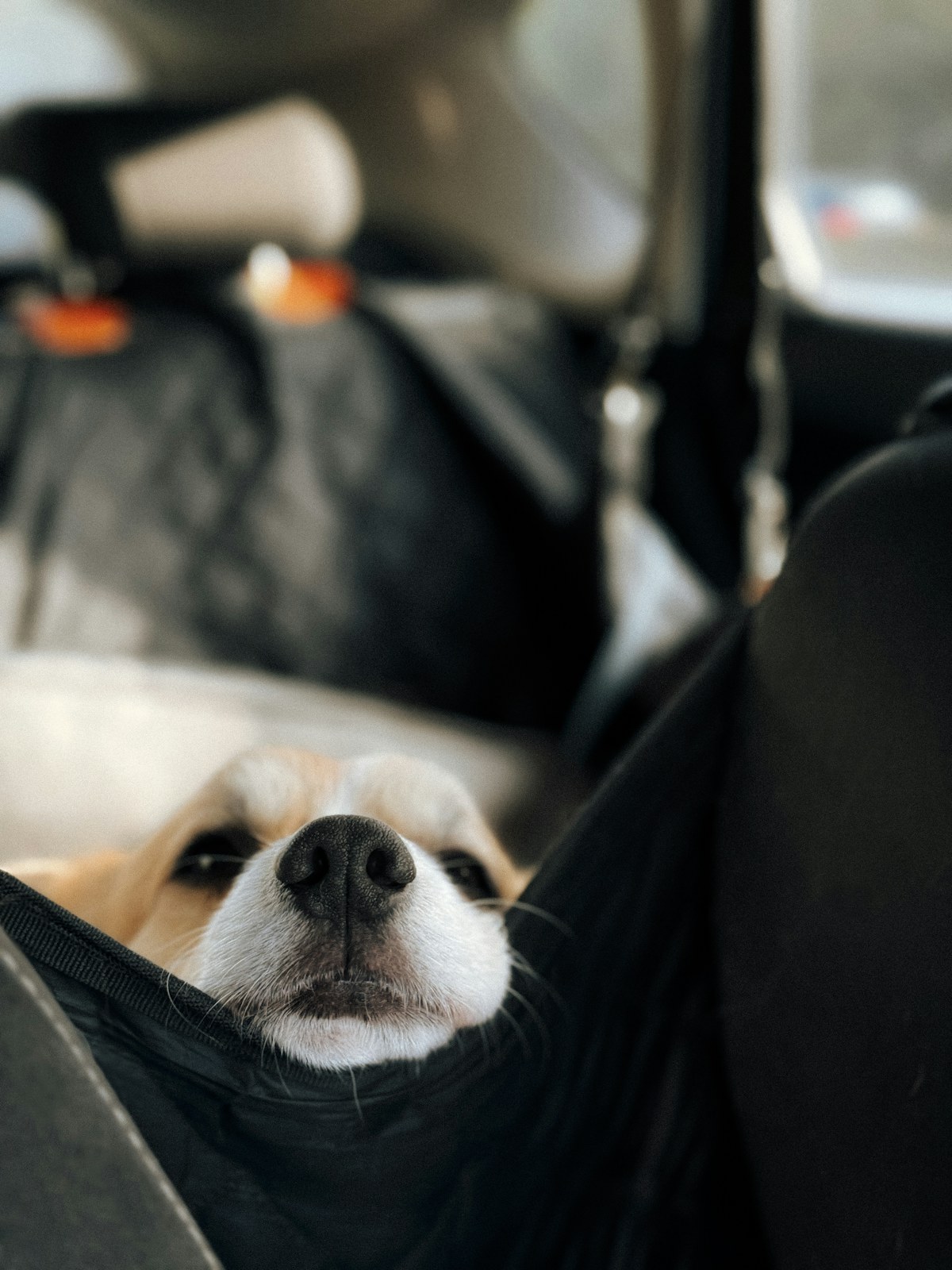
The first car trip that matters may be an appointment on a busy morning. You need to carry a bag, park somewhere unfamiliar and get the dog out beside moving traffic. The dog has to cope with a vehicle that makes noise, equipment that limits movement and a destination they have never seen. Several of those details can be separated from the appointment. It is much easier to learn what a dog does at the edge of a car seat when you have nowhere to go. A practice session can finish before the engine starts.
Begin by choosing how the dog will travel securely. Use a suitable vehicle restraint or carrier and follow its instructions, including guidance about the vehicle seating position, approved attachment points and fit. Check any local requirements that apply before traveling. If you are uncertain about compatibility or fit, ask the equipment maker or your veterinarian for help. A walking lead serves a different purpose in this routine: it is for the handoff between a secure place and the car, and between the car and the next safe space.
Set up the vehicle without the dog
Clear the travel position of loose items. A bag, folding chair or water bottle can move when the vehicle stops. Give your ordinary supplies a place where they cannot slide into the dog's space. Decide where you will put the lead so you can reach it from the door you plan to use. If the gear attaches from one side of the car and you usually park with that side against a wall, make the installation and exit plan work together. Think about the place where you will use the car on most ordinary days.
Install the carrier or restraint following the manufacturer’s directions. Take the time to locate the relevant attachment points and see which parts you will need to reach with the dog beside you. Avoid adding improvised straps or using an attachment point simply because it is convenient. If there is a cover or pad involved, make sure it doesn't interfere with any of the equipment. A secure installation should leave you able to check connections without pushing the dog around or asking another person to hold something in place.
Look at the opening you will use. A high step into the car may be awkward for a small dog or one that moves carefully. Check whether the dog already has a comfortable way to board, such as a suitable ramp or help with lifting when appropriate. A ramp needs secure footing, and you can introduce it away from the car first. Ask your veterinarian for guidance if getting in requires lifting a dog who appears uncomfortable or has mobility difficulties. Plan the physical move before you practice, because a dog balancing at the edge of a seat is a poor moment to change your mind about how to help.
Let a parked car be the whole outing
Pick a quiet place to park, away from moving traffic and with enough space on the boarding side. Set the parking brake and keep the engine off for this first session. Take the dog to the outside of the car on the lead and see how they approach. They may sniff around the rear wheel, stop beside the door or wait farther away. Start at the distance they can manage comfortably. There is no need to sit in the car on the first attempt. You can walk past the vehicle, turn back once and head indoors.
On another quiet occasion, open the door before you bring the dog to it. The sound and sweep of the door can be distracting if it happens next to the dog's head. Give them enough lead to investigate from a safe position and keep a clear way to step back. If treats are appropriate for your dog, you can reward a voluntary approach with a small piece placed where they can turn away easily. If they want to leave, let them do so. Bringing them back immediately to finish the setup can make the car feel like a place where a retreat never works.
When the dog can approach comfortably, practice boarding and stepping out again with the engine off. Stay with them. If you use a carrier that the dog already rests in at home, the familiar object may make the space easier to explore. If the carrier must remain secured in the vehicle, give the dog time to approach it in that position. Keep the car well ventilated and the conditions comfortable throughout. Never leave a dog alone in a parked car during practice or an errand. The short outing is useful only if you can end it as soon as the dog needs to leave.
Introduce the part that changes when you travel
Once the dog can get into position and remain there comfortably for a short time, practice connecting the restraint while the car is still parked. Follow its directions each time. Notice whether the dog can settle when you take a normal seat and whether you can close the door without pinching a lead or blocking ventilation. If this part takes several attempts for you to get right, rehearse the hand movements with the dog outside the car first. It is easier to notice a twisted strap or a wrong buckle without a dog leaning into your hands.
A helper can make the first engine session easier. One person can sit in the driving position and pay attention to the vehicle while the other observes the dog from a safe seat. The helper can describe the dog's response before anybody decides to drive. Start the car only in a suitable open-air location and keep the session brief. If the engine changes the dog's behavior noticeably, end the session there. For a dog who settles after a moment, it may be enough to repeat the parked practice on a different day. Getting used to the sound and experiencing a moving car are separate steps.
If the dog pants heavily, drools, vomits or shows distress during travel, consult a veterinarian before continuing the practice. Motion sickness and fear can look similar from the driver's seat. A veterinarian can help identify what needs attention and advise on appropriate care. Keep a note of when the signs first appear: outside the car, while the engine is running, after a turn or toward the end of a journey. That record gives you more detail to share than a general statement that the dog dislikes the car.
Choose a trip with an easy end
A useful first drive can be a short trip to a quiet place that the dog already knows. Look for a destination where parking is straightforward and you can exit on a side away from traffic. Check the route before you leave. A familiar park with difficult parking may be less useful than the start of a short residential walk. The dog's first few minutes outside the car should give them room to look around and move without waiting at the edge of a busy road.
At the destination, park fully before turning to the dog. Get the lead ready and make the transition in a secure position. Follow the carrier or restraint instructions, and keep the dog under control before opening a route to the outside. If another person comes with you, agree who handles the door and who handles the dog. In a crowded car park, you may find that there is too little room on one side to exit safely. Choose a different place to park. Taking a few more minutes to get there is simpler than improvising once a door is open.
The outing itself can be short. A quiet look around and a chance to walk briefly may be enough. A long visit can leave the dog tired before the return trip, which makes the two parts of the experience harder to compare. When you get home, note something specific about the outward trip and something about the return. A dog who boards willingly to go home but hesitates at the beginning might find the destination or the boarding location easier on the return. Decide what you will repeat before increasing the distance.
Keep a small travel kit ready to use
A practical kit can contain the equipment you already take on outings, a way to offer fresh water when stopped, bags and a towel. Secure it before driving. If you carry paperwork for a particular trip, put it where you can find it after you park. You can keep a note in your phone of which door you used, how long you were in the car and whether the location was easy to leave. That information is particularly helpful if the dog's next trip will be with someone who was not there.
The best practice route leaves you a way to stop early. Over time the dog may become comfortable with the sound of the engine, the feel of the turns and the return to a familiar spot. You can extend one part at a time. A first trip that ends a few minutes after you leave the driveway has done its job if everybody can use the equipment comfortably and the dog arrives somewhere they can step out without a rush.