The toy that gets carried through the house may be the one you would have thrown out first. Perhaps it is a sturdy ball with an unremarkable shape, while the bright toys gather dust near the sofa. Once they are all in the same basket, it can be difficult to tell which ones matter. A dog may pull out the ball because it is the first thing they reach, or because it is the only one that rolls on the rug. Before buying anything, take a look at what is used and what each toy asks of the room.
A rotation gives the dog a manageable selection and gives you time to look over the rest. Begin with the toys already in the house. Some will stay out regularly because they suit a daily routine. Others work best when a person brings them out for a short game and puts them away afterward. Your shelves need only hold the difference between the two. The rotation is successful if the dog can still find a useful toy and you can see when a piece needs to be washed, retired or kept for a supervised game.
Sort by what actually happens
Put the collection on a table while the dog is in another part of the room. Set aside anything with damage, missing pieces or exposed stuffing. Check seams, attachments and the surface of each item. Some toys are safe only for a particular style of play and can deteriorate quickly once a dog starts chewing them. Follow the maker's directions on size, use and cleaning. Choose items that suit your individual dog, including what they are likely to break off or swallow. If you are uncertain about a toy's suitability, keep it out of use while you ask your veterinarian.
Think about the last time you saw each of the remaining toys used. A ball that rolls down a hallway may work in a game of fetch but disappear under furniture during solo play. A tug toy works when somebody can hold the other end and has enough space. A larger rolling toy may be easier to follow across a hard floor but produce too much noise late in the evening. Separate them by these everyday uses. The piles may be different from the categories on the packaging.
Check how easily the dog can pick each one up and put it down. Some dogs carry a particular toy into another room and leave it by the bed. Others drop a rolling toy as soon as it stops moving. The same toy can have several uses, but observe what your dog actually does before you plan around it. If the dog takes a toy to the same corner every evening, you may decide it has earned a regular place. A rotation can be small enough to leave a familiar favorite available.
Build a short selection for one ordinary day
Choose one or two suitable items that can be available when you can provide the level of supervision they require. Keep toys that need direct supervision stored securely until you are ready to play. Choose a separate item for shared play and leave it in a place where the person who plays can reach it. If you have a family routine in which somebody comes home and plays for a few minutes, put that toy where they will find it without crossing the room with bags. There is no need to give every toy a fixed day of the week.
Look at the floor where the toy will be used. A ball that rolls into the narrow space behind a cabinet can lead the dog to scratch at the floor or ask for help. Choose a different ball or set up a clear area for a short game. If a toy slides too fast on a smooth floor, try using it on a rug that stays put. Clear the walking route and give the dog enough space to turn. A toy that fits a particular game in the right place can be more useful than one that is available all day in a room that doesn't suit it.
A low container may make a few toys easy to find. Choose something stable with an opening the dog can reach without digging through sharp edges or loose parts. If the dog chews the container, store toys out of reach and bring one out at a time. Give the toys a clear place to return when the floor needs to be cleared. The person picking up a toy later should be able to see whether it is clean, whether it needs repair and whether it belongs in the supervised set.
Give shared games a recognizable beginning and end
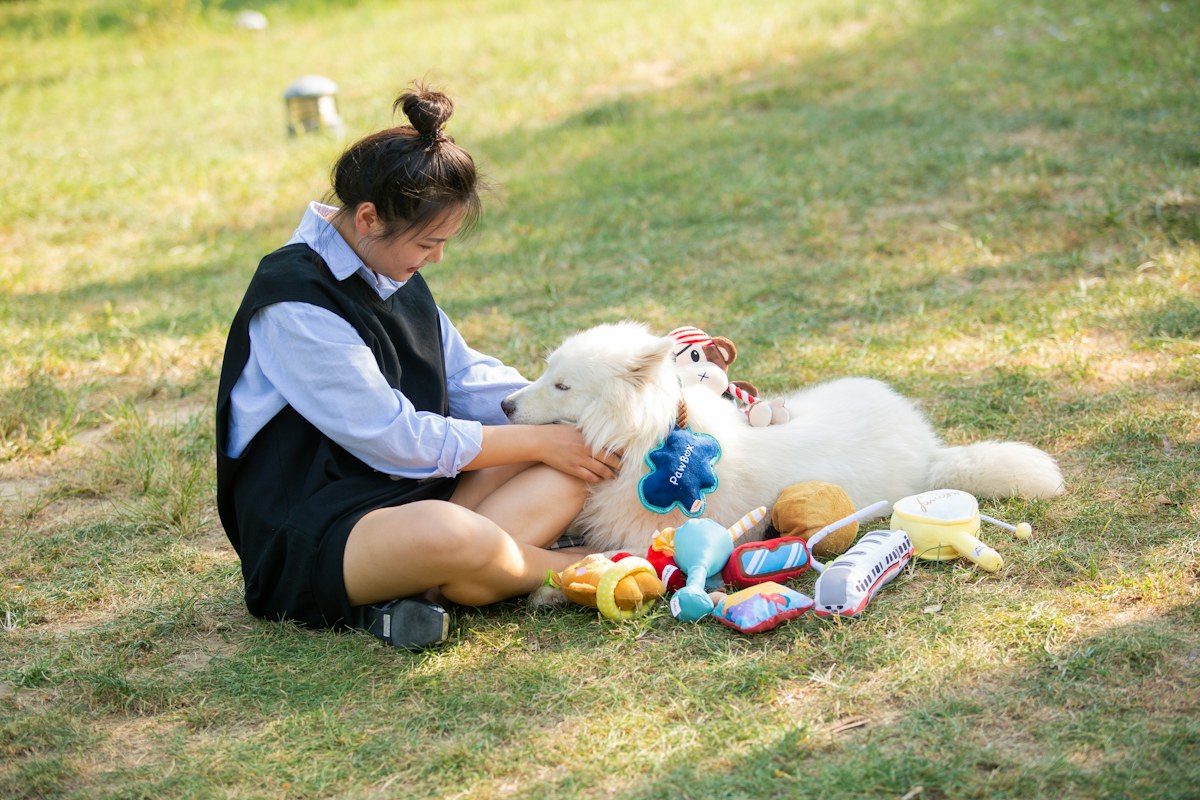
Bring out a shared toy when you have room to play and enough time to put it away at the end. In a small space, a few gentle rolls on the floor may work better than throwing a ball. Check what is nearby and keep the game where everybody can see it. When using a tug toy, give the dog room to move and follow appropriate guidance for the dog and the toy. Stop if the game becomes hard to manage. If your dog guards a toy, freezes over it or reacts when approached, give them space and consult a qualified professional for help.
When you finish, let the dog release the toy voluntarily before putting it back in its place. If they have a familiar cue for letting go, use it in the circumstances they already know. A quiet finish can be a moment when the toy goes still and you both take a breath. If the dog wants to take a break before you do, give them room to leave. The aim of a shared game is that everybody can stop. Keeping the toy for the next short session is easier when the current one ends without a struggle.
People sharing dog care can agree on the few toys they bring out and where they go afterward. If a toy is not meant for unsupervised chewing, say so clearly to the person who will be home later. A separate storage box can help. A child can learn which game happens with an adult and which toys stay put until the room is ready. That agreement protects the simple parts of the routine. Nobody needs to remember how an entire basket of objects is supposed to be used.
Change one part of the selection
After a few days, swap one item and leave the familiar choices in place. See what the dog takes first during the same part of the day. If the new item gets a sniff and stays there, consider whether it is easy to carry, whether it suits the floor or whether the dog has another activity in mind. A toy that is ignored while people are making dinner may get a different response when somebody has time to roll it. Observe the use you intended before deciding it belongs at the back of the cupboard.
Use the swap as an opportunity to clean the toy that comes out of use. Follow the care instructions and let it dry fully before it goes into a closed container. Take a closer look at parts the dog often grips. A fabric item might show wear around a handle while the rest looks clean. A toy with damaged parts needs to come out of the rotation. If your dog often works at one part until it comes loose, choose a different design with guidance from a professional or the manufacturer. The purpose of keeping a reserve is to make those decisions easier when you notice wear.
Write down an observation if it will help the next person: the ball rolls under the sofa, the soft toy is for carrying, or the tug toy goes into the closed cupboard. You can put the note beside the storage rather than turning it into a schedule. When another person uses the toys, ask what actually happened. A dog might spend five minutes looking for the rolling ball with one person and choose a short game on the rug with another. Both tell you something about which activities can be repeated comfortably.
Make room for the toys that earn it
If the collection is still large after a few rounds, decide which usable items are likely to return. Keep the tools for games you already play and the items you know how to supervise safely. Let the rest leave the dog's space. A worn or damaged item should be discarded safely. A suitable toy that is intact can be stored as a spare, or you can check whether a local organization accepts clean items of its type. There is no need to keep an object simply because it was supposed to be the next favorite.
A good selection might be one ball for a clear hallway, a familiar toy to carry and something you take out for a short game on the rug. Those choices may change when you move furniture or when the dog grows older. The storage can still be the same. Keep enough space to see what is available, what needs washing and what has already had its last game. That makes the next change easy without filling the room again.