Give the pen one job at first
An indoor dog pen is most useful when it solves a specific problem in a familiar room. You might need a clear stretch of floor while you put away a delivery or move the chairs to clean. Before choosing a spot, walk through the task while the dog is elsewhere. Notice where you need to stand, how much space you use when you turn, and where the dog already watches from. A pen that fits the gap between a cabinet and the sofa can still block the only route out of the room if its gate opens the wrong way.
Think about whether a pen is the right shape for that job. A freestanding enclosure gives you an area inside the room, while a gate separates two existing areas. In a small kitchen, blocking a doorway with suitable hardware may leave more space than putting a pen in the center. A pen can make sense in a larger room where the dog will still have room to turn, lie down and move away from the side people pass. Compare the floor area after subtracting the gate's swing and the clearance needed around the outside.
Choose a model suitable for the dog's size, strength and behavior. Read the manufacturer’s instructions about assembly, surface, panel arrangement and supervision. A dog that climbs, jumps or tries to push through barriers needs a different management plan. One dog may stand quietly behind a panel, while another can shift it every time someone moves past. The hardware needs to make sense for the actual dog and setting, as well as for the people operating it.
Check the floor, the gate and the gaps
A flat floor gives you a better chance of noticing when something moves. Set the pen up empty, latch it and press gently against a few spots from both sides. Check that the connections are properly engaged and follow the instructions for stabilizing the panels. An enclosure fitted on an uneven rug can rock where one leg rests on the edge. If you are allowed to use a protective mat underneath, pick one that lies flat and makes it easy to see whether a panel has shifted.
Open the gate from the position you will use in everyday life. Can you reach the latch while standing upright? Where do your feet go when the gate is open? A hand reaching over the side may make sense with an empty pen and feel awkward when a dog is standing nearby. A gate that opens directly toward a busy passage can bring the dog and a passing person into the same space. Turn the enclosure so you can open it from a clear patch with room to step aside.
Inspect the area around the outside as well as the inside. A dog can reach through some panels, so keep cords, curtains and trailing fabric clear. Make sure nearby furniture is far enough away that it does not offer a step over the side or leave a tight gap the dog could get into. Check the instructions for any restrictions on collars or harnesses in the pen and avoid equipment or objects that could snag. When you use the enclosure, keep an eye on both sides, especially if children or other pets are moving nearby.
Make the inside look like a place the dog recognizes
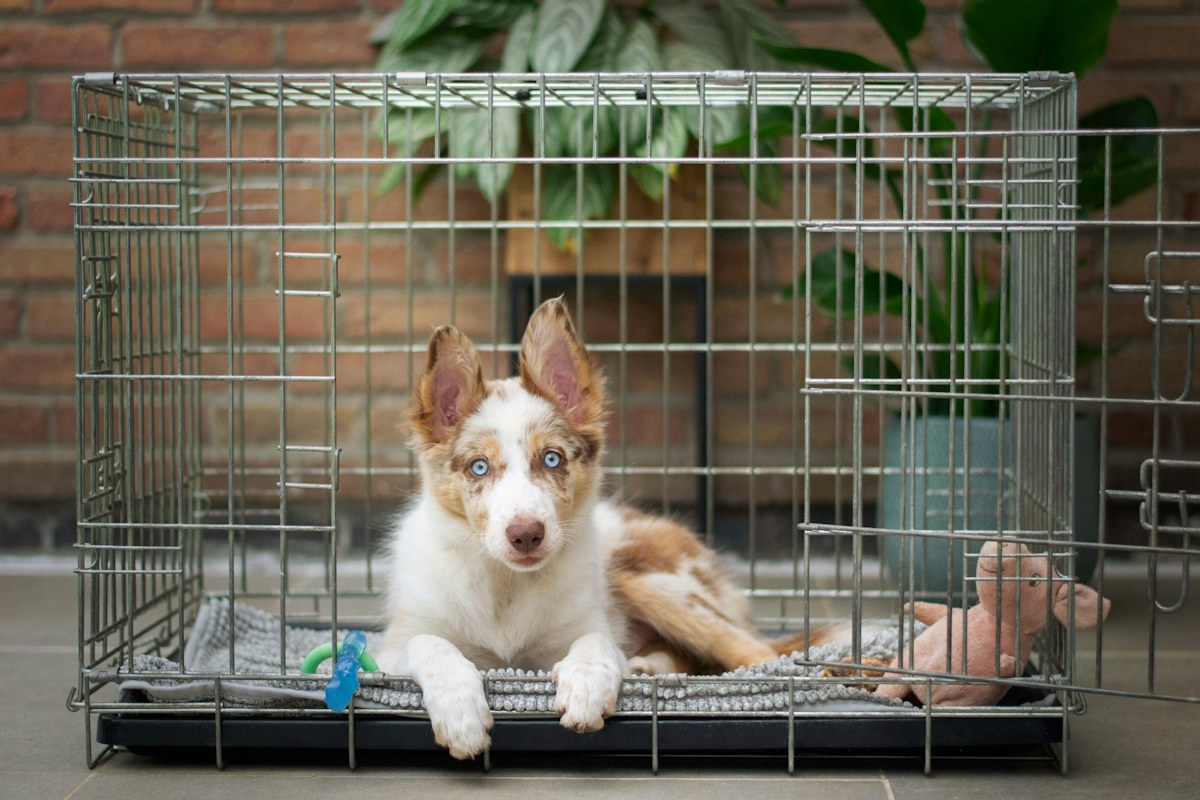
A washable mat or a familiar bed can define where to rest. Check that it leaves enough exposed floor for the dog to step off it and turn. Some dogs move a bed before settling, and a large one may slide against the gate and make it hard to open. Place it where you can see the latch and lift the mat out later without having to reach over the panels. If you include a water bowl, use a stable place where spills can be wiped and the dog can drink without standing on its bed.
Keep the interior simple. Put in only items suited to the dog and the type of supervision you can give. A favorite toy may make sense while you are sitting nearby, but remove anything damaged or small enough to come apart in the way your dog plays. If several dogs are in the room, avoid letting one stand along the outside edge and stare at the other. Pens can control where a dog goes. They still need enough space around them for the dog inside to relax.
Set the pen in place before the moment you intend to use it. A sound such as a swinging panel or a latch clicking can be new to the dog. Open the gate and stand out of the entrance. Let the dog look in and walk away. A short investigation can be all you ask for that day. If the first entry coincides with a loud task and the gate closes immediately, the enclosure may come to mean several unfamiliar changes at once.
Separate a visit inside from a closed gate
When the dog is comfortable approaching, put a suitable small reward near the entrance if the dog likes food rewards. Let it step in and out freely. Move the reward farther inside across different opportunities, rather than drawing the dog in and closing the gate the first time. Stand to one side while it comes back out. If the dog seems unsure about going in, check whether the floor moved, the opening is narrow or you are standing across the only route out.
Introduce the gate separately. Move it slightly while the pen is empty, then open it again. On a later repetition, try a short movement while the dog is comfortable inside and you are beside it. Open the gate to let it leave. If the dog remains relaxed, a brief closure can come later. Make the first closed moments shorter than the time you think you will need for an actual task. It is easier to see how a dog responds when the only thing happening is the gate movement.
Once the dog can wait briefly, practice a small part of the task you originally planned. You might put one empty bag on the counter, then let the dog out. On another day, move one chair. Keep the dog in sight and finish while it is still comfortable. If it starts trying to leave, move back to a shorter, easier step and look at whether the task brought a new sound or sudden movement near the panels. Avoid treating distress as something the dog has to wait out.
Try the pen in a room people actually use
If your household often crosses a living room, set the pen a little away from the straight line between the seats and the door. Give anyone passing enough room to turn without bumping the side. A person on a phone or carrying a bag may take a slightly different route than when the room is empty. Show people where to walk during the first few uses. Keep visitors from leaning into the enclosure, reaching through its bars or opening its gate without knowing the plan.
In a kitchen or dining room, consider heat, access to food and what happens when a drawer is open. The pen should leave an unobstructed route for people holding hot dishes. It is usually easier to place the enclosure off to one side and do an ordinary small task before using it in a busy meal preparation window. If a dog watches everything that lands on the counter, use the quieter end of the room or move the activity farther from the panel instead of expecting it to ignore constant movement a foot away.
If the pen will be folded after each use, give the parts a storage place you can reach before bringing the dog into the room. Check the hinges and hold panels in the positions described in the instructions while folding. An unsecured group of panels leaning beside a doorway can tip when people pass. Keeping the assembly process out of the dog's path also makes it easier to notice a missing connector before you close the gate.
Take the pen down or use a different setup when its intended task no longer fits the dog. A dog may be happy to wait for a short supervised cleanup and restless during a long call. A growing puppy may need more room or a different barrier than the same animal did a month earlier. Give the dog regular chances to move, rest elsewhere and use its normal spaces. A pen is one part of organizing the room during limited moments.
Inspect the setup before using it again
Look for bent panels, loose hardware, a latch that no longer seats correctly or a mat that has begun to curl. Clean surfaces as the instructions allow, and dry the floor before putting everything back. Recheck the route if you have moved a sofa or changed the direction the gate faces. A pen that was suitable beside one cabinet might land near an outlet or a door swing after an ordinary furniture rearrangement.
If you can open the gate without crowding the dog, walk around the pen without brushing it and see the dog while finishing the short task, the setup is doing the job you selected for it. If any of those things are hard, change one part and test it empty. When a dog consistently tries to escape or is uncomfortable with confinement, ask a qualified professional for individualized help and use a safer alternative in the meantime. The best result is an enclosure you can use briefly, predictably and with room for everyone to move.