Work out what the cat is going back to
A cat can return to the same place every afternoon for several reasons. The cloth may feel familiar, the room may stay quiet at that hour, or a fold may block the light from the window. When you remove everything for washing at once, it can be difficult to tell which of those things mattered. Look at where the cat actually lies before taking the bedding away. Notice whether it sleeps across the top, against an edge or in a sheltered space beside it. Check how it gets there and how it leaves.
Separate a favored resting place from a piece of laundry you happen to need. If the cat often sleeps beside a pillow on your bed, you can keep the position available while replacing the pillowcase. If it chooses a folded throw, the shape and feel of the fold may matter. A new blanket can be much thicker even when the fabric looks similar. Set it down at the same height and leave the approach clear. A clean replacement that occupies the same amount of space is a better test than a different kind of bed in a different room.
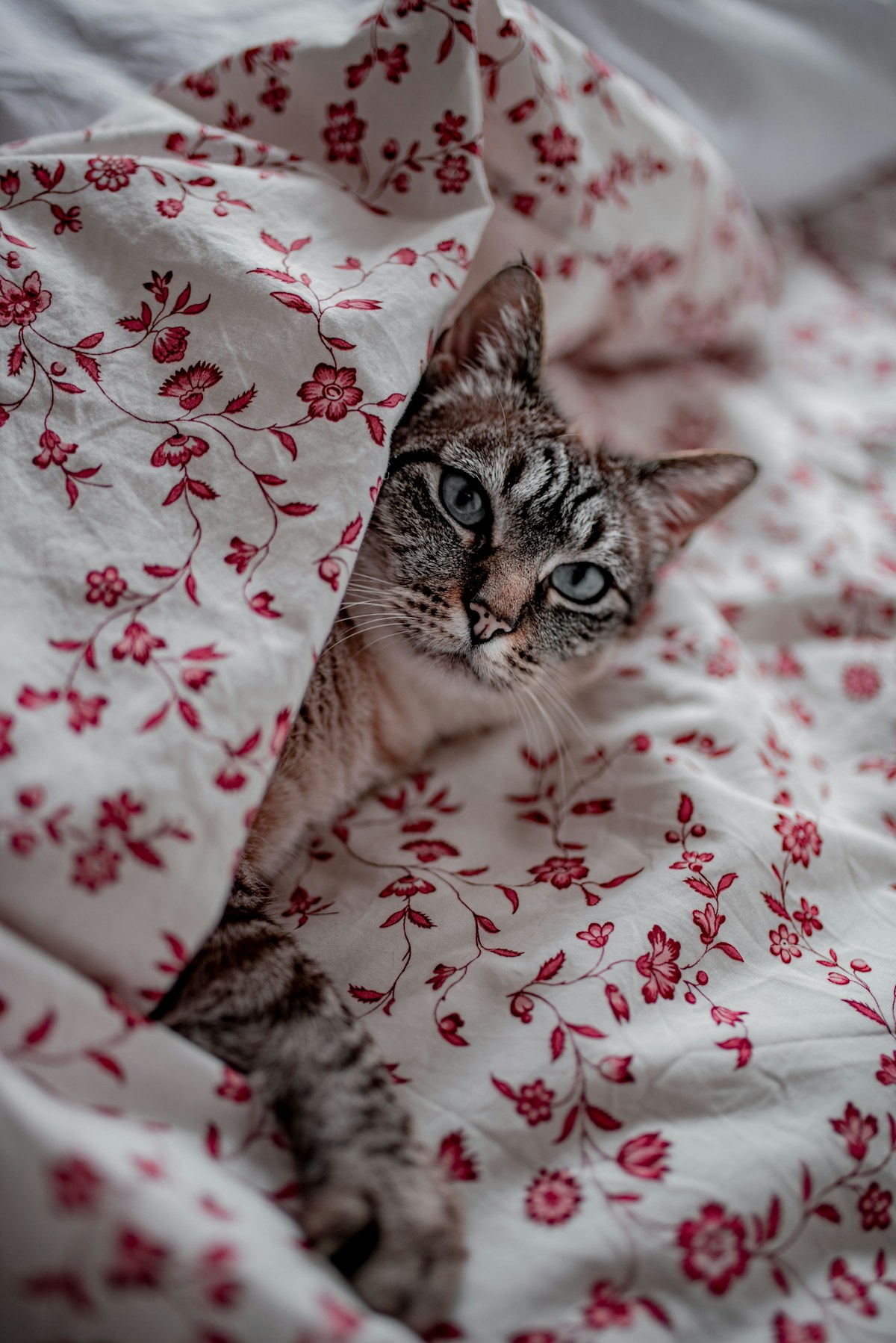
Some cats use a sheltered corner under a draped layer. Provide a safe, open option rather than putting heavy bedding over the cat. Check that loose fabric cannot tangle around it and the cat can come out easily. A low open-sided resting place or a familiar bed beside a chair can provide shelter without needing to trap the animal under a blanket. Keep the route out clear when moving furniture, pillows or bags.
Leave a resting option available during the wash
Choose a second spot the cat already visits. Put a clean familiar piece there before removing the first one. A cat may move to it while the washing is underway, or it may stay elsewhere until the original place is ready. The useful part is offering a choice that does not need to be introduced on the busiest day. If the cat regularly uses two pieces of bedding, consider washing them on different days so one stays available.
A clean towel or low mat can be a practical substitute when the usual cover needs a long drying time. Choose something that lies flat and stays steady when the cat steps onto it. Look at the edge if the towel is folded. It should not curl into the route or slide across a wood surface. Put the substitute near the normal position rather than in a busy passage. A cat that chooses another resting place can continue using it without having to pass the laundry basket.
In a multi-cat home, keep both cats' regular choices in mind. Moving one blanket onto the only chair the other cat uses can create a conflict over a spot that used to be separate. Leave enough space between replacement options that each cat can approach and leave without passing the other closely. If one uses a bedroom and the other a chair in the living room, keep those places open during the wash rather than consolidating all the bedding into one temporary area.
Make a quick check before lifting bedding
Look before gathering a duvet, blanket or pile of towels. A cat may be tucked into a fold or resting where the fabric covers its outline. Lift a free edge slowly and check the space beneath. If the cat is there, give it a path to leave instead of carrying the fabric with it inside. This is especially important when the bedding is dark, the room is dim or someone else has folded it loosely. Check again before closing the washing machine or dryer and keep the doors closed when the equipment is not in use.
Leave the laundry basket in a place where you can see it. If a cat tends to climb into an open basket, move the clean bedding to a closed, inaccessible area while you sort it. Pick up any dropped elastic, tags or loose threads. When a cover has a damaged seam or a pillow has exposed stuffing, remove it from the cat's reach. Examine both sides after washing, because a tear can be hard to see when the fabric is laid over a dark surface.
If another person is helping with the wash, tell them where the cat tends to hide. The safest routine is checking each piece as it goes into the basket rather than assuming someone checked the whole pile earlier. A cat can return to a piece left on the floor while a person fetches another item. Keep the bedroom door closed with the cat elsewhere if sorting the bedding repeatedly blocks the route and makes it difficult to see where the cat is.
Wash the material the way it can be washed
Follow the care label for both the cover and any removable insert. A thick insert may need a different routine from a thin blanket. Shake or brush loose hair out first if the material allows, and keep the lint and loose hair away from the cat's resting areas. Choose laundry products appropriate for the household and follow their directions. Avoid adding strong fragrance to a piece the cat has used as a resting surface. A clean piece with a noticeable unfamiliar smell may take time for the cat to approach.
Let bedding dry completely before putting it back. If a mat has a backing or a thick fold, check the parts that take longer to dry. Moisture can remain inside a seam when the top feels dry. Use a separate temporary resting place until the bedding is ready. If the usual material repeatedly takes longer to wash or dry than you can manage, use a thinner washable cover over a stable surface when practical. That gives you a smaller piece to remove during a normal cleanup.
Clean the surface under the bedding as its manufacturer recommends. A resting place near the floor can collect hair beneath the cover. A chair or bed can hold dust in the gap behind a cushion. Move the cushion carefully while the cat is elsewhere, then put it back so the landing area is the same shape. Avoid changing more than one important detail if you want to see whether the cat accepts the new cloth. A complete rearrangement may be worthwhile occasionally, but it makes a poor test of one replacement.
If several pieces look alike, keep one fold or storage location for the clean spare and another for the cover in use. A label on the shelf can help when two people handle laundry. Check any stored fabric for dust, loose threads or a strong storage smell before putting it back on the bed. Keep the spare somewhere you can reach without moving the chair or bedding the cat is currently using.
Put the original shape back first
If the cat used the crease beside a pillow, recreate the open resting surface beside it. If it rested on the flat part of a folded blanket, keep that part about the same thickness. Tuck or fold the edge so the cat does not have to cross a loose layer. Check from the direction it normally approaches. A bed can look tidy from the doorway and still have a large ridge on the side the cat uses.
Let the cat explore the clean surface on its own. It may pause, sniff and leave. Wait through the time it normally uses the room before deciding the change failed. If it repeatedly lies close to the spot but avoids the new cloth, try a thinner fold or a stable piece of a similar texture. Change one detail first. Adding a new scent or placing treats on the bedding makes it harder to learn whether the surface itself is acceptable and can leave crumbs where the cat rests.
Keep the room's ordinary light and temperature in mind. A different blanket can change warmth, but the same spot can also become less appealing because a window is open or a heater now comes on earlier. Put the original surface in the room when it is clean and dry, then see which place the cat chooses at a familiar hour. A resting place can change with the season without requiring the household to move every bed each time.
Make the next change easier to repeat
Keep one spare cover that fits the same surface, if a regular change is useful. Store it clean and dry where you can reach it while the other is being washed. Check the replacement for loose threads and look at how it lies before the cat returns. A cloth that can be folded to the right size without creating thick edges makes the routine simpler. If the cat prefers a different safe place while the bedding is away, keep that place available too.
After the wash, notice how the bedding holds its shape when the cat gets up. A piece that often travels halfway across the bed may need a different fold or a stable surface underneath it. Make that adjustment before the next washing day. The best setup is easy to see before you gather the fabric, easy to clean and familiar enough for the cat to use again without a person having to put it there.