The place where a litter box fits and the place where it works may be several feet apart. A tray can slide under a shelf in the laundry room and still be hard to reach once the washing machine is running. It can fit inside a bathroom where the door is often closed. In a home with two cats, the tray might be in a corner that one cat enters willingly while the other waits in the hall. Looking at the approach from both sides gives you a better starting point than measuring the tray against the empty floor.
A good location serves two daily routines. Your cat has to be able to enter, turn and leave when they choose. You have to be able to check and clean it without moving furniture or shifting a stack of supplies. Start by finding two plausible places. Check both at the busiest time of day. Then give the cat a way to try the new location while the previous box remains available. A small experiment can reveal whether a noise, a closed door or an approach through another pet's favorite spot matters more than you expected.
Walk the route at the times the room changes
Follow the floor path from the places where your cat usually rests. You might pass a hallway where people drop bags, a door that closes when someone showers or a dog bed close to a narrow turn. It is easy to overlook these changes when you inspect the room alone. Walk the same route at a moment when somebody has just come home or is putting clothes in the wash. A convenient route in the morning can disappear once other people are using the room.
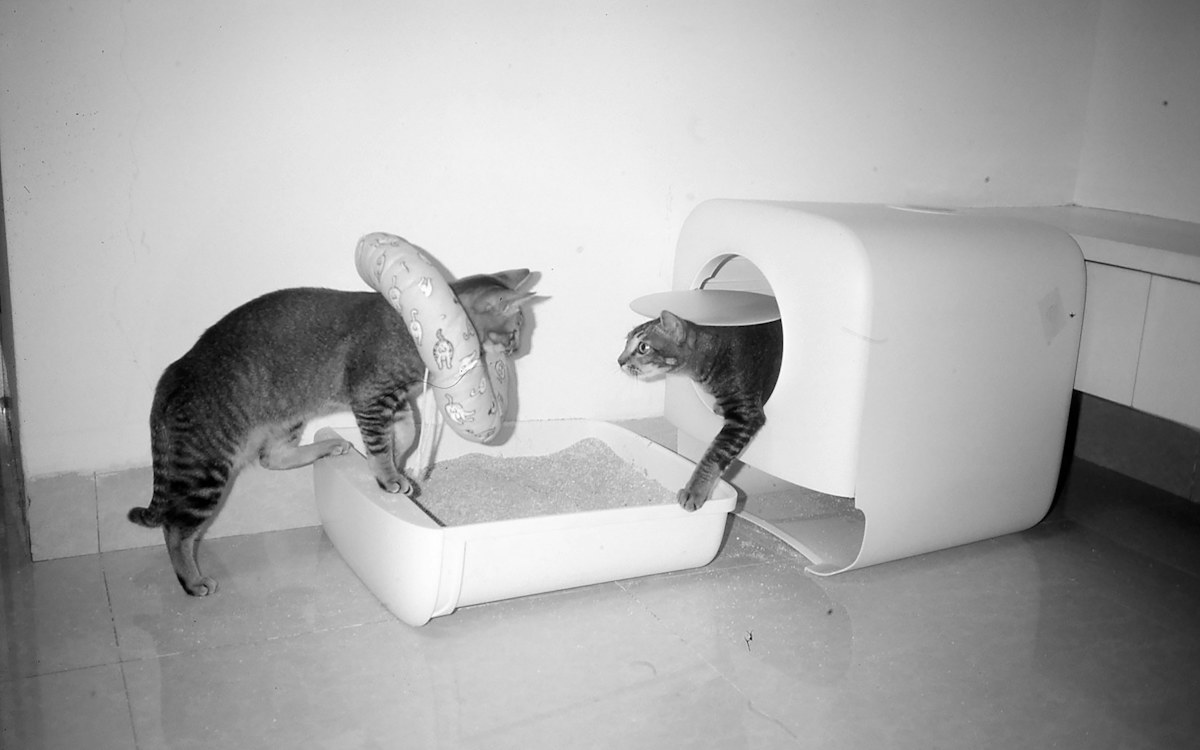
Pay attention to the final few steps. A tray at the back of an alcove may leave the cat facing a wall when they enter. If another pet regularly waits in the doorway, the cat may have no comfortable way to leave. Look for a spot with a little clear space in front of the box and a path that stays open. A room that offers two ways to move away can be particularly useful in a home with several cats. If there is only one doorway, avoid putting other attractive resources directly beside it where another animal is likely to linger.
Listen to what happens near the floor. A washing machine or dryer may shake a surface that seemed quiet during the day. An automatic door closer can make a sudden sound nearby. Even a cupboard can get noisy if a shelf full of supplies rattles when somebody uses it. If you are considering a utility room, watch one full cycle of the appliance before deciding. It might be simpler to move a small side table and make room in a quieter part of the house. The location can still be easy for people to reach without being in the middle of their routine.
Match the space to the cat using it
A cat needs enough room to step in and move comfortably. Check where the tray opening faces and whether the edges are easy to get over for the cat in your household. For a cat who moves carefully, a suitable low entrance and a direct route may help. If jumping or stepping has changed suddenly, speak with a veterinarian. Choosing a different location can be useful, but a box arrangement cannot explain a new change in how the cat moves or uses the toilet.
In a multi-level home, check whether the route depends on stairs, especially during the hours when doors are shut or the cat tends to rest upstairs. Consider providing an appropriate box on the level the cat uses most. If there are several boxes, give them distinct locations so that one narrow passage does not control access to all of them. Two trays side by side can be easy for one person to scoop, but they offer little extra separation to cats that avoid crossing paths. Move a test box to another quiet location and observe how it is used before taking away one of the existing options.
Keep the box away from food and water, and make sure it does not occupy the only quiet resting place in a room. If the available floor is small, it may be easier to move a different household item than to shrink the space around the tray. A bin that opens into the approach is another thing the cat has to pass. Keep supplies where you can reach them without standing over the cat. The goal is to let the cat's trip and your cleaning trip happen independently.
Give the new location a fair trial
If you can, set up a second box in the new location and leave the familiar one in place. Use the same type of litter and a tray that suits the cat, so you are mostly comparing the sites. Avoid changing the type of litter, entry design and position all at once. When several things change together, one unused box cannot tell you which part is difficult. Leave enough time to see what happens during ordinary days, including an evening when the home is busy.
Notice whether the cat approaches the box, waits nearby or goes straight past it. If the new tray is used only after the house settles, compare the sound and foot traffic at other times. If several cats share the home, a new location may be particularly useful for one animal even if another keeps using the previous tray. You do not need to see every visit to learn something. When you clean both boxes on the same schedule, you can observe which ones are being used without hovering near the door.
Make sure people know to keep the route open. A door that is held ajar should stay in that position without leaving a hazard or interfering with safety requirements. If household routines make that difficult, try another place. A location that works only while someone remembers to prop a door open is vulnerable to a single evening when they forget. Once there is a clear preference for the new site, continue to leave enough litter boxes in appropriate places for the cats in the household. A new option can earn its space without the old one disappearing at once.
Make daily cleaning easy enough to repeat
Leave a scoop and suitable cleaning supplies close enough to reach, safely stored away from animals and children. Keep the surface around the box accessible so litter can be swept up without moving the tray every time. A washable mat can help if it lies flat and leaves the entry easy to step across. Check whether the mat is actually useful once you have swept around it for several days. If it bunches up or the cat tries to avoid it, a small clear patch of floor may serve the same purpose.
When you scoop, notice practical details such as where you put the scoop down and whether the box stays level. If you have to reach behind it with one hand while holding a cupboard door with the other, the location will be difficult to maintain. Pull the tray forward or make room at one side. Follow the litter and tray directions for cleaning. Keep the box clean and give it time to dry after washing before you set it up again. People are more likely to keep up with a routine they can finish quickly without a search for equipment.
In a small apartment, the best arrangement may need a little visibility. A tray placed just out of the main walking route can be easier to look after than one fully hidden behind a piece of furniture. If you use a screen, leave generous room around the opening and check that it cannot fall over. A screen that reduces traffic or glare might help. One that leaves the cat with a single tight entrance creates another constraint. You can try a clear open location first and see what problem a screen would actually solve.
When a location change is only one part of the answer
Watch for changes in how a cat uses the box even when the arrangement appears to work. If they start going outside the box, appear uncomfortable or strain, contact your veterinarian promptly. A sudden change deserves more attention than moving the tray and waiting to see what happens. If several people share pet care, note when the change began and what each person saw. Details such as the number of cats, where the box is, which litter is used and any recent household change can help explain the situation.
Once the cat uses a location regularly, protect the ordinary things that made it useful. Keep the approach clear, leave the supplies nearby and notice when the household starts using the room differently. A guest, a moved appliance or a new piece of furniture can change access without anyone intending to move the box. The best sign of a good spot is that both daily routines are easy to complete. Your cat can use the tray when the house is busy, and you can clean it without turning the room upside down.