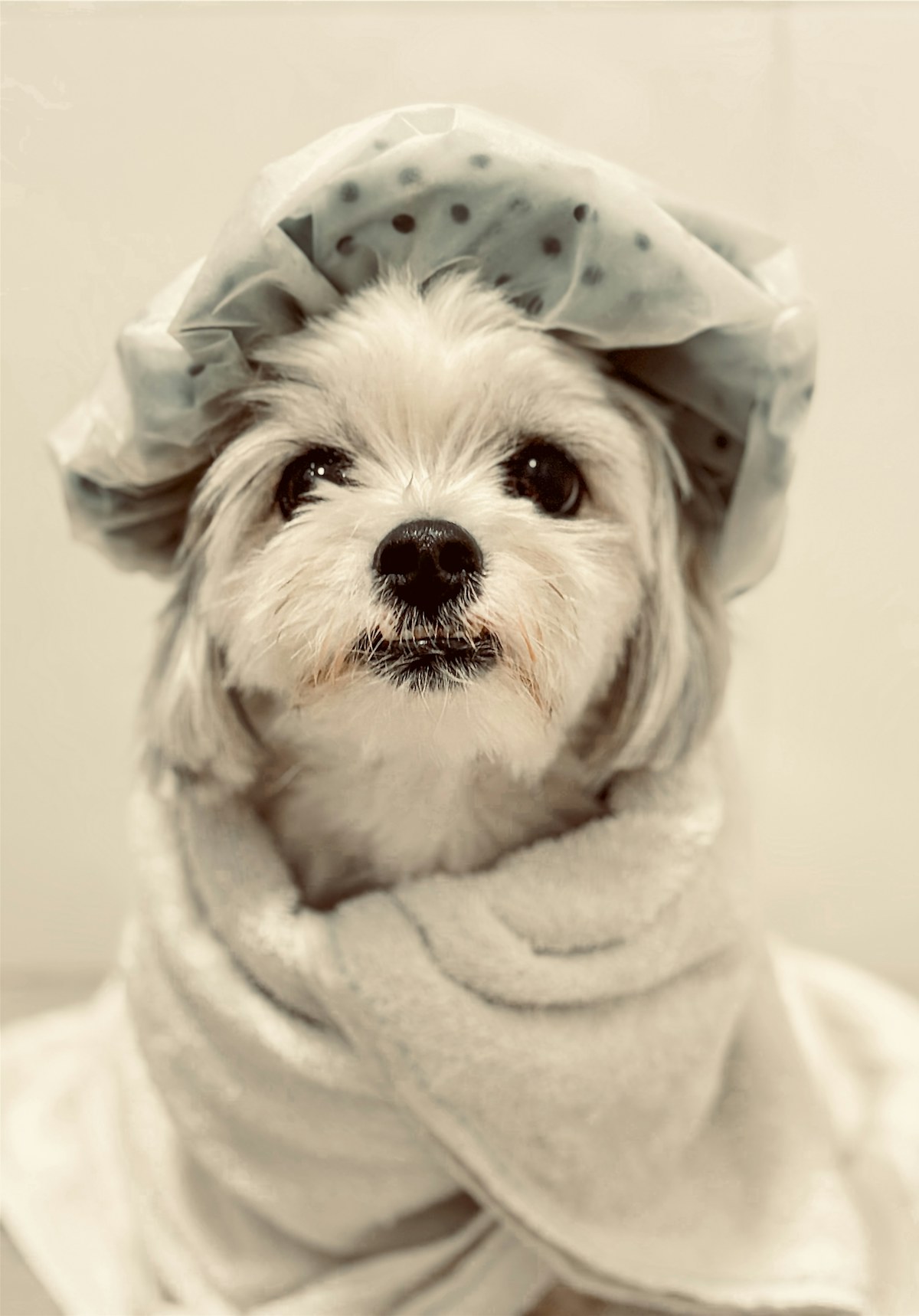
The towel can look like the least surprising thing in a bathroom until it arrives over a dog's head. From the dog's position, it may be a wide moving surface, followed by hands reaching for feet and the sound of fabric rubbing on wet fur. The room can make those sensations harder to deal with. A wet dog may be standing on a slick floor and looking for somewhere to move. A towel routine begins more easily when you can work on the pieces separately. Practice on a dry day, with a clear way to step away and no need to finish in one attempt.
There is a difference between getting water off a coat and helping a dog accept the movements involved. A willing dog might stay for a few gentle presses, move away, and later return. A dog who suddenly resists being touched in a particular place may be uncomfortable. Stop if they show signs of pain, and ask your veterinarian about a new sensitivity. If your dog shows fear around handling or has a history of biting, have a qualified professional help you plan the routine. Use a setup that keeps everyone safe while you learn what the dog is comfortable with.
Pick a surface before picking up the towel
Choose a quiet space with steady footing. A low mat on the floor can make the place easy to recognize, provided the mat lies flat and stays put when it is damp. Test it before using it with a wet dog. Avoid making a dog balance on a ledge or stand at the edge of a tub while you work. If you use the bathroom, give the dog a place to stand away from the bath and leave enough space that you can sit or crouch beside them without blocking their exit.
Put the towel somewhere you can reach with one hand. A dry folded towel on a stable low surface can be easier to take than one at the bottom of a pile. Use a size you can handle without throwing it across the room. With a small dog, a hand towel may be enough to make the first movements easy to see. With a large dog or a thick coat, have a second dry towel available. A saturated towel becomes heavier, and you may need to replace it before you have finished.
Check how the floor behaves near the chosen place. Water can collect where the mat ends or under a door. Keep the dog out of any slick stretch while you deal with spills. A spare towel for the floor can help, as long as it is not left bunched where somebody could trip. Set the bottles, brushes and other equipment out of the working area. When the dog can step to the side without knocking something down, there is less reason to hurry after them.
Make the first contact predictable
Begin when your dog is already comfortable in the space. Leave the towel folded nearby and wait to see whether the dog chooses to look at it. You can place a small appropriate reward on the floor away from the towel after a relaxed approach. That gives the dog room to move back. When the towel itself seems uninteresting, pick up a corner slowly, set it down and pause. Watch what the dog does as it moves. If they step away, leave the towel low and give them time before trying a smaller movement on another day.
Introduce a brief touch to a part of the body your dog is comfortable having handled. The side of the shoulder may be easier than a foot, face or tail. Hold the towel so only a small part of the fabric moves and press it gently for a moment. Then take it away. A dog that remains loose and close may be willing to repeat the contact. If they freeze, turn sharply, avoid your hands or try to leave, stop. You will have more to build on if the first contact is easy enough for the dog to consider returning.
Make sure the dog can see when the next touch is coming. You might give a simple cue, pause, and then offer the towel at the same height as before. If you use a reward, offer it after the contact and leave the dog free to move. Avoid luring them into a position you then hold in place. A predictable touch can become familiar over several small practices. There is no need to try all four paws on the first day. The goal is to make the next touch easier to accept because the last one ended clearly.
Use the real towel after a bath
When the dog is wet, let them shake in a safe place if they choose. Keep your eyes and footing clear and give them room. Start where your dog can see the towel, then blot gently to take up water. Pressing and lifting a towel can be easier to tolerate than a long rubbing motion. Work in small areas and avoid tugging at the coat. If the dog normally moves away after one or two touches, start with those and pause. You can do another short part once they come back voluntarily.
Consider the part of the body that needs attention first. On some days the dog's legs may be wet while the back is nearly dry. On others you may need to take surface water from the shoulder before getting to the legs. Plan to stop before approaching any area the dog is not ready to have handled. Keep the towel away from eyes and openings of the ears, and use gentle contact on any part you can reach comfortably. For a dog with particular coat or skin needs, ask your veterinarian or groomer how to finish drying appropriately.
Change towels when the first one becomes heavy or no longer takes up much water. Put the wet towel down where it cannot slip under somebody's feet. Do not wrap the dog in a way that restricts their movement or leaves them unattended with the towel. A dog who steps off the mat may be taking a break. Leave a safe, comfortable place available where they can finish settling after the drying you have been able to do. If you need a different drying method for the dog's coat or the conditions in the room, work out that method with appropriate professional guidance.
Give the awkward parts their own practice
Feet often involve a balance shift. A dog who will happily have their side blotted may move away when you try to lift a leg. Practice with all four feet on the floor. First let the towel touch the outside of a leg briefly if the dog is comfortable. You can use a dry mat to catch some moisture from the feet after an outing. There is no need to hold a foot for a longer time simply because the towel is available. If your dog regularly needs feet handled for care, ask a qualified trainer or veterinarian about a gradual way to teach that separately.
A person helping can keep the room quiet and hand you a spare towel. Agree on who is doing the handling so the dog doesn't have hands reaching from both sides. If the dog is worried, the helper should leave room rather than hold them in place. A short routine is easier to repeat if it doesn't require two people every time. You can keep the supplies near the mat and have the second person ready only for tasks the dog already knows and accepts.
If your dog backs away as soon as they see the towel on a bath day, look at the differences from practice. The towel may be bigger, the room busier or the floor less secure. Change one factor first. Use the familiar towel for a brief contact, or move to the ordinary drying place once the dog can get there safely. If that still feels too difficult, use appropriate help instead of insisting on completing the practice. Drying needs to fit the dog as well as the room.
Let the finish become familiar
Put the towel away after the session and leave the dog somewhere comfortable. Wash and dry the towel as appropriate before it returns to the drying spot. If several people share the routine, tell them how the dog prefers to begin and which movements are currently easy. “Side first, one press, then a pause” is a useful instruction. It gives the next person a small starting point and tells them when to wait.
The routine may eventually take only a few moments. A dog can stand on secure flooring, see the towel arrive, take a break after several touches and leave when the drying is done. When a step stops working, there will be a specific change you can look for, such as a wetter floor, a new towel or a move toward a sensitive foot. Keeping the movements brief and recognizable makes it easier to deal with that change before the dog has to move farther away to be heard.