A sidewalk can feel wide until a stroller comes around the corner and you realize the dog is walking on the side the stroller needs. You may have just a few seconds to step away from a hedge, shorten the lead and decide whether there is room for all three of you. The useful skill is changing position while there is still space. On a quiet stretch of pavement, you can practice moving together to the side away from passing traffic. Later you can make that change before the route becomes crowded. A consistent choice about where to walk is easier to follow than repeated corrections at the narrowest point.
Set this up with equipment your dog already wears securely. Use a lead length appropriate to the surroundings and keep your dog away from the road. Work at a distance from other people and dogs where your dog can move comfortably and pay attention to you. If the dog is fearful or lunges at people or animals, arrange help from a qualified trainer or behavior professional rather than practicing near the things that worry them. The sidewalk is for getting somewhere safely. A small practice session can happen somewhere quieter.
Choose the side by looking at the next few steps
On a broad pavement, the useful side is often the one that leaves an open route for someone to pass. On a street with traffic close to the curb, place yourself between the dog and the roadway when you can do so safely. A hedge or fence on the inside can give the dog a clear edge, as long as there is no gap that leads to a yard or driveway. On a path with people passing in both directions, a place where the dog can stand beside you on a firm surface is more useful than an instruction to stay on one side for the entire walk.
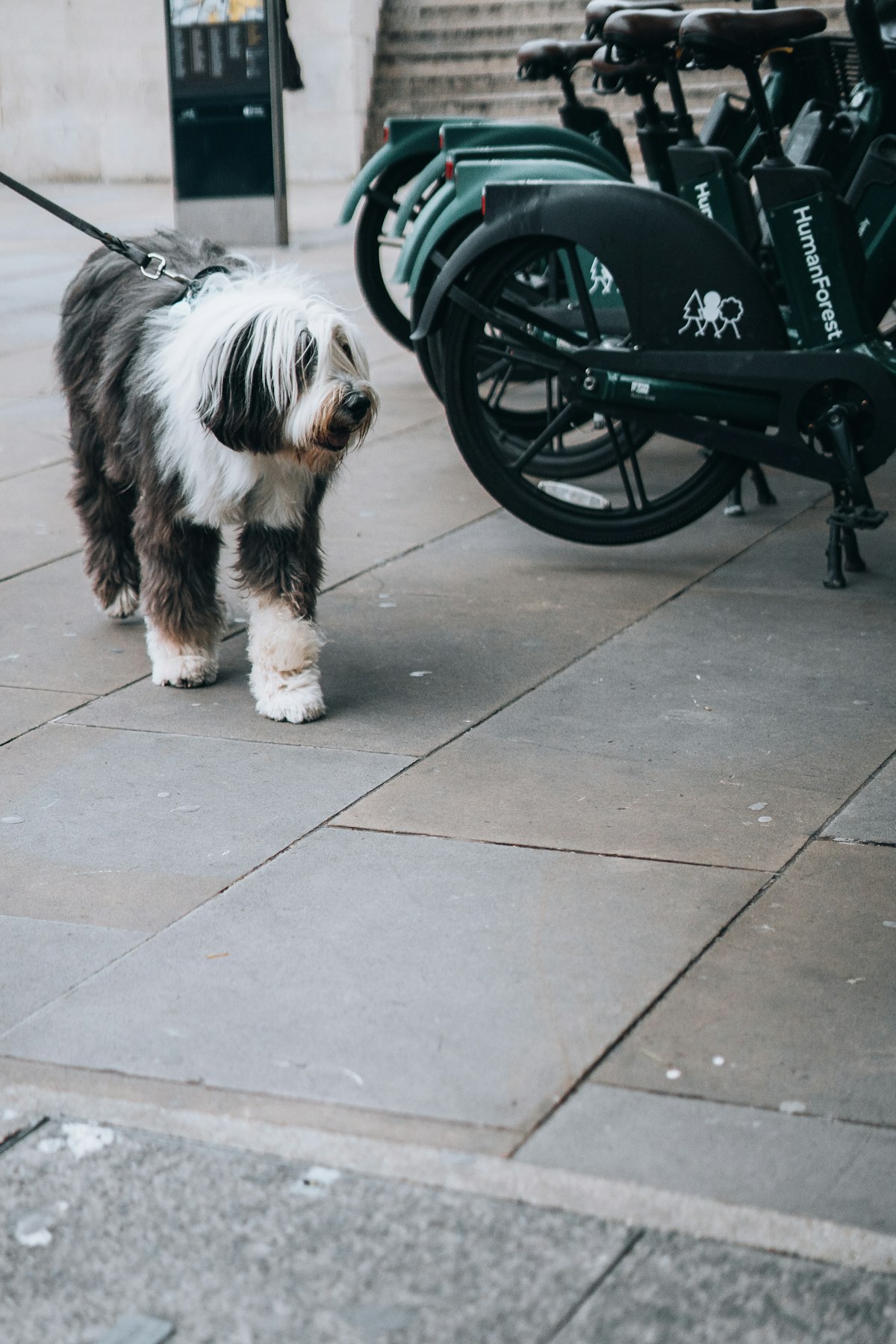
Look ahead for places where the path changes. A post can leave plenty of room on one side and make the other side difficult to pass. An open car door, a doorway or a parked bike may direct other people toward the edge you were planning to use. Pick an approach that leaves you a way to pause or turn. Change position before you reach the obstacle. If you get to the narrow part and find that no safe route is open, move back to a wider place and wait. The goal is to avoid forcing several people and a dog into the same small gap.
A side can be easy for you and awkward for the dog. For example, the dog may be used to walking next to your left leg and need a clearer invitation when you offer the other side. Notice whether the dog can see the path beside you and whether there is room to turn. On the first practice, use the position that both of you already find easy. Once you can move into it predictably, you can teach a change to the other side if the routes you use call for it.
Practice one position in a quiet space
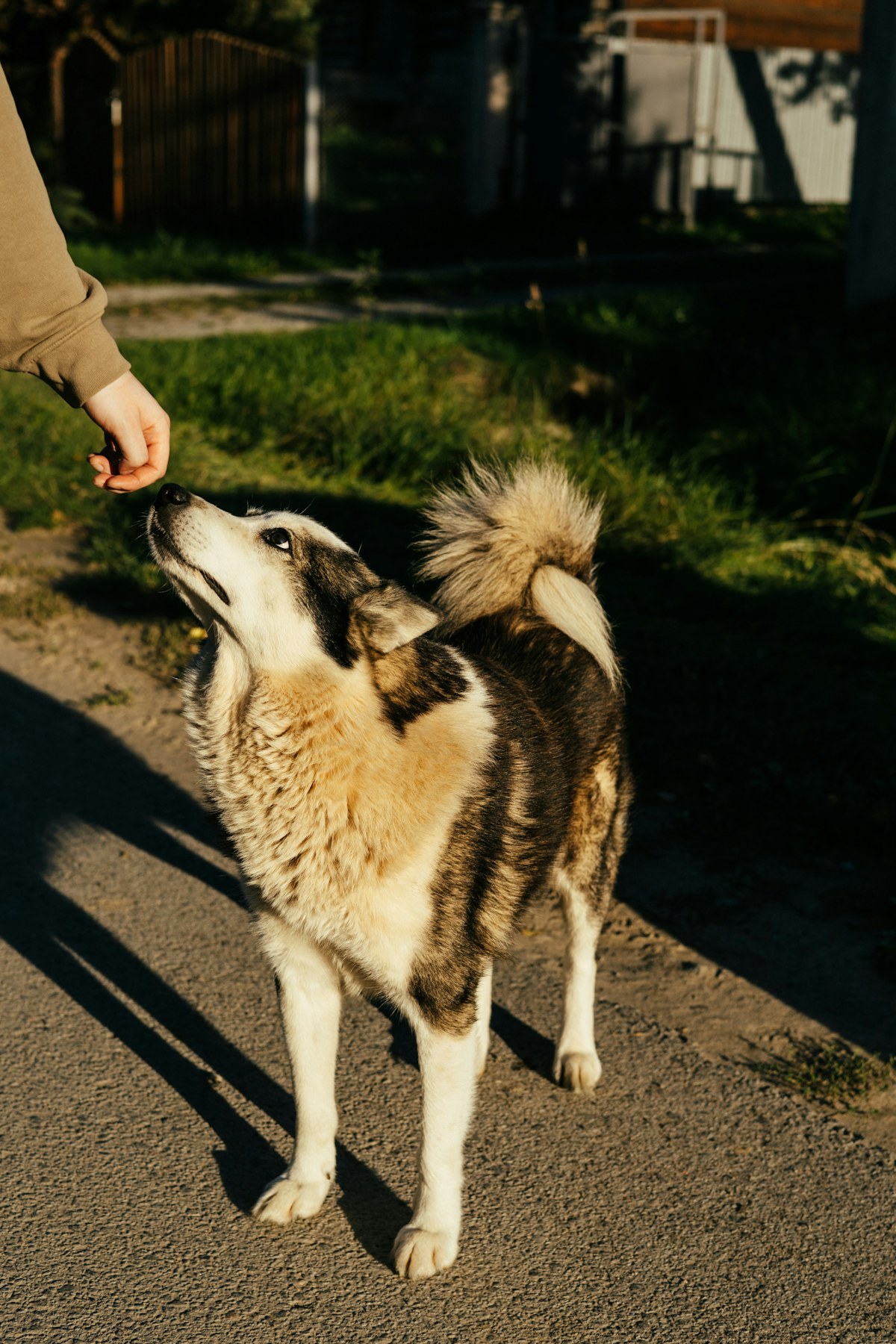
Use a place with no need to pass anybody, such as a broad path at a quiet hour or an open private area where you have permission. Start with the dog beside you and take two or three easy steps. If the dog moves with you and the lead remains loose, you can reward that position with something they enjoy, such as a small appropriate treat or an opportunity to sniff. Give the reward on the side where you want the dog to stay, within comfortable reach, so that they do not need to cross in front of you to get it.
When the dog readily steps with you, add a cue you can say before moving. It might be a word for coming to your side or following as you turn. Say it once, then take a small step that gives the dog a clear way to follow. Keep your hands steady and avoid pulling them around by the lead. If they are watching something else, move to a quieter place or try again after a pause. Repeat the part that goes well a few times before asking for more steps. You are building a movement that can happen smoothly when both of you have other things to watch.
Try stopping on the same side. The dog should have space to stop in a natural position. They do not need to sit if standing is easier. Stand where the lead is short enough to keep your dog clear of others but is not drawing them forward. Let the dog step away or look around once the practice is done. If you will use this position only for passing, you can release the dog to walk normally when the other person has gone. A short change is easier to practice than an expectation that the dog will hold one position for a long walk.
Learn a change without stepping over the lead
To switch sides, find an open space and come to a stop first. Keep the lead clear of your feet and give the dog a route around you. You can turn together and start in the new direction, then make another turn when there is room. A person already skilled at an appropriate side change can teach it with clear cues and reinforcement. For an ordinary neighborhood outing, an easy turn in a quiet spot is often enough. The point is to avoid a rushed movement with somebody approaching from both directions.
Notice where your hands naturally go during a change. A bag, umbrella or phone can make it difficult to keep the lead clear. If you need both hands for the first few practices, put the other things away. Decide which hand will hold the lead when the dog settles beside you and how you will keep the spare length off the pavement. Avoid wrapping it around your hand. If the dog changes position unexpectedly, stop in a safe place and reset. The route stays easier when you can see where the lead runs before starting again.
A change does not have to happen every time someone appears. If the dog is already on a suitable side and the other person has a clear path, walk on at a comfortable pace. If you see a dog or person approaching quickly and expect a difficult pass, create distance early or take a different route. A practiced position gives you one tool. A wider spot, an early turn or a safe crossing can work better when the pavement itself leaves too little space. Use the environment to keep the encounter manageable.
Rehearse with ordinary neighborhood traffic
When the change is easy in a quiet place, use it on a route with space and occasional passersby. Pick an early landmark, perhaps a broad driveway entrance with good visibility that you can move past without blocking it, or a quiet corner before a row of shops. Move into position while the passerby is still well away. Keep enough room to move farther if the dog becomes distracted. A successful first pass may happen on opposite sides of a wide path. There is no reason to start beside a school gate or on a crowded corner.
You can say that you are giving your dog space if someone asks to greet them. Continue moving when there is a clear route. If a passerby unexpectedly stops in front of you, keep the dog beside you and choose another direction if you can. The location may require waiting for someone to pass rather than continuing forward. Choose a spot where the dog can stand securely and see what is happening without blocking another person's route. Praise or reward a return of attention when it is safe to do so. Reassess as soon as the space opens.
Plan the point where your dog can return to exploring. If you finish the pass beside a driveway, walk beyond the entrance before giving more lead. If you are still beside a busy road, use a cue that keeps your dog near you until there is a more generous space. The pause between passing and exploring can be only a few steps. That interval prevents the dog from stepping across someone who has barely gone by. It also gives you an ordinary way to end the position you practiced. Once the route opens again, a short sniff at the inside edge of the path can make the transition clear without sending the dog into the roadway.
At home, pick one detail to repeat next time. The dog may have moved over easily before a fence but lost the position at a gap where there was a new smell. Try the cue a little earlier at that point. If you ended up turning back at the narrow corner, remember the wide place where turning worked. A change that works for a short pass on an ordinary day is worth keeping. Once you know when to begin it and where to end it, you can make the sidewalk more predictable for both of you.