Start with the places where the dog turns
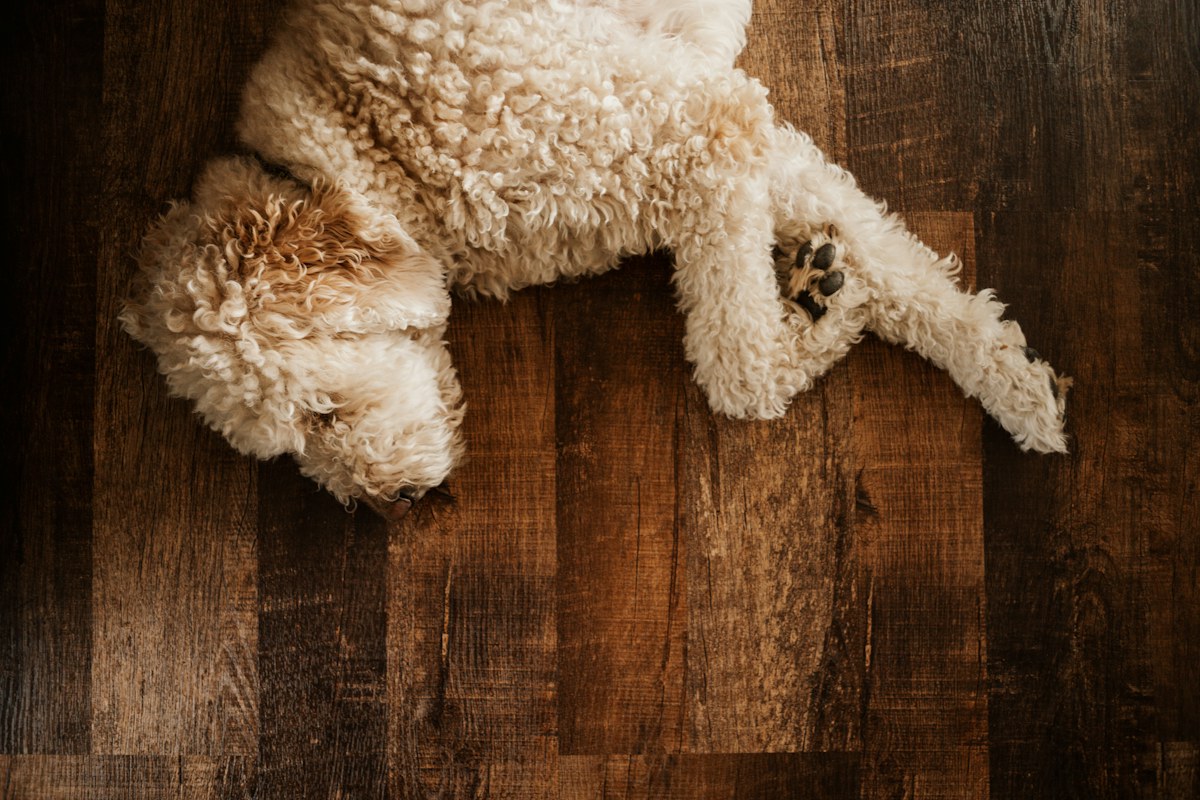
The most difficult part of a wood floor may not be the middle of the room. It may be the last step before a doorway, the spot where a dog pivots after drinking, or the space between a favorite bed and the hall. Watch the dog take its usual route when nobody is asking it to hurry. Look for the places it slows down, puts its feet farther apart or begins walking along an edge where it can reach a rug. Those changes can show where the floor is hardest to use.
Pay particular attention when the dog gets up. Pushing off a smooth floor can ask more than walking in a straight line. A mat under the first few steps from a resting place can make the start of the route more predictable. Keep the nearby exit clear so the dog can stand fully before turning. If a dog regularly hesitates, appears uncomfortable, or suddenly has difficulty moving, check with a veterinarian. A rug can change the surface underfoot. It cannot explain a new movement problem.
Follow the same route yourself at different times. A dry floor may feel steady in the morning and be damp beside a bowl after dinner. Light reflected off a polished area can make it hard to see where a thin mat ends. Observe when the dog is moving at its usual pace and when the room is busy. A route that works while chairs are pushed in can become narrow once people sit down and leave a bag on the floor.
Draw a route before buying several rugs
Choose two or three places the dog needs to reach during a normal day. A resting place, water bowl and doorway are common examples. Walk the space between them. If the dog already follows the edge of the room, use that path rather than laying a rug through the middle where people are more likely to move it. Where a dog turns, put the stable surface before the turn begins and continue it beyond the place the dog straightens out.
Mark likely rug sizes with a few sheets of paper while the dog is elsewhere. Check how much room remains for doors and furniture. If a mat needs to sit directly in a door swing, test the clearance before using it. A door that catches a corner can make the surface bunch up when someone opens it. A shorter runner on either side may work better, provided there is room for the dog to cross the remaining surface without an abrupt turn.
Try connecting important places before filling unused floor. A strip to the water bowl can be valuable if the bowl is reached from a slippery corner. An isolated small rug can leave the dog with the same difficult landing when it steps off. Look at the whole transition from the dog’s first step to its next stable stopping point. If you cannot cover the route safely, move the bowl or bed closer to a surface the dog already uses comfortably.
In an open plan room, the route can make a gentle bend around an island or the back of a sofa. Set the runner at an angle if a straight line would send the dog into a table leg. Look at how people and the dog will use the corners of the rug. The dog may follow the center until it reaches the couch, then step out across an edge. Give that last step a broad, unobstructed landing rather than placing a basket or plant at the edge of the cloth.
Choose a surface that stays put under sideways pressure
A rug can feel soft and still move easily. Press your foot lightly across the edge and look at the underside. If the whole rug slides, choose a better backing or a suitable pad. Check both the rug and flooring instructions before using a backing on wood, because some materials may affect a finish. Test it in a spot where you can lift a corner to inspect the floor. A pad that matches the rug helps the edges sit flat.
Try a low pile where people cross or where the dog has to step onto the rug from the side. Thick edges can catch a toe and make the change of height harder to see. Avoid raised folds, torn seams and loose fringe on the route. If a rug begins to curl after washing, lay it flat and make sure it stays flat before putting it back. A mat that needs to be straightened each time someone crosses it will probably shift when the dog walks over it as well.
Check the width where the dog actually places its feet. A long narrow runner may be fine for a straight hallway and too narrow at the point where the dog turns into a bedroom. A wider piece at the junction can give it room to slow down and change direction. If you use two rugs, make the join easy to cross. Keep them flat and prevent either edge from moving over the other. Two overlapping rugs can form a ridge in exactly the place you intended to make easier.
Put water and resting places where they can stay dry
The area around a water dish often needs more attention than a dry hallway. Use a stable bowl on a washable surface, then look for drips in the direction the dog walks away. A mat that catches water in front of the dish may leave the exit side wet. Move it or choose a longer shape if that keeps the route dry without sticking out into another passage. Lift the mat regularly to see whether moisture has collected underneath.
Use a resting surface that stays level when the dog steps on or off. If a bed slides away as it rises, put it on a stable area suited to both the bed and floor. Leave room for the dog to approach without having to thread between a chair and the wall. People tend to move a pet bed when they need extra space. Choose a position the household can keep clear, or identify a second position where the dog can settle comfortably during busy times.
If the dog tends to carry toys along the route, leave one clear patch where it can put them down. A ball or chew at the edge of a runner can create a surprise when a dog steps on it. Gather loose toys after play and move furniture legs out of the turning area where you can. Keep a place open for a person to pass without asking the dog to step off its secure surface each time.
If an alternate bowl location solves the route, leave the old area clear until the dog knows where the new bowl is. Check that it can still reach water without passing another dog’s bed.
Test the setup during the busiest part of the day
Try the rugs in place before anchoring any furniture around them. Watch the dog after a normal rest, when it gets up to drink or follows someone toward the hall. Let it move at its own speed. A useful result might be a more direct route, an easier turn or a choice to pause without spreading its feet wide. Look also at whether a rug creeps sideways after several trips. If the dog begins using the edge only, see whether the rug moves or a seam is in the way.
Ask another person to walk the route while carrying something they ordinarily carry. A mat positioned at the ideal distance from a doorway can still catch the foot of someone moving a basket from the bedroom. Shift the rug enough to keep the walking route usable without taking away the dog's support at the turn. If both routes cannot fit, move the dog's destination to a place where it can be reached from an existing rug. A better floor plan may solve more than a thicker mat.
Check any new gaps that appear as furniture shifts. A dining chair pulled out after a meal can land on a runner and push it out of shape. A door propped open for cleaning can leave a different route. Place rugs where the household is able to use them without repeatedly changing their position. Do a short check whenever the furniture or layout changes. What works in an empty room may need one adjustment when the room is actually in use.
Keep the route predictable as the floor changes
A recently washed floor can be more slippery until it is dry. Keep the dog off a wet route and set the rugs back only when the floor and pads are dry. Clean rugs according to their instructions and check the backing for wear. A rug that used to stay in place can begin to shift after its backing breaks down. Look at the corners before you put it back, and replace a damaged piece before it becomes the route the dog relies on.
If a runner has to come up for washing, use an alternate route that already has a stable surface or move the bowl or mat temporarily. Keep a familiar place available while the original dries. Watch the dog after the next few trips and adjust only what needs adjusting. The goal is a route that stays available during an ordinary day, with steady surfaces where the dog gets up, changes direction and comes to a stop.