A dog let into a small yard may take the same route every morning. They go from the door to the corner by the fence, look through a gap and come back when they hear somebody in the kitchen. The yard may have a patch of grass nobody uses and a path partly blocked by an empty planter. Moving that planter may change what the dog can do without changing the size of the yard. Look for a place to make an ordinary choice: a second way to cross, a spot where the dog can stop without being in anyone's way, or a clear route back to the door.
Start with a securely enclosed yard appropriate for your dog and supervise the first trips as you make changes. A yard is one place to spend time. It doesn't have to contain a training course or replace walks and other activities that suit the dog. The ideas here are about using the space you already have. Work with features that are safe and familiar, and give the dog time to explore them without leading them through a prescribed circuit.
Draw the route you already see
Watch from a place where you can see the whole yard. Note which direction the dog takes from the doorway and where they slow down. A dog might always take a narrow route beside the house because that is the driest surface after rain. Another may avoid a loose patch of stone and choose the fence line because the footing is steady. Try looking at the path after you have watered the garden or put the bins out. The useful parts of the yard may change during a normal week.
Look closely at where the dog turns. A flower bed against a fence may force the dog to walk back along the same narrow strip. A gate, appliance or compost bin can make the end of a path too crowded for a comfortable pause. If the dog has a favorite corner, you can keep it available and clear a route toward it from a second direction. A loop can be very short. Two open routes around a broad stable planter are enough to give the dog a choice. Make sure both routes give them room to turn and aren't blocked when the yard is busy.
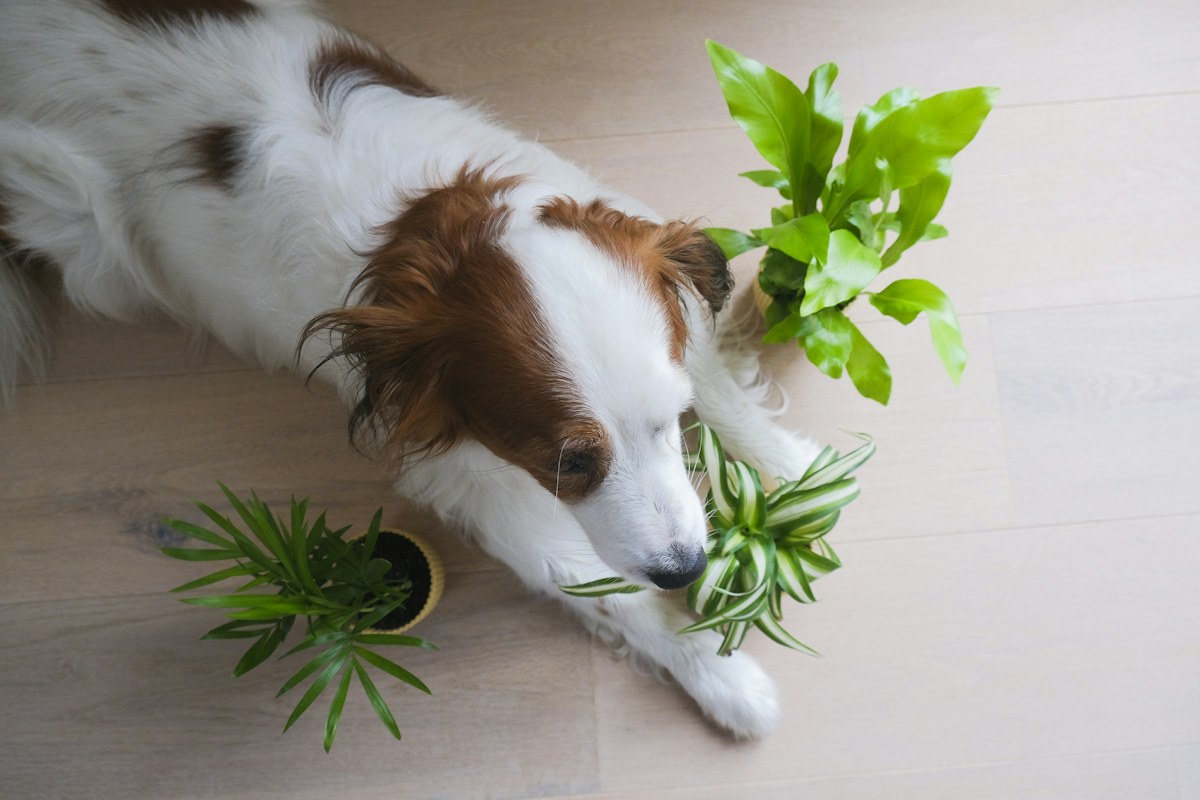
Note which areas need to stay out of reach. Keep dogs away from sharp tools, gardening products, compost and plants or other materials that may be unsafe. Ask your veterinarian or consult an authoritative reference for any plant you cannot identify as safe, and prevent access in the meantime. Secure gates and check the perimeter after moving anything that had been standing near the fence. A shifted bench or planter can give a dog access to a gap or a higher place than they could reach before. Look from the floor as well as from where you usually stand.
Keep two surfaces available if you have them
A yard with a firm path and a patch of grass lets the dog choose different footing and different places to look. Keep the edge between the two easy to cross. Remove obstacles such as loose hoses, pointed stakes and wobbly stepping stones from the route. If a surface is hot, slick or uneven, choose another one. Let a dog with limited mobility keep using the parts of the yard they can manage comfortably. If their movement has changed, ask your veterinarian what is appropriate before giving them new surfaces to navigate.
Avoid adding material simply to create variety. A new patch of gravel can hold heat or scatter onto another route. A decorative planting strip may contain mulch or small items that an animal wants to chew. Start by clearing an existing route and see whether the dog uses it. If the dog regularly detours at the same point, take a closer look at that surface. A low step, a patch that stays wet or a hard edge against the paw can be more relevant than what is visible from the door.
For a small paved yard, keep the easy route open and use the space around stable objects to make it possible to turn. A broad chair at the edge of the yard may give you a place to sit while the dog looks around. Leave enough clearance that a dog can pass without brushing against the legs or encountering a loose cushion. If the chair folds, put it away safely when it is not in use. A yard can offer several positions to stand and sniff without becoming cluttered. Keep the useful edges and let the remaining surface stay open.
Create somewhere to pause away from the gate
A dog may spend a lot of the time at a gate if it is the only place with a view. If movement outside the fence keeps the dog tense, give them a quieter place to pause with a view of the house. Set it where they can approach without coming close to traffic or a gap in the fence. Check that it offers comfortable conditions at the hours you usually go outside. Shade, fresh water when appropriate and a clear way indoors are more useful than a fixed place to lie down at all times.
Sit or stand nearby for the first few quiet visits. Let the dog find the new route while you are there. Give them time to stop and sniff, and call them away from anything they should avoid. If they return to the door after only a minute, let them go in. An animal who has seen the whole yard before may need very little time to decide where they want to be. If they use the new pause point while you sit nearby, you can return to it without taking a toy or food outside each time.
Watch the movement from a pause back to the doorway. A dog who rushes there may be reacting to the sound of the door or trying to avoid a bottleneck. Leave room around the step and make sure the return is clear before inviting them to come in. If several people use the yard, decide who checks the door and gate when the dog is outside. Make the routine simple enough that a person can do it while carrying things. Each visit should leave you with an easy way to bring the dog inside.
Change one familiar detail at a time
You can open a second route by moving a container or clearing away a hose. Give the dog a few ordinary days to investigate before changing the rest of the yard. If they find the new path and still spend most of the time on the old one, the additional path may be useful on some days and unnecessary on others. Pay attention when something changes, such as the return of a bin to the pavement or a person sitting in a different chair. A choice is useful even if it isn't used on every visit.
If you put any object outside for the dog to investigate, check it before and after use and choose something appropriate for their habits. A familiar durable toy can be taken out for a short supervised game and returned indoors. Keep small, sharp or loose pieces out of reach. You can also make an ordinary visit interesting by sitting in a different safe part of the yard, without adding an object at all. Let the dog decide whether to come over or take the other route. The test is whether the space gives them an easy decision, not whether it keeps them occupied for a particular amount of time.
A new arrangement may change with the weather. After rain, a path can become slippery, and a container that usually stands firmly may move. In warm conditions, look at where shade is actually falling and shorten the visit if necessary. Keep the yard clear of debris after garden work and check any changes in the fence. A useful route can be closed for a day while you deal with a problem. The dog should have a straightforward way to use the remaining space or come back indoors.
Keep the small loop easy to maintain
After the yard has had ordinary use for a week, look at which items tend to get moved back onto the route. If the hose keeps crossing the same place, store it where you can reach it without leaving it underfoot. If the bins have nowhere else to go, leave more space on the other side and keep that route available. The easiest adjustment is the one that stays in place during normal gardening and rubbish collection. Take a picture of the clear floor if it will help you reset the yard after a change.
The small yard may still have one familiar corner and the same old patch of grass. What has changed is the space between them. Your dog can stop near you, step off the path when it is clear and return to the door by a route you can see. On a quiet afternoon that can be enough. The dog has a few ordinary choices, and you can supervise without steering every step.