Wait until people are settled
A visitor does not need to greet a dog in the first few seconds inside a home. The hallway may be crowded, the visitor may still be taking off a coat, and the dog may be trying to see where everyone is going. Wait until the guest is seated in a room with enough open floor. A person seated sideways to the dog can be easier to approach than a person standing between the dog and the only door. Leave a clear route past the chair so the dog can go somewhere else.
Choose a spot where the dog's usual activities can continue. If the dog normally lies near the window, leave that place available rather than asking it to sit beside the visitor. The visitor can carry on talking to you. The dog can look from its resting place and move closer if it wants. There is no need to turn the entire room's attention toward it when it takes the first step. The dog should also have an option away from the conversation if voices or movement make it difficult to settle.
If the dog cannot stay relaxed while people are moving through the room, use a separate space it already knows. Prepare its resting place and water as usual, and keep the entrance clear. The decision to use a separate room can happen before guests arrive. Once the visit is underway, consider whether the household has enough room and attention to offer a quiet meeting. A gathering with several people moving at once may be a poor time to try one.
Think about whether the visitor will be using a cane, a large bag or another item that changes the space beside the chair. Give that item a place to rest while the person gets settled. If the visitor needs to stand up often, leave more room around the seat so the dog can see the movement and step away before feet come forward.
Give the visitor a simple way to wait
Ask your visitor to keep their hands close to their own body while the dog approaches. They do not need to lean over the dog, reach toward its face or hold out a hand for it to sniff. Let the dog investigate the floor, the chair or the general area without requiring any contact. If it takes one look and moves away, let it go. Being curious about a person and wanting to be touched are separate things.
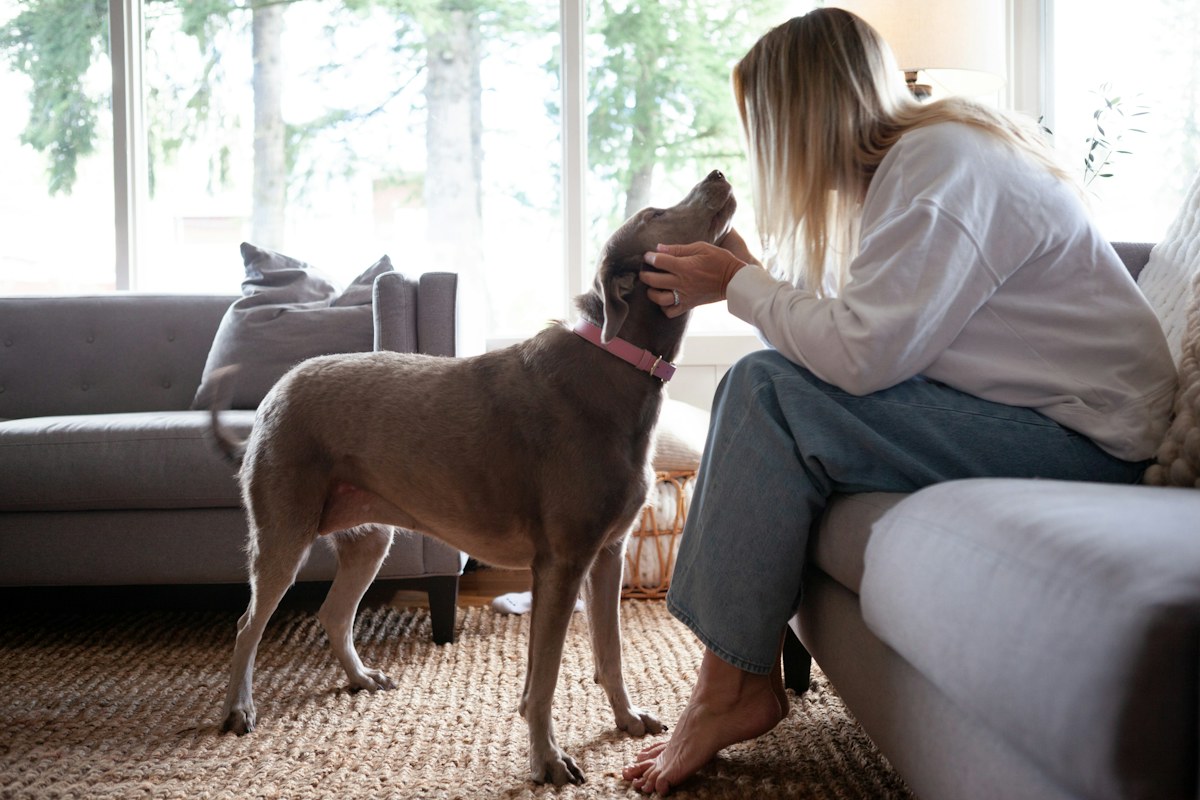
Tell the visitor where the dog is comfortable being touched, if you already know. A brief touch at the side of the shoulder can be easier for a dog to see than a hand coming down over its head. Touch should happen only if the dog remains comfortable and appears to be seeking it. Avoid reaching across the dog or putting an arm around it. Keep one side open so it can leave without going through the space between a person and the chair.
It can help to show the visitor how short a first greeting can be. One brief stroke can be followed by a pause with the visitor's hand back in their lap. If the dog moves away, continue the conversation. If it comes back and appears comfortable, another brief touch may be fine. An extended petting session makes it harder to tell when a dog would have chosen to leave. Pauses make the dog's next movement easier to notice.
Watch what happens when contact stops
Some dogs move a little closer when a hand goes away. Another may lean briefly and then turn toward the doorway. Look at the whole animal rather than reading one movement by itself. A loose stance and a dog returning on its own are useful clues. A dog that turns its head, moves its weight away, grows still or keeps trying to make more space should be given that space. If you are unsure, stop touching and let the dog choose what to do next.
Keep the visitor from following if the dog steps away. A person may mean well when they reach for the dog after it has moved just beyond their hand, but the dog has already made a small change to create distance. Let it pass the chair and return to its regular place. If it approaches someone else, the first visitor can remain seated. The dog can make a separate choice about each person in the room.
If a visitor brings food, decide whether it belongs in the greeting. A dog may move toward food even while it is uneasy about getting closer to a person. Avoid using treats to draw a hesitant dog within touching distance. If an appropriate reward is part of a plan the dog already knows, offer it with room to move away. Put food aside when several pets are close or when a dog tends to guard it. The visitor does not need to be holding something for the dog to have a chance to investigate.
A dog may choose to greet again much later in the visit. Let the visitor use the same pause after a brief touch even if the first exchange went well.
Set up the furniture so a dog can leave
Look at what sits between the chair and the dog's nearest clear route. A footstool can change an open path into a gap beside someone's legs. A table that looks far enough from the chair may make it hard for a larger dog to turn. Move the item before the visitor sits down. If you cannot leave a comfortable gap around the chair, choose a different seat or let the dog spend the visit in another room.
If the dog uses a mat, place it where nobody has to reach over it to get to a lamp or bag. People should be able to stand up without stepping directly toward a resting dog. A quiet route to a second resting place helps if the room becomes busier. Before a group visit, check where coats, bags and children's toys will end up. They can occupy the floor space you were relying on even if nobody places them there deliberately.
Make a separate plan for small children. Have an adult supervise any interaction and keep the child from leaning across, hugging or following the dog. A child can be part of the same room without touching the dog. Give both a separate activity when the floor is too busy. If an adult cannot stay close enough to supervise, use secure separation appropriate for the dog and the home. The dog should have a place where it can rest without being approached.
Choose a response if the room gets too busy
A dog that greeted one seated guest calmly may have difficulty when another person arrives and everyone stands up. Give it the option to leave. If several people are expected, choose one person to keep an eye on the dog while someone else handles doors and bags. Use the separate resting area when the amount of movement exceeds what the dog can manage comfortably. A pause in the visit can be a better time to look at how the room is arranged.
Avoid trying a greeting when a dog is stiff, growling, hiding from a person or unable to move away. Do not ask a guest to keep approaching to see whether the dog changes its mind. Give the dog safe distance and use a secure barrier or separate room if needed. If it has a history of threatening behavior, biting or persistent fear around people, get help from a qualified professional who can assess the individual situation. Household visitors are there for a visit. They do not need to take on a difficult training exercise.
When someone does not want to interact with a dog, arrange the room accordingly. A visitor can sit behind a suitable barrier or visit while the dog is settled in its own space. Ask before assuming the visitor is comfortable with a dog investigating their chair. A clear arrangement leaves less room for a person to push the dog away abruptly because they felt unable to move. Everyone can spend time in the home without having to greet.
Keep the easy version for the next visit
Think back to the moment the visitor stopped touching the dog. Did the dog stay, move away or find another resting place? Was the path out still clear when someone stood up? These are more useful details than how long the visitor was able to pet it. If the dog moved away and settled, keep that option available next time. If it followed the visitor from chair to chair without being able to rest, make the visit shorter or set up more distance.
A quiet greeting can be as brief as a dog walking past a chair, taking a look and continuing into the next room. It can also include a couple of short strokes when the dog is comfortable. In either case the visitor knows what to do, the dog can leave, and nobody has to crowd the hallway to make an introduction. Keep the arrangement that fits the dog and the people in the room that day.