The best position for a cardboard box may be where you were going to put it temporarily. A spot beside a bookcase gives it a solid edge and a view across the room. An empty corner behind a pile of laundry may look quieter to a person but offer a poor way out. Before cutting windows or decorating the cardboard, look at the box from the doorway your cat actually uses. It helps to know where a cat could see you coming and which way it could leave.
A box can be a short-lived part of a room. That is one of its advantages. You can try it in a new place without installing shelves or committing to a large piece of furniture. It will eventually get damp, bent or torn. If the cat never uses it, it can go straight into the recycling. Keep one or two changes in mind and decide what you want to learn from each.
Pick the plain box from the pile
Start with dry cardboard that smells neutral. A clean shipping box that held paper or linens makes a better candidate than a carton that held cleaners, oily food or a leaking container. Remove tape, loose labels, plastic handles, staples and packing materials. If tape peels the cardboard into strands, discard that part. A flap with loose strings at its edge will be difficult to keep tidy even if you trim it once. The box needs to sit flat with sides firm enough to stand by themselves.
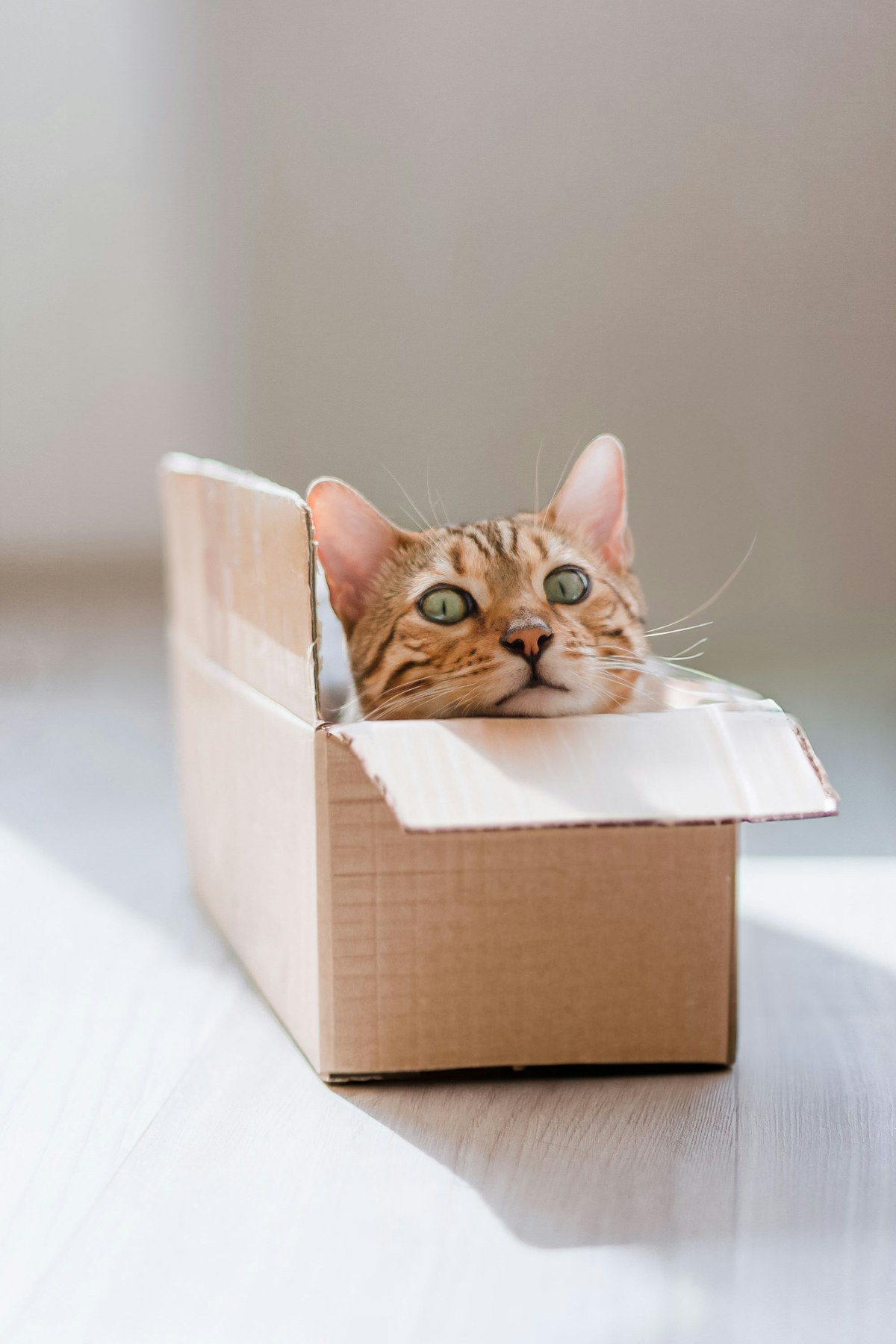
Place the box on its side so an opening faces the room. A cat should be able to step through and turn comfortably. A tall box with the only opening on top can tip or be hard to climb out of, especially for a cat that moves carefully. If the opening is already low and broad, try that before cutting a new one. A low lip can help hold a small cloth in place, but a taller lip may be awkward in the first version. Try pressing the floor of the box gently in different places. If the box shifts or a side begins to fold, pick another box.
You can trim the loose flaps with scissors before you put the box out. Take the cardboard to a surface where you can work with the cat elsewhere. Smooth the edge, sweep up the offcuts and check the floor for any plastic that came loose. If the cat chews or swallows cardboard, remove the box and choose a suitable ready-made resting place. A used box is an experiment, and you can end it whenever the material starts to be a problem.
Find a place with a view and a way out
Set it a little outside the path between the busiest points in the room. For example, a box beside the arm of a sofa might give the cat a view across the living room. The strip between the sofa and the only doorway may be a poor choice if people need to step over the box. Put it somewhere you can leave it for several days. Temporary spots beside the recycling bin, under the dining chair in daily use or near the vacuum's parking place tend to move before you learn anything from them.
Check the location when the room is in use. Can someone sit on the sofa without putting their feet in front of the opening? Can your cat step out if somebody reaches for a book on the adjacent shelf? Keep the box away from heating equipment, doors that can swing into it and anything that can spill. If the floor is slick, try a secure rug underneath rather than fastening the cardboard with exposed tape. A stable box also gives a cat a clear choice about whether to enter, without a shifting floor changing the decision.
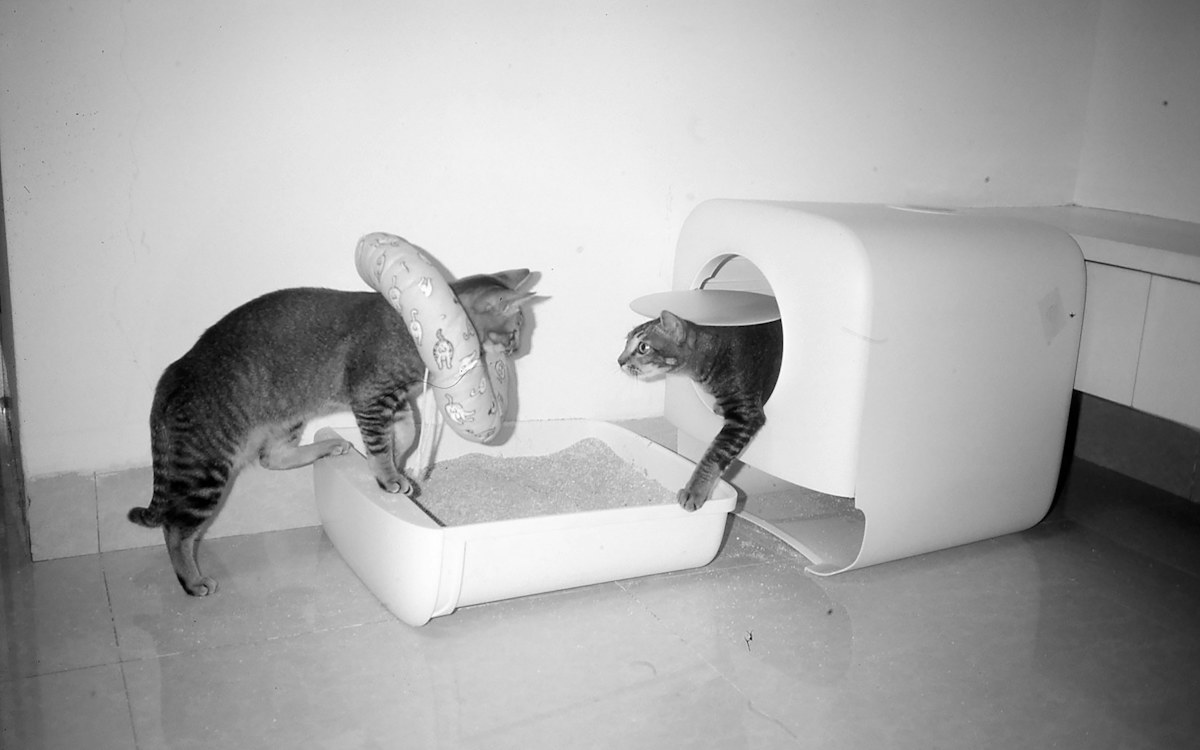
In a home with another animal, an opening may become a chokepoint. A cat can sit inside a box even if the other pet has parked themselves outside it. Pay attention to the approach and departure as well as to the time spent resting. A location beside a clear exit route may be preferable to the recess between a cabinet and a wall. If you add a second opening, keep the sides strong and make sure both openings have usable space beyond them. A hole facing a wall will let in light without giving anyone another route.
Leave the first visit up to the cat
Once the box is ready, let the cat investigate as part of an ordinary day. The same applies when a visitor is around. Putting a cat in the box or pointing someone over to see them in it can make the box part of an interaction they did not choose. You can set a small familiar cloth inside, as long as it lies flat and has no loose threads. It is reasonable to try the bare cardboard first, particularly if the cat regularly chooses a flat piece of paper over a soft cushion.
The first useful visit may be brief. A cat who puts one foot inside, backs out and returns later has had time to inspect the entrance. They may also sit on the other side of the box. If that spot has a better view or less foot traffic, the cardboard is already changing the room in a way worth noticing. Wait a few days before deciding the original setup was a failure. The cat may try it when people have gone to bed, when the light moves off a neighboring chair or when a quieter person is home.
A toy can make the box interesting, but it can also obscure what the cat likes about it. If you want a resting place, keep play separate for the first few days. Avoid leaving string or elastic in or around the box. If the aim changes and you use a wand toy nearby, put it away after the game. Give the cat a clear path back out when play stops. A rest spot can be near the part of a room used for play while still having a little room around its opening.
Make one change when the room gives you a reason
If the cat looks into the box several times and walks away, consider what they do immediately after. If they go to a chair facing the opposite direction, rotate the box a little so the opening gives a similar view. If they head for a window, try a stable spot closer to the light, without leaving the box in a place that gets hot. If another pet comes straight over whenever the cat investigates, move it to a quieter room rather than adding an elaborate cover. Make one change and leave it long enough to see what happens.
Household timing can matter more than the box. A corner by a hallway may feel secluded in the morning and crowded after dinner. A washing machine down the hall can change the sound of an otherwise quiet place. Try walking toward the box while someone else moves around the room. See how quickly a path that looked open narrows when a person drops a shopping bag or pulls out a chair. Keep the access predictable during the hours when the cat is most likely to use it.
If the box is used every day, keep it accessible while you clean around it. When you eventually replace it, set the fresh box beside the old one if there is enough space. Give the cat a chance to approach it on their own. A slightly wider opening or different floor texture may matter more than you expect. If the cardboard is soiled, wet or unstable, remove it promptly. A clean, safe resting place nearby can be available while you find a suitable replacement.
Let the box tell you what to keep
The easiest clue to carry forward is the location. A cat who regularly faces the door from a box by the sofa might use a low bed in the same spot. A cat who prefers the cardboard beside the window may be choosing a sight line, a warm patch at a certain hour or a place where people pass without reaching toward them. Observe whether the location remains popular when the box is removed, then decide whether anything permanent is worth adding.
In a small home you may only have one good area with room to spare. In that case, a box that fits underneath the edge of a bench without wedging the cat against a wall can be enough. Ask other people in the home to leave the opening clear when they put bags down. If one person needs to use the bench to get ready for work, check that the box will still have a quiet period after the hallway clears. The arrangement works best when the people in the room can forget about it without blocking it.
A box that stays empty can still reveal a preference. Take it away and watch where the cat goes during the same part of the day. If the next stop is always the chair next to you, the cat may have a perfectly good place already. There is room for a cardboard hideout when the cat has a reason to return to it and everyone else can walk past it. Once those two conditions are met, a delivery box does its job with very little attention.