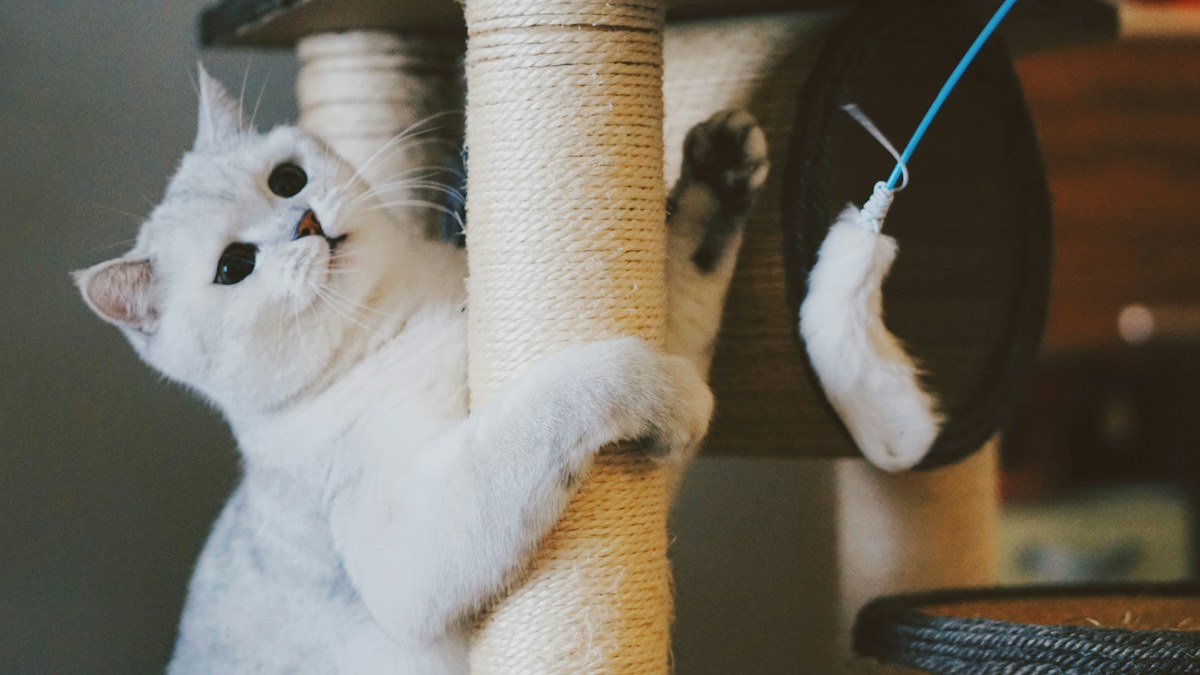
A cat tree can have four levels and still offer only one usable seat. One cat may sit at the first step while another waits on the floor. They may look perfectly quiet when you pass the room. The difficulty is visible only when the second cat starts up, finds the only route occupied and turns back. Count the routes as well as the perches. A tree with a clear approach and useful places at different heights may work better than one tall structure with the same narrow column serving everybody.
This is a guide to arranging a room around a suitable cat tree, not to asking cats to share at close quarters. Keep individual resting places and other resources available in separate areas. If one cat regularly chases or blocks the other, or if either cat changes their usual eating, toileting or resting habits, ask a veterinarian or qualified feline behavior professional about the situation. A change in furniture can give both animals more choices while you work out what else they need.
Watch the lower level during a normal afternoon
Notice where each cat comes into the room. One may walk along the wall while the other comes straight from the sofa. Watch where they stop to look at the tree and whether they can see the first platform clearly. The first step may be technically open while one cat is resting beside it. If the other approaches slowly and consistently turns away at that point, observe whether they use the tree at another time. A resting cat can have an effect on the route without doing anything that looks like a confrontation.
Look at what happens in both directions. A cat on the top level might come down using an intermediate shelf, then step onto the seat of a chair. If the chair has been pulled out, the route may change. Another cat may be able to climb past the first step but not have a comfortable place to land after coming down. Do not lift either cat onto a platform to demonstrate the route. Make a note of where they go voluntarily and leave the option to return to the floor clear.
Time of day can explain part of the pattern. A cat who gets an uninterrupted turn in the morning may never have the same opportunity when the room is occupied after work. A dog resting near the tree or a person sitting close to the base can change access. Check the layout when the room is busy as well as when it is quiet. The useful arrangement is one that gives both cats somewhere to go on an ordinary evening, when nobody is adjusting the room specifically for them.
Place the tree where the floor around it stays useful
Choose a suitable product and follow the manufacturer's instructions for assembly, stability, anchoring and use. If you cannot confirm the floor or wall is suitable for the required fittings, consult a qualified installer. Never assume a structure is stable because it feels steady while empty. Check the position and condition according to the directions before letting the cats use it. Keep it away from accessible cords, unstable objects, open windows and other hazards. A tall structure can change what a cat can reach elsewhere in the room.
Look for a place with room at more than one side of the base. A tree wedged into a narrow corner can save floor space but leave the cats only one opening. A small shift along the wall may let one animal approach while another leaves. Use a location that permits the installation the manufacturer requires. If a door swings across the only open side, find a better position. If a couch arm is part of the approach, check how often someone sits there or puts a bag beside it. The approach needs to work even when the room is used normally.
Take an ordinary walk through the proposed area. The tree should not force people to turn sideways at a doorway or walk underneath a platform while carrying something hot. Leave an open surface where a cat can step down without arriving directly in front of somebody's feet. If you can't make the floor around the tree usable, look for another room or choose an appropriate smaller structure. It is possible to provide useful vertical space without making the largest object in the room the only attractive place to go.
Give the second cat somewhere worth choosing
An additional resting spot works best if the cat can get to it from a different direction. A stable low platform, a suitable cat bed or another appropriate piece of pet furniture in a separate part of the room may be enough. Observe what the second cat normally prefers. They may use the arm of a sofa to watch the doorway, or settle on a low surface in the quietest corner. Keep a comfortable version of that spot available even when the other cat is on the tree. You can compare the choices without expecting both animals to sleep at the same height.
Consider whether the two places offer different views. If the tree overlooks the busiest part of the room and the second bed faces a wall, the alternative may be less appealing to a cat who likes to observe. Move the bed so it has a clear view without occupying the exit from the tree. If one cat likes to rest out of sight, give them a spot partly sheltered by a stable piece of furniture with an easy way out. Provide more than one option for each part of the day, especially if you know that sunlight, heat or household traffic changes substantially.
Keep other resources from concentrating around the base. A food bowl or a favorite toy can draw one animal to the same spot another cat needs to pass. Locate essentials in suitable separate areas. Choose different times or places for interactive play, so the tree remains a place a cat can use even when the other is active. An alternate bed close to a bottleneck may create the same problem you were trying to solve. The best position often makes a different part of the room useful.
Observe what changes after the first week
Let the cats approach on their own while you use the room as usual. Look at the tree from the doorway, from your usual chair and from somewhere you can see the approach without standing in it. If both cats are comfortable, they may use it at different times. There is no need to see them on it together. A useful observation is that each can make a choice about where to rest without waiting for the other to move. Also notice whether a cat hesitates at a particular height or position when the other is nowhere nearby. That may point to a problem with the structure or its location.
If a chair or bin shifts during the week, check the routes again. A simple floor marking or a photograph can help you remember where to leave a stable piece of furniture that the cats use for access. Keep the tree's surface clean and check it for wear as directed. If you find a loose part, damaged covering or unexpected movement, prevent access until the problem is resolved. Let the cats use their other resting choices while you work. A familiar elevated route should not be relied on after its condition changes.
If one cat stays by the base, see what they are doing there. They may be resting away from the busiest part of the room or watching a doorway beyond it. Offer a second spot where they can do that without being in the other cat's path. Compare use after the change. You may learn that the attractive place was a patch of floor beside the tree rather than the tree itself. Freeing that floor can be more useful than bringing in another tall piece of furniture.
Keep the room useful even when the tree is occupied
Test the arrangement on a day when people are using the room as they usually do. Can each cat approach a place to rest from a clear direction? Can they step down without coming close to the other cat or a busy chair? Can you clean around both places and put everything back? If one of these actions is difficult, solve that part first. Move a movable item out of the way or adjust the use of the room while following the equipment directions. If the tree stays busy at the same time each evening, make both resting spots available before people sit down and the floor fills up. Preserve the routes that already work.
A good shared room may end up with a tall tree and a low bed, or a tree that one cat uses often and another uses rarely. What matters is whether each animal can leave a place, reach another and settle without having to negotiate the same narrow opening every time. Clear space around the furniture is part of what makes those choices possible. Once both cats have somewhere they can reach easily, you can let their ordinary habits tell you how much sharing they actually want.