The first step may be the last thing your dog is thinking about. At the bottom of the stairs there might be a person carrying a basket, a loose runner and a door that opens across the spot where the dog has to turn. Any one of those details can make a familiar route awkward. Before changing the stair itself, look at what happens on the flat floor immediately above and below it. There may be enough room to make the approach clearer without asking the dog to use the stairs any differently.
This is a way to inspect the household setup, not a test of whether a particular dog should climb. If your dog has a new reluctance to use stairs, appears painful or unsteady, or is recovering from an injury, keep them away from the stairs as needed and consult your veterinarian. Ask how to arrange the home around their current mobility. It can be more useful to put essential resources on one floor than to try to fix a route the dog should avoid. The rest of the room should still work while you wait for guidance.
Look at both approaches from the floor
Stand at the bottom without using the stair and look at the distance between the first step and the nearest obstacle. A small dog may have room to stand and still need more space to turn. A larger dog may approach at an angle if a cabinet or an open door occupies the straight path. Move the basket or other portable object that takes up that space and leave it somewhere people can use it without bringing it back. If the landing is already empty, check the neighboring room. A chair pulled out from a table can cut off an approach the landing itself seems to have.
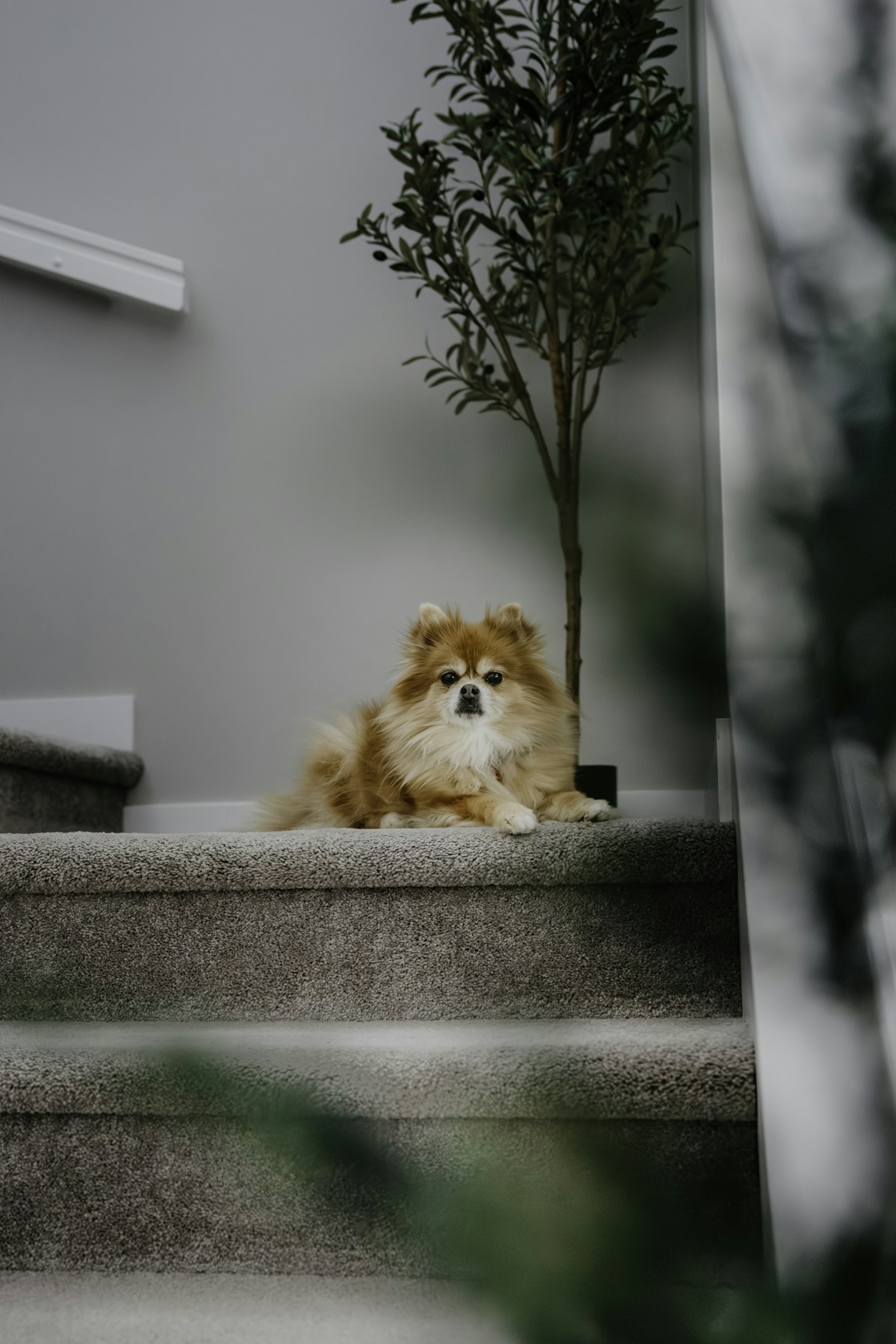
At the top, look for a place where the dog can step off and come to a stop. One edge of a mat may be loose, or a closed door may limit how far they can walk after the final step. See what happens when somebody comes down the hallway from the other direction. They should not have to stand on the first stair to let the dog pass. If the dog has a habit of waiting at the top, give them an open part of the floor for that pause. A toy basket or shoe rack might fit there on paper and still interfere with where the dog naturally stops.
Light can be different at the two ends. A window that keeps the lower hall bright can leave the top stair in shadow. At night the person who knows the house may find the light switch by habit. Notice what light is available before anybody starts moving. Put a lamp where it can be used without a cable across the route, or arrange for the hall light to be switched on before the busiest part of the evening. Keep glare and strong shadows in mind. The point is to see the landing and its edges clearly from either direction.
Fix the flat surface before changing the stairs
A rug that slides on the landing can make the transition harder for both people and dogs. Test it under ordinary foot pressure and remove it if it will not stay in place. A low profile mat with a backing suitable for your floor may work. Check that it lies flat, that a door clears it and that its edge will not curl. A mat that shifts after cleaning needs to be reset before the hallway is in use. Try walking on it in the shoes you wear most often and check the approach when the floor is dry and after people come in from outside.
For worn or slippery stair treads, get advice appropriate to the material and the design of the staircase. A loose offcut or towel is unsuitable as a temporary tread. Any covering has to be designed for the purpose and secured according to its instructions. Keep the stairs clear while you decide how to handle them. If other people live with you, share what you found and agree on where shoes and bags can go. A container set one step away from the approach may reduce the number of things that drift into it each afternoon.
Notice the change between surfaces. A glossy floor just after a carpeted stair might be where the dog hesitates. An unfinished edge where two materials meet can catch a nail or a person's shoe. If the transition looks damaged or unstable, have it assessed and keep the area out of use until it is safe. An intact runner can still have a frayed edge that is easily missed when you walk through the hall quickly. Checking from both sides of the landing makes small maintenance problems visible.
Change who uses the landing at the same time
If the staircase is a bottleneck, think about the busiest trips of the day. The dog may follow a person carrying laundry, pass somebody coming the other way and try to get around a child who has stopped to talk. Each encounter is brief, but in a narrow place there is little room to wait. Set one simple household habit, such as carrying laundry when the dog is settled in another room or checking the landing before calling the dog from a different floor. You want the change to be easy to repeat on days when no one is thinking about the stairs.
A dog who rushes to follow people can be given something to do on the flat floor, away from the edge. Practice an already familiar cue in an open part of the room, with the stairs inaccessible. If they are comfortable resting on a bed or mat while somebody walks past, place that resting area well back from the route. Keep the practice short. The bed should remain a place the dog chooses to use. If the dog becomes anxious when a person leaves the floor, a qualified behavior professional can help you make a plan that fits the dog.
In a home with several pets, check whether one animal uses the landing as a lookout and another has to pass close to get downstairs. They may seem calm while both are still, then move suddenly when a person appears. Provide a resting place away from the top step so the landing stays available for moving through. A cat who sits at the edge may already have another view from a nearby stable seat. You can keep that seat accessible and leave the hallway clear without asking the animals to sort out the traffic themselves.
Plan a comfortable routine on one floor
If access has to be limited, choose a barrier suited to the location and install it exactly as directed. A gate at the top of stairs needs to be designed and installed for that application. Avoid using a barrier that somebody has to step over while carrying things. Check how people will open it and where the dog can wait while they do. Make sure a barrier does not leave the dog trapped on the stair side. A closed room with all the resources the dog needs may be easier to manage during a temporary change.
Move ordinary essentials to the accessible level. That can include a water bowl, a resting place and the door used for regular outings. Keep these resources clear of the stair entrance so the dog does not have to approach the barrier to reach them. If the household spends much of the evening elsewhere, consider moving a chair or changing where you spend part of that time. The one-floor setup becomes more useful when it includes some of the company the dog normally has. Give the routine a chance to work before moving everything at once.
If more than one person handles the dog's care, keep the plan visible. It may be enough to say which door should stay closed, where water is available and who will check the gate after bringing in groceries. A temporary plan can fail because it relies on people guessing what someone else did. Walk through the most common trips together. If a choice makes an essential movement awkward, make a different choice now rather than waiting for the first hurried morning to find it.
Watch for the details that come back
After several normal days, inspect both landings again. A rug that stays flat in the morning may bunch after somebody brings a cart past it. A corner you cleared may collect bags when guests visit. If one item keeps coming back, give it a reachable place of its own outside the approach. Leave a path wide enough that somebody can use it with a hand full. The adjustment works when people can maintain it as part of their usual movements.
A well arranged landing is quiet in the practical sense. The flat floor is visible, a door can open without sweeping across the approach, and there is a place to pause away from the edge. When the route is suitable for the dog, those details make everyday use simpler. When it isn't, the same inspection helps you put together a better day on the accessible floor. Either way, the stairs stop being the place where several small household problems meet.