Watch the room at two different times
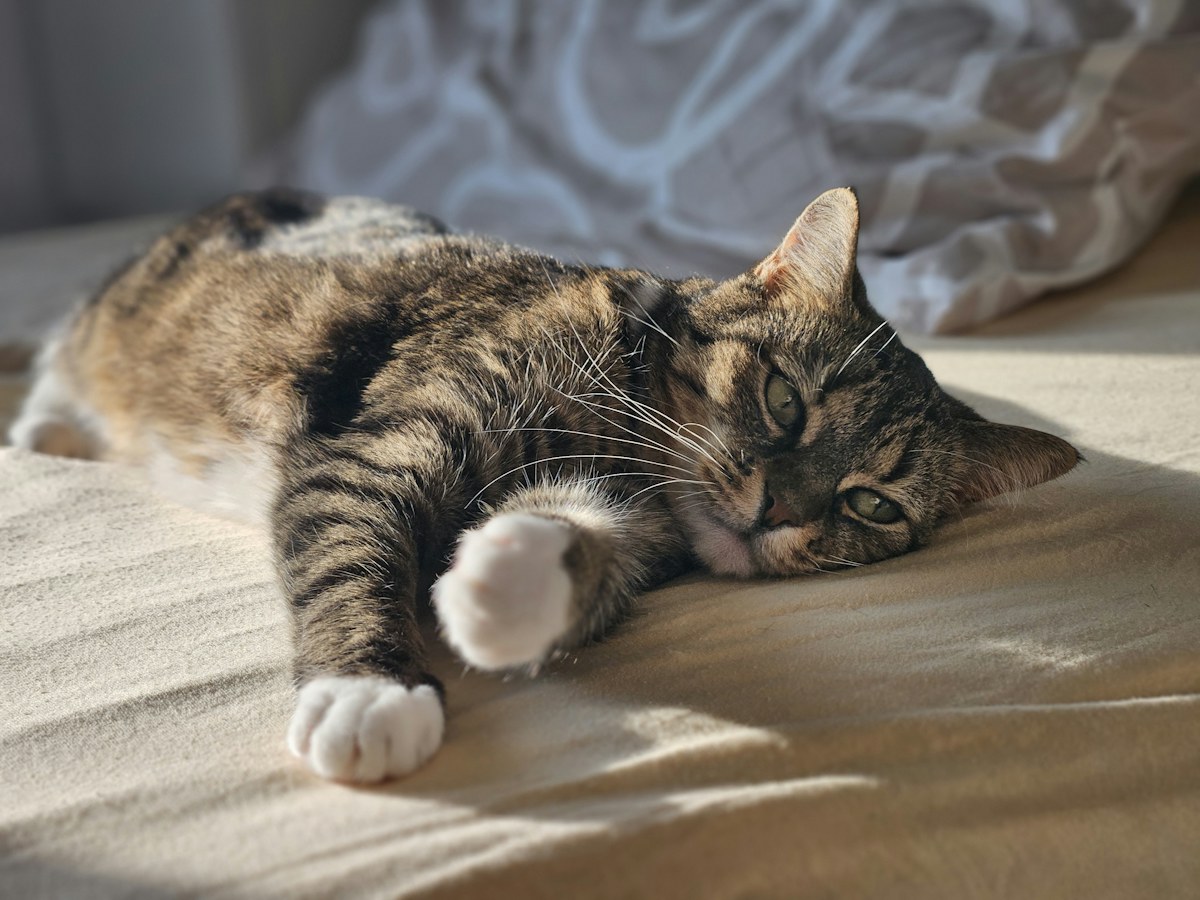
A patch of sun on the floor can look like an obvious place for a cat bed. It is bright at breakfast and nowhere near the same place by lunchtime. The cat may follow it across the room, settle on the edge of a cushion or move to another surface once the window gets warm. Watch where the light starts and where it ends on an ordinary clear day. Look again when curtains are drawn to cut glare or a chair is pulled closer to a table. The useful places for a cat to rest are the ones that remain safe and accessible as the room changes.
Notice where the cat rests at the edges of the patch. It may put only its front feet in the light or stay in the shade with its face turned toward the window. Set any bed near the light rather than positioning it so the whole surface stays in direct sun. A cat that can move a few inches from light to shade can adjust the resting spot without leaving the room. You can also leave the existing floor clear and put the bed in a quieter place. The way the cat already uses the room is a better starting point than the center of the brightest patch.
Check at cat height. A spot beside a low window may feel warm and still from your seat but have a draft along the floor. A floor vent may blow directly across the edge of a mat. The spot next to it can be much more comfortable. Move the bed or chair only as far as it takes to get out of the draft or direct airflow. Then watch where the cat chooses to rest.
Give the cat a cooler route out
Keep the path from the sunny area to a shaded place clear. If a cat rests on a cushion by the wall, it should be able to step off without meeting the edge of a table or squeezing behind someone sitting nearby. A folded stroller, bag or laundry basket can block a path without changing the view from the sofa. Move anything that regularly lands in the same spot. If that floor space is needed for storage, choose another resting place that offers a wider approach.
The cooler choice can be simple. A clear patch of floor behind a chair may be enough for a cat that often lies on a smooth surface. A bed under a sturdy table can work when the cat can use more than one side to come and go. In a larger room, give it a familiar place on the opposite side. Avoid setting the cool and sunny options so close to a heater that both feel warm whenever it comes on. If curtains change the airflow in the room, check the options with them open and shut.
Put fresh water somewhere easy to reach without crossing a cluttered corner. It can stay at the cat's usual water station if the route is clear. A bowl by the sunny window may become warm or collect bits from a nearby plant. Move it to a stable, shaded spot if that is what keeps it easier to check and refill. A room with a useful resting place also gives the cat the option to leave for other parts of its ordinary routine.
Use light control that leaves the floor clear
A sheer curtain can reduce brightness without changing the whole room. Check what it does at the time the sun is strongest. Some curtains move in a breeze and fall across the place where the cat lies. Adjust the furniture or choose a shorter curtain if fabric reaches the bed. Keep cords and loops secured safely out of reach. When the window is closed, make sure its latch holds. Use ventilation only when the window or opening can be managed safely for the cat.
In a room with blinds, try using the angle to send light toward the top of a wall instead of across the floor. Stand at the places people sit to see whether the change still helps them read or work. At the same time, look at where the cat's shaded option falls. A brighter room can still offer a cooler spot along a side wall or behind a low piece of furniture. The best adjustment is one the household is willing to keep using during the bright part of the day.
If you move a chair near the window, keep enough room for blinds and handles to work without reaching over the cat. A chair used by people may rotate or slide as someone gets up. A fixed cushion at the side of the room is usually simpler if the chair's movement brings it close to a narrow area. Keep fabrics and bedding away from heaters and vents as directed by the equipment manufacturer. A familiar blanket does not belong where it can drape onto a hot surface.
Pick a surface that stays steady as the light moves
A cat can use a thin washable mat if it lies flat and does not shift. Try pressing across the mat with a hand before putting it down. If the entire piece moves easily, look for a stable backing or choose a surface that sits firmly on the floor. Loose fabric that travels with a cat's feet can make the room less predictable. A cover should stay in place when the cat stretches or stands up. Check the corners again after washing, because some fabrics curl as they dry.
In a small sunny room, furniture can cast useful shade under a sturdy bench or beside a cabinet. Keep any narrow retreat away from cables and leave space to see where the cat is when moving the furniture. If the cat rests on a low seat, check its landing space and the material beneath it. A throw that slides when the animal jumps onto it may be more trouble than a simple uncovered cushion. A clear approach matters as much as the texture of the bed.
A home with two cats can provide more than one comfortable resting place without using a matching set of beds. One might prefer the warm patch near the window and the other a quiet chair farther away. Place the options so a cat cannot block the whole route by sitting between them. If both repeatedly wait for the same spot, add a resting place where the light is similar but the approach comes from another direction. A narrow perch with one exit tends to concentrate the choice.
Check what changes when nobody is in the room
Consider how long the sunny room stays open while you are away. If the door tends to swing shut, make sure the cat can use its other ordinary spaces. A room can warm up when nobody is there to adjust a blind. Watch the room once at the warmest part of the day before relying on it. Provide access to cooler areas and water. When the room is excessively warm or you cannot provide those options, close it off while the cat is elsewhere and let it use a more comfortable part of the home.
A change of season can make a once reliable patch quite different. Sun that reaches the floor for an hour in winter may move along another wall in spring. A chair near the window may be ideal while the household reads there and impractical once the room becomes a work space. Leave the arrangement flexible enough to move a mat or adjust a curtain. Recheck the location when you bring in a fan, move a desk or open an entrance that usually stays shut.
If the cat begins leaving a favorite sunny area, notice what else changed first. A nearby appliance may be on at a new time, or the floor may feel warmer than it did a week ago. Try moving the cooler option closer or clearing a route to another room. Seek veterinary advice if the cat shows a concerning change in behavior or comfort. Rearranging a room can help with access and ordinary preferences, while a professional can assess signs you cannot explain.
Keep the pieces that work on an ordinary day
After several days, look at where the cat starts and finishes a rest. A cat may choose the light first and move when a person opens the curtains farther. Another may sleep beside the window until someone comes home, then use the shaded chair. You can keep those options available without setting out a separate piece of equipment for every place. Make the most-used surfaces easy to clean, and keep the transitions between them free of bags and furniture legs.
A sunny room is ready when the cat can use it at its own pace. It can approach the light, step away from heat or glare, reach water and leave by a route that stays open. People can still sit, read or move through the room. If the floor plan meets those conditions, a simple resting surface can be enough. Notice what the cat chooses when the room is quiet, then keep that choice available when the rest of the household comes back.