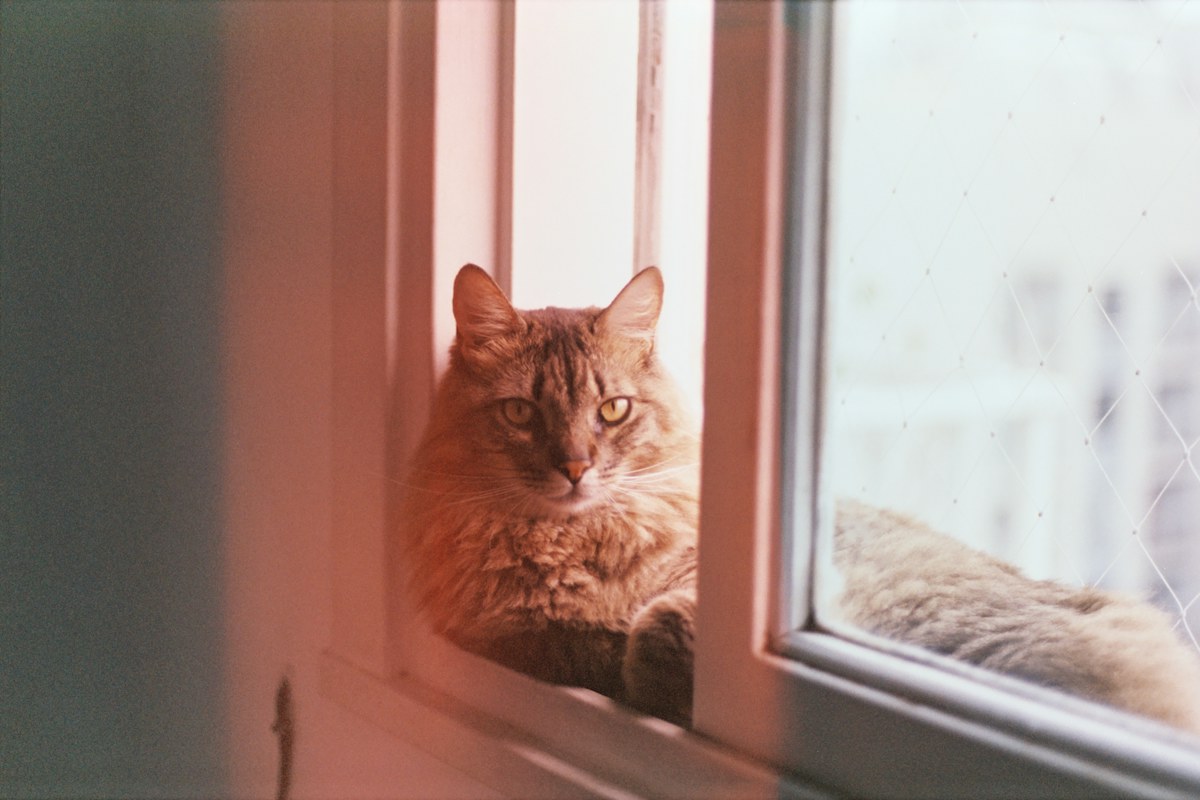
The chair by the window has become a lookout. It may have a line of flattened fabric along the back where the cat sits, or a small bare patch on the seat where the morning sun lands. You might pull the chair away each time you open the curtains and put it back each time you remember where the cat likes to sit. Before buying a perch or moving a table, spend a day looking at how the chair and window are already being used. There may be enough room for a better arrangement within the same few feet of floor.
The first question is where your cat wants to be at this window. A cat watching the pavement may need a little height. One that sleeps on the seat may follow the patch of sunlight instead. A cat standing on the back of a chair to get around a curtain is using the chair as a step. Each behavior gives you a different reason to move something. You can make that change small enough to undo before the room gets rearranged around an assumption.
Follow the route the cat takes
Watch how your cat arrives and how they get down. If they come from a low cabinet and leave by the arm of the chair, keep both routes available while you try the new position. If the only landing place is a narrow sill, consider moving a broad, stable piece of furniture close enough to offer a more generous landing. Moving a chair toward a window is useful only if the legs sit firmly on the floor and the back remains stable when the cat shifts weight. A swivel chair or a light stool that rocks under pressure may be a poor starting point.
Trace the route with the room in its usual state. A cushion pushed against the arm, a bag dropped by the door or a laundry rack that appears after dinner can get in the way. Try clearing the route for several days before adding furniture. The cat may begin to use the easier approach as soon as the path becomes available. In a room where the furniture has to serve two purposes, leave an approach from the side that is least likely to be blocked when people sit down.
A cat who stops at the middle step might be satisfied at that height. That is useful information if your original plan involved a taller spot. Try leaving the view open from the middle step. A low seat with a broad surface may work better than a narrow ledge at eye level. If you have an older cat or one whose ability to jump has changed, avoid making them prove they can reach a perch. A low viewing position with easier access can be a comfortable alternative, and changes in mobility are worth discussing with a veterinarian.
Deal with the window itself first
Check how the window opens, which parts move and whether any gaps are accessible. Treat an ordinary insect screen as a barrier for insects. A cat may press against it, climb it or put weight on a loose corner. Keep the window closed when the cat can reach it unless you have a properly secured barrier suitable for pets and that specific window. Tilt windows and partly open sashes can create narrow gaps where an animal can get caught. If you rely on a particular window for ventilation, make a plan to keep the cat out of the room whenever that window is open.
Look at the shade or blind hardware before setting the seat in place. A cord that hangs out of reach from the floor can be next to the cat once the chair is moved. Follow the window covering manufacturer's guidance to secure cords, and use a cord-free covering where practical. Consider where curtain fabric ends up when it is tied back. A long loop beside a chair can invite a cat to put a paw through it. Keep loose fabric and ties clear of the route and the resting area.
Also check the sill. Move fragile pots, drinking glasses and small pieces of decor that could be knocked down. If plants are in or near the route, verify their suitability for a home with cats. A crowded window may have room for a perch once the belongings shift to a shelf elsewhere. If the sill is too narrow for the cat to settle, use it as a boundary of the setup and let the chair or other stable surface carry the weight.
Set a seat where the view changes slowly
Start by moving the seat a few inches at a time. If the cat looks outdoors from an angle, a slightly different position might bring the useful part of the view into reach. A sidewalk is more interesting when it is visible without leaning around a curtain. A shrub can be visible from the end of the seat even if the glass is high. Test where the view begins with your eyes level with the cat's likely position. It is surprising how often a broad window is obscured by something at exactly that height.
A quiet outlook can be just as usable as a busy one. A cat who spends much of the time sitting still may be following light, shadows or occasional movement. A stream of pedestrians, outdoor cats or dogs may make some cats watch tensely. Look at what happens when the animal or person passes. If your cat can look away and settle, the window may still be a comfortable spot. If they pace the sill, vocalize repeatedly or stay fixed on the same view, give them an easy way to leave and consider covering the lower part of the glass for part of the day.
Keep a second place to lie down in the room, preferably one where your cat can get out of direct sun. After a few days you may find that the window spot is used almost entirely in the morning, or only after the room cools. That is enough to make the setup worthwhile. If the room gets hot or cold near the glass, you can shift the seat a little farther back and still leave a line of sight. A washable cover can make the seat easier to share as long as it sits flat and doesn't slide when the cat lands.
Make it work for the people in the room
Think through the ordinary actions that happen near the window. Can you still draw the curtain without leaning across the cat? Can you open the cupboard or walk past the chair without turning sideways? Is there a safe place for a cup when somebody sits down? A perch that only works while nobody uses the room is likely to get moved each evening. Give both uses a clear path. If you open and close curtains several times a day, a chair a little to the side can give you access to the fabric while preserving much of the view.
In a shared household, decide what the seat is for when someone wants to use it. One option is to leave the corner of a broad seat open and put the cat's cover at the other end. In a narrow room, that can work better than fitting a second chair. It can also be simpler to rotate a table a quarter turn so the daily route passes behind the seat rather than beside it. Make the change with everybody's normal routine in mind. An unobstructed route matters in the morning when someone is walking through the room carrying bags.
If more than one cat uses the same window, observe who approaches when the spot is occupied. Two comfortable routes out can keep one cat from having to pass the other closely. A wide surface may work for cats who already rest together. Cats who use different parts of the room may benefit from two seats or views at different heights with space between them. Watch the transitions as well as the quiet moments. A cat that waits nearby and only takes the spot after the other leaves may need their own useful option elsewhere.
Try it for a full week
Pick one small change and leave it in place long enough to include a few different days. A sunny morning and a cloudy afternoon show different parts of the view. A home with a quiet weekday rhythm may get busier on Saturday. Observe when the seat is used and whether the cat can come and go without needing help. One useful test is whether you can sit nearby and carry on with what you were doing without blocking an approach. The arrangement should feel like part of the room to both of you.
A simple setup has few things to maintain. Brush loose fur from the cover, check that the furniture hasn't shifted, and look at the cords or fastenings after you clean. If you use a manufactured perch, follow the maker's installation instructions and load limits, and inspect its attachment regularly. Furniture can still be the most practical option if you are renting, have a window with a tricky frame or need to change the room frequently. The seat should remain stable after you move it back.
After a week, keep what worked. You may find the old chair was already in a good place and needed only a cleared arm and a different curtain position. You may discover that a lower seat lets the cat watch longer because there is room to turn around and lie down. If the new spot stays unused, restore the room and observe a different window before buying anything. A good lookout earns its space by being easy to approach, pleasant to spend time in and easy to leave. The cat gets to decide whether the view is worth a return visit.