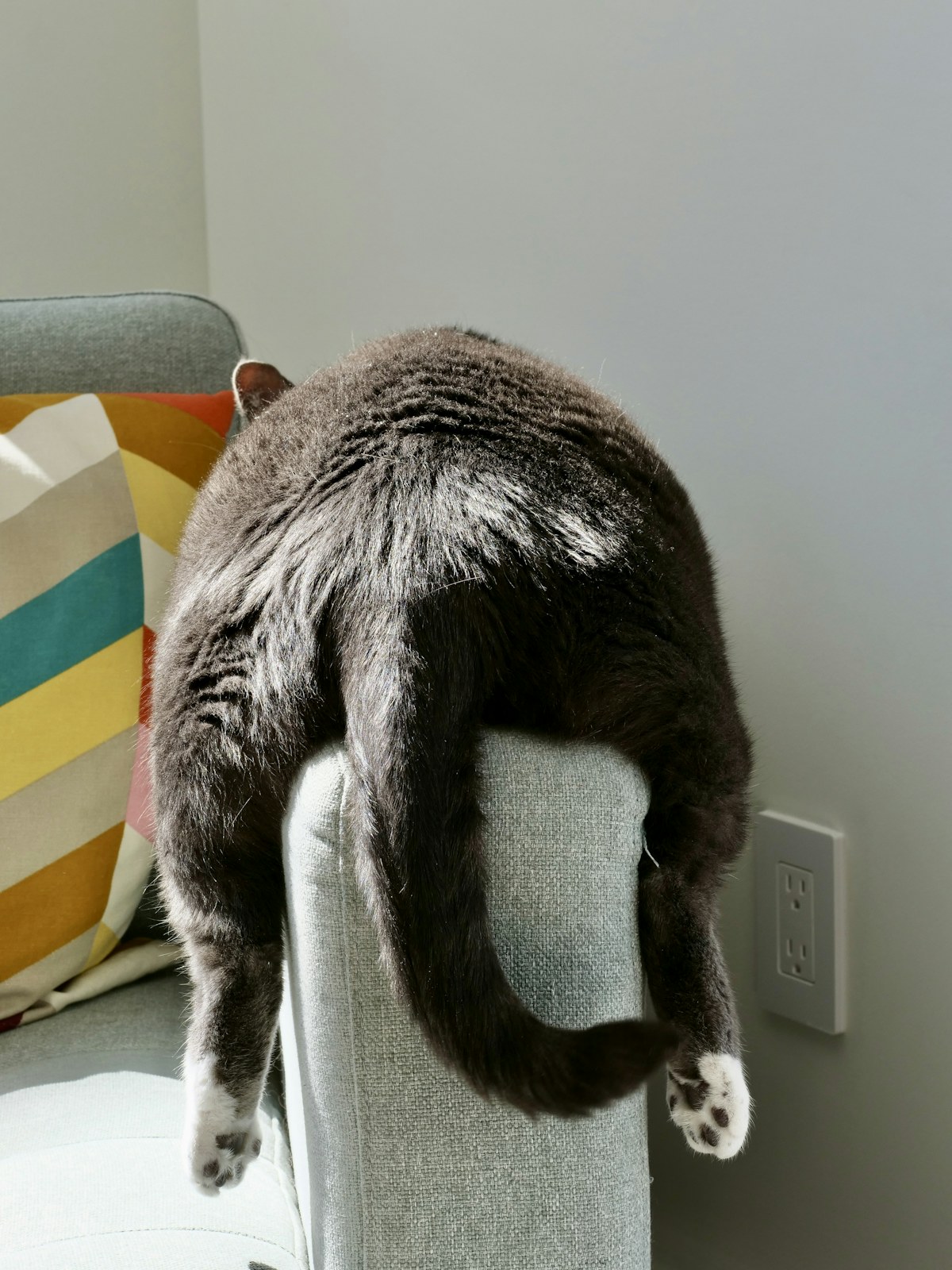
It is common to discover how much of the day a chair occupies just as you are about to get rid of it. The cat sleeps on the cushion before breakfast, climbs onto the arm when someone opens the door, and disappears from view against its back after dinner. An empty chair can look interchangeable with any other chair that fits the room. To the animal using it, the route to the cushion and the view from the arm may be part of what the chair provides. Moving it a few feet and replacing it with a different chair are separate changes. If you can make them separately, you have a chance to see which one your cat notices.
The best starting point is the ordinary use of the room. Take a little time to notice when the cat arrives, whether anyone else is sitting there and where the cat goes when they leave. You can learn enough in a few observations to design a reasonable temporary arrangement. This comes in handy even if the old chair is staying. A work crew, overnight guests or a new table can put it in a different place for a week.
Watch the chair through a few ordinary transitions
Look at what happens just before the cat sits down. A person might have left the seat warm, or the light might have just reached it. The cat might walk down the back of the sofa and step onto the chair. If the only route is from another piece of furniture, a replacement chair of the same height on its own can be harder to reach. Observe the way down too. A cat who leaves by the wide seat and avoids the narrow arm is giving you information about usable space, not merely the highest point they can reach.
The distinction between the cushion and the place is easiest to see when the chair is occupied. If your cat waits until the person leaves and then immediately takes the seat, warmth, scent or the cushion may be part of the appeal. If they sit on the back even when somebody is in the chair, the view or the distance from the floor might be worth preserving. A cat that moves to a nearby chair when the first is occupied may simply want to be near people, with somewhere to leave by. Use those responses as clues. You don't have to put the cat in the new location to test it.
Notice the small ways the room changes. At one time of day, somebody may sit a foot away with a book. At another, a door may stay open and give a view down the hall. A sunny chair can be popular while the sunlight is gentle and abandoned once it heats up. The new resting spot needs to make sense during the same part of the day. An empty chair at the other end of the room may have a lovely afternoon view, even if it feels isolated during the morning routine.
Try a second seat while the first is available
If there is room, set up an alternative a short distance from the old chair. Start with a piece of stable furniture you already own, with an easy way to approach and a generous place to turn. Use a washable cover if the seat needs protection. Make sure it stays flat and does not slide. A cloth with familiar scent can be helpful if the cat already uses it, but choose one that lies safely and has no loose ties. Avoid stacking soft pillows to reach the same height. A surface that dips or shifts can discourage the first jump.
Choose what you want the first comparison to show. To see whether the position matters, leave the new chair in the same general part of the room and make its surface easy to use. If the cat already uses a particular pad, give them a chance to try it there while preserving a familiar place on the original chair. To see whether a better route matters, leave the chairs as they are and clear the space around the alternative. A cat can consider the new seat over several days. Make one change at a time when there is no urgent reason to move the old furniture.
Do not judge the trial by whether the cat immediately sleeps in the new spot. An animal may pause to sniff the edge, step up briefly, then come down and return later. Look for voluntary repeat visits. If the cat approaches from the far side each time, make sure the opening stays available after the old chair goes. If they sit in the sun in the morning and leave when the new spot is used by people, the temporary chair may do its job for only part of the day. You can leave a second place for the evening without treating the first choice as a failure.
Plan the move around the path people will use
Furniture day brings doors, loud sounds and people carrying objects they cannot see over. Decide where the cat will be before moving begins. A familiar room with water, a litter box at an appropriate distance, a comfortable place to rest and a closed door can keep the animal clear of the moving route. Make sure everyone who is helping knows which door stays shut. Remove boxes and wrapping from the floor before inviting the cat back. A quiet moment to inspect the rearranged room is easier to organize once the loud work is finished.
Before sliding a chair against a wall, check what that does to the cat's old route. A familiar landing place may now have a gap beside it or be blocked by a table. Avoid leaving narrow spaces where an animal can get trapped. If the old chair is moving to another room, take a look at how its base and arms work there. A seat that was easy to approach from a sofa may need a low, stable alternative route in a different part of the house. If your cat's mobility has changed, check with a veterinarian and keep their resting options easy to reach.
Take the first evening as a chance to observe. The cat may walk along the old path and find the chair gone, then look from the new location. Give them room to inspect it on their own. Let the replacement stay where you planned unless it is unsafe or blocks traffic. A new chair can have unfamiliar smells and different footing. You can keep an existing low resting area available while the cat gets used to the room. That is especially useful if the furniture change happened quickly and you did not have time for a trial.
Decide what belongs in the room after a week
A chair can work perfectly as a bed and poorly as a shared seat. If people regularly want to use it at the same time the cat does, move the rest spot close enough to preserve company without occupying the only chair. A stable bench, broad platform or the unused end of a sofa may work. Leave a comfortable way to approach it. Give the cat a choice about using the new area and notice whether it remains attractive when somebody has taken the original seat. The arrangement can be successful if both places get used at different times.
If the replacement is ignored, watch where the cat sleeps instead. A chair with a deep seat may be abandoned for a low stool with a view of the doorway. A cat that liked the old chair in the morning may have found another patch of sun. Follow that observation. Try putting the familiar pad where the cat is already choosing to pause, or clear enough of the new spot to provide the view they seem to prefer. A small practical move can do more than reproducing the height, color and shape of the old chair in every detail.
In a rented room where the old chair belongs to someone else, write down what you intend to move and where it will go. Take a photograph of the original spacing before the move. If the cat keeps returning to the empty place, the photograph lets you see whether the chair's side faced a window or had a clear opening next to a bookcase. Reproduce the useful part with something already at hand. A stable low bench placed on the open side of the new chair can restore the approach even if the new seat is taller. Keep the bench clear of the part of the room where people normally carry groceries or laundry.
Ask yourself which part of the change still takes attention. If somebody needs to keep clearing coats from the replacement chair, the routine may need a hook or a place for bags. If the cat uses the chair only by squeezing past a table, there may be room to move the table slightly. If the new arrangement no longer needs anyone to manage it, leave it alone for a while. The goal is an ordinary resting place that fits the room's actual use. The old chair can leave when the routes and choices that made it valuable have a place to go.