Pick a patch where you can see the whole search
A toy search can start in a surprisingly small patch of grass. The dog needs room to lower its head and take a few steps in different directions. You need a clear view of where it goes and what it picks up. Look at the ground before you bring the dog over. Choose a familiar enclosed yard or another appropriate area where you can manage the dog safely and follow local rules. Keep the search away from traffic, open gates and places other dogs are likely to cross.
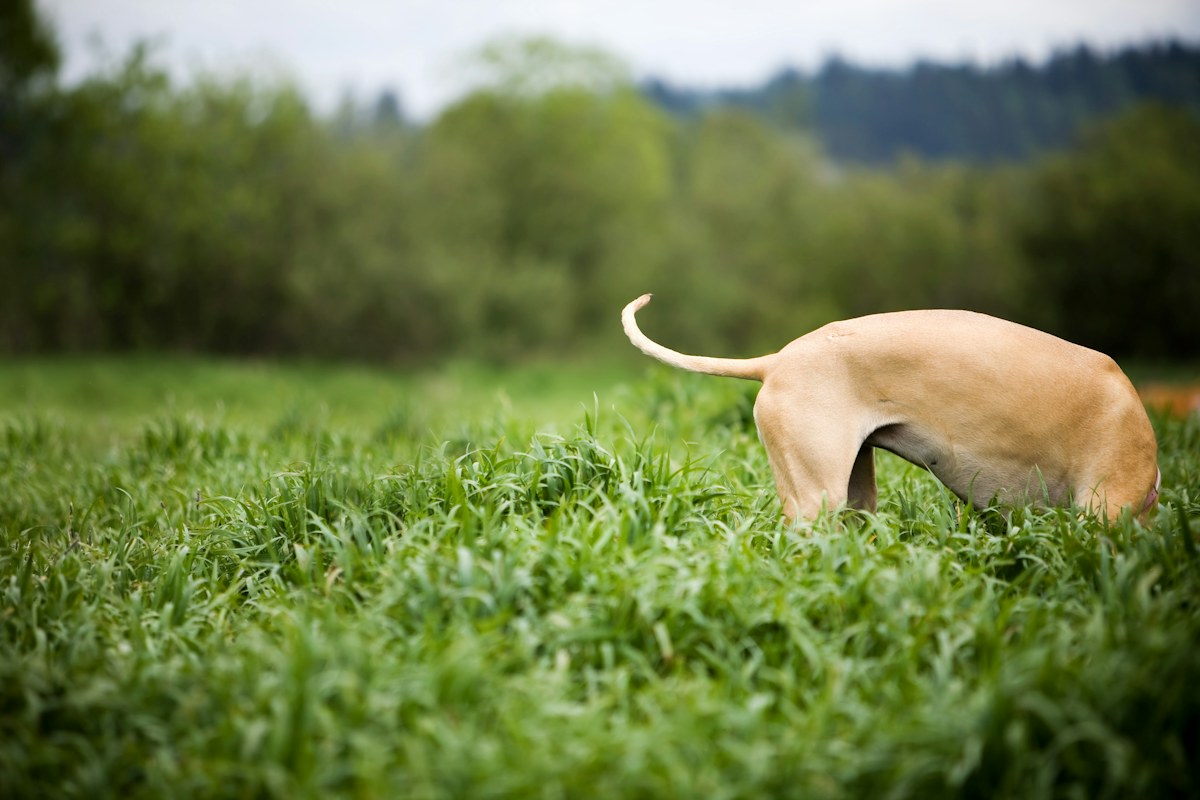
Walk the patch yourself. A low stretch of grass can contain sticks, damaged toys, discarded food or hidden holes. Remove anything you can safely remove, and choose another place if the surface is rough, treated with garden products, or otherwise unsuitable. Give the dog a route around a tree without wrapping a lead around the trunk. If you are using a lead, keep the exercise within the range where you can handle it comfortably. A search that sends the dog into long grass where you lose sight of its mouth is too large.
Choose the part of the yard that will stay clear while you are using it. A patch beside an outside table may work when nobody is sitting there and become crowded during a meal. Move the search to the other side of the yard when someone needs to cross. Leave an easy place to put the toy down at the end and an open route back inside. The game should fit into the yard without asking the dog to work around an unrelated rush of people.
Start with one object the dog already knows
Pick an intact toy the dog uses comfortably and that is suitable for its size and play style. A plain washable toy is easier to find again than one that blends into the grass for you as well as the dog. Avoid adding essential oils, scents or food. The familiar toy already has a smell, and the exercise is about finding a known object. You will also be able to retrieve the toy at the end rather than wondering what was left behind.
Let the dog see the toy while you place it on top of short grass a few steps away. Keep it fully in view at first. Walk back or ask a helper to place it while you stay beside the dog. Give one short cue if you want to name the game, then let the dog move toward the toy. A dog may use its eyes at this stage. That is fine. You are giving it a clear picture of what the game is before making the object harder to see.
When the dog reaches the toy, let it investigate or pick it up. Some dogs carry it back, while others stand over it and look toward you. End the first round there. If the dog releases the toy freely, put it in your hand when the dog moves away. Use an exchange the dog already knows if needed. Avoid reaching into its mouth or following it around to take the toy. A dog that guards toys needs a safe individual plan before this game is a good fit.
Make the toy harder to see without sending the dog farther
On the next round, place the toy at the edge of a slightly taller but still visible patch. Let one part show above the grass. Keep the distance similar. The dog can walk to the place where it saw you put the toy and then investigate the last foot or two. If it rushes past, wait a moment to see whether it turns back. Avoid repeating the cue every time it changes direction. A quiet pause gives the dog a chance to search without following your voice instead.
Change one part of the placement at a time. You could hide more of the toy, change the side of the patch or place it where the dog cannot see your hand put it down. If you add all three changes together, the dog may spend most of the time looking for the starting point. Begin with the object only partly covered by grass. Avoid digging a hole, placing it under heavy objects or hiding it somewhere that asks the dog to push through a thorny plant. The whole toy should still be easy to pick up.
Watch what the wind does to the search. A dog may reach the toy by circling downwind of it or check a place that looks farther away than necessary. Let the dog work within the area you can supervise rather than guiding it down the shortest line. A calm walk across the patch can be just as useful as a direct find. If it keeps moving out of the area, bring the next toy placement closer and put it on a more obvious patch.
Use a helper if the dog gets up to follow every placement. The helper can set the toy down while you wait with the dog at the edge of the patch. Ask the helper to leave by a different route, then let the dog explore the patch. Keep the first placement obvious again, since watching a second person handle the toy changes how the search starts.
Keep the search easier than an outing in tall grass
Some dogs will investigate anything that catches their attention. If your dog tends to eat things it finds outdoors, choose a well-checked, easy-to-see space and keep the toy in view. You can move the game indoors to a cleared floor if the yard has material you cannot reliably see or remove. The search should give the dog something familiar to locate. It should not depend on the dog distinguishing the toy from debris or plants you cannot identify.
Stop the game when another dog comes near or people start moving through the patch. Use a familiar cue to leave the area if your dog can follow it comfortably. Retrieve the toy only when you have the space to do so safely. With two dogs, take turns in separate areas if they might race for or guard the same object. If two handlers are available, each can supervise one dog in its own section without crossing search paths. An easy individual turn often gives a quieter dog more opportunity to investigate.
The weather can change the game. After rain, grass can feel slippery where a dog has to turn. On a warm day, choose a short round in suitable conditions and keep access to fresh water and rest. A dog does not need to complete every search you set up. End if the dog is uncomfortable, the surface becomes hard to use, or the toy has started coming apart. The same activity can be offered later when the setting works better.
Give the dog a route back out of the search
Once the dog finds the toy, move to a clear place rather than walking straight over it. Leave room for the dog to come back carrying the object or to set it down and leave. Give it a familiar way to finish, such as bringing the toy toward a mat or moving with you to another part of the yard. If the dog turns away with the toy, wait for a safe opportunity to collect it. The finish can stay quiet even if the dog approached the search enthusiastically.
Have a second, easier placement ready only if the dog seems interested and can move comfortably. A second round may begin in a different strip of grass with most of the toy visible again. If the dog hesitates, shorten the search rather than adding excitement by waving the toy or calling repeatedly. A dog that finds the toy and then lies down nearby may be ready to rest. End the activity while you can still manage the toy and give the dog its normal choices afterward.
If you want to track what works, note the surface, visibility and number of turns the dog had to make. A search may be easy when the toy sits beside a light patch and harder when it is in shadow. Notice the position from the dog's view before assuming it needs more practice. The dog may have seen only the grass moving, or your body may have blocked the place where the toy landed. Move one part of the setup and watch again.
Finish by checking the patch and the toy
Count what you brought out and take it back inside. Look at the toy for dirt, damage or missing parts, and clean it as its instructions allow. If you used a marker to remember where a toy went, remove that too. Pick up items that moved while the dog was searching. A clear patch is easier to check next time and easier for the rest of the household to use afterward.
Keep the version that left you able to see the dog, retrieve the toy and end the game without a chase. You can make a future search a little harder with a new angle or an extra step of grass. If the dog is content with a short, familiar find, repeat it on another day. A small search can be enough when the object is appropriate, the dog is free to pause and the whole area stays easy to supervise.