Plan for the moment after the ball stops
A puppy can chase a ball across a small room faster than a person can move the chair at the end. The first roll may seem gentle while the puppy is still deciding what to do. The next can send it straight toward the edge of a rug, where it has to stop on a smooth floor. Choose where the ball should come to rest before choosing where to sit. A short path across a steady surface with open space beyond it makes it easier for a puppy to slow down and pick up the ball.
Look for a place where the ball cannot roll under the sofa or disappear behind the legs of a table. A low piece of furniture can stop the ball and still leave the puppy reaching into a space you cannot see. Roll parallel to the furniture rather than directly toward it. If the space is too short for a gentle roll and a stop, place the ball a few feet away and let the puppy walk to it instead. A short approach can be plenty of activity in a small room.
Pick the time as carefully as the route. An empty room may be suitable in the middle of the day and full of feet just before dinner. If someone needs to walk through, wait for them to pass or move to another area. Clear bags, food bowls and loose cords before you sit down. Keep enough space behind the puppy for it to turn away from the game. The best path is one you can leave open from the first roll to the last.
Choose a ball for the puppy in front of you
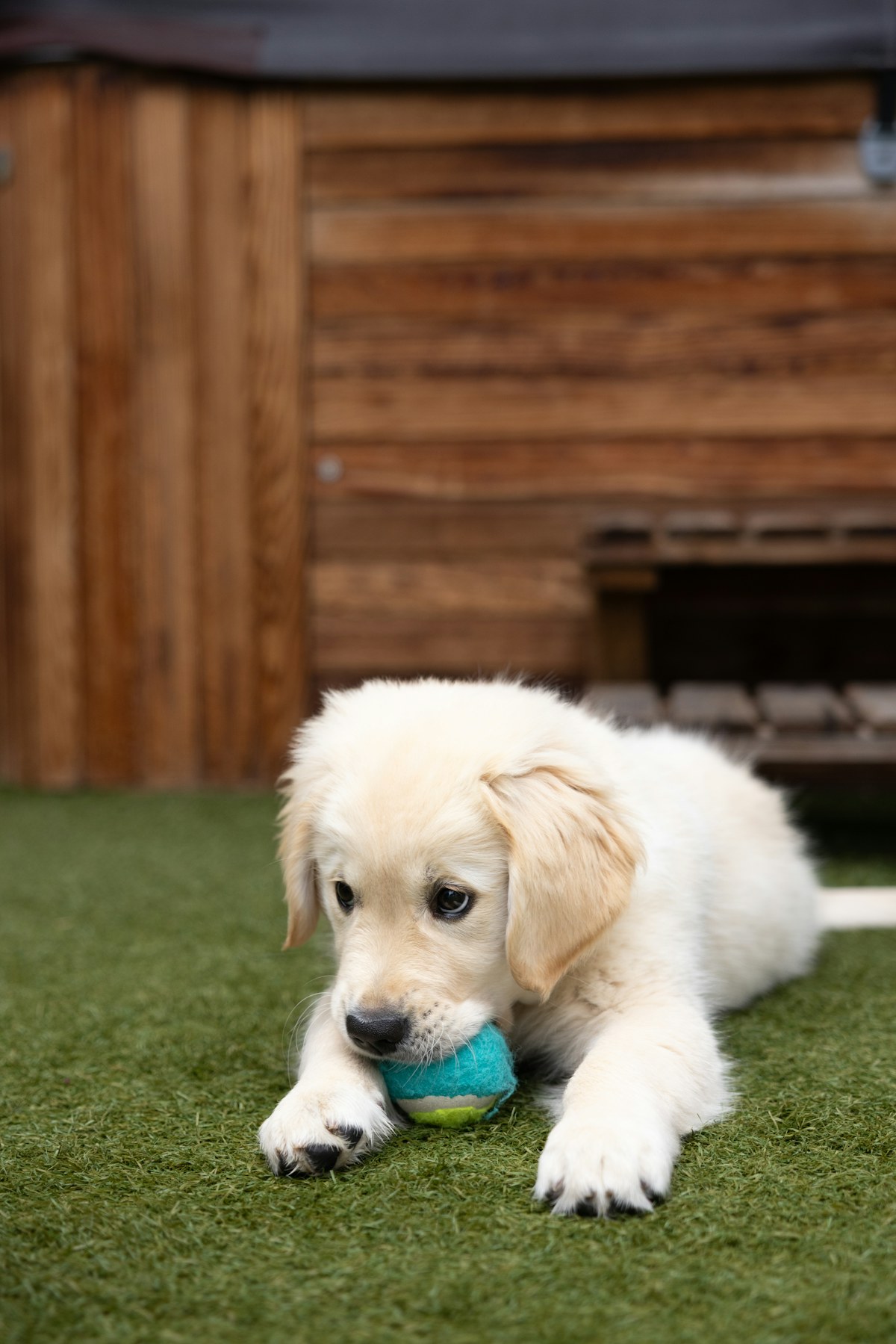
A ball should be appropriate for the puppy's size, age and way of playing. Use a product designed for dogs and follow the size and supervision guidance. A ball that fits fully into the puppy's mouth can be a swallowing or choking risk. A heavy or oversized ball may be hard to carry and can keep rolling after the puppy reaches it. A softer toy suited to a puppy can work well for a gentle floor game if it stays intact and the puppy can pick it up easily.
Check the surface before each session. Look for cracks, loose pieces, splits and signs that the puppy has started pulling material away. If the ball has a sound-making part inside, retire it if the outside is damaged or the internal parts become accessible. A ball that survives a careful roll may still be unsuitable if the puppy wants to sit down and chew it hard. Choose a different supervised toy or change activities when you see that pattern.
Try the ball yourself with a few slow rolls. A light ball can turn when it meets a rug seam. A ball with an uneven shape may be fun in open space but keep finding a narrow gap in a small room. Use a movement you can predict. If the sound startles the puppy on wood or tile, move to a suitable rug or use a quieter toy. The puppy can investigate a stationary ball first and decide how close it wants to get.
Let the first roll be short
Set the ball down, place one hand behind it and send it along the floor just far enough for the puppy to see it travel. Let it stop. The puppy may walk after it, pounce once or wait and look back at you. Keep your body quiet so the moving object is easy to follow. If the puppy stays in place, move the ball once more across its view and stop. There is time for a second try after it has had a chance to smell or touch the toy.
Avoid throwing the ball over the puppy or bouncing it off the floor. In a small room, the ball may take an unexpected turn or invite a jump near furniture. A roll a puppy can reach in a few steps is easier to repeat. Vary the direction only after the puppy has a clear route. The point of the game is following a moving object and deciding what to do when it stops. A long chase is unnecessary for that to happen.
Watch the puppy as it reaches the ball. If it lowers its head and goes straight into a wall or a piece of furniture, shorten the roll or change the angle. If it keeps chasing after the ball reaches the end of the rug, move your starting point so the ball stops earlier. Look at where the puppy's back feet go as it turns. Those feet can end up off the stable surface while its head and front feet are still on it.
Once the puppy understands the movement, change your angle so it can follow the ball from the side rather than directly behind it. This is useful if the puppy tries to stop by dropping its chest onto the ball. A slow roll passing in front of its paws gives it room to approach from a new direction. Keep the distance about the same while you change direction. If the puppy watches without following, move the ball back to the familiar path.
Give the puppy somewhere to carry the ball
Once the puppy picks up the ball, keep its route back open. It may come toward you, carry it to a mat or move to the edge of the room and set it down. Treat any of those as useful information. A puppy that carries the ball away may want to inspect it, or may have learned that a person walking toward it usually means losing the toy. Stay seated and let it move. Avoid chasing it around the room or trying to pull a ball from its mouth.
If the puppy comes back with the ball, hold your hands still for a moment. Let it set the ball down on its own if it wants to. You can practice a suitable trade using another toy or an appropriate small reward when the puppy is comfortable exchanging items. Keep the trade calm and give the puppy room to step back. A puppy that stiffens, growls or repeatedly moves away while holding the toy needs more space and an individualized plan from a qualified professional if the concern persists.
Roll again only after the first ball is available and the puppy has stopped moving. If you are using a second ball as part of a simple exchange, keep it still until the puppy has let go of the first one. Two moving balls in a small area can make it difficult for the puppy to stop and choose. The exchange should make the next round clear. You can also end after the first successful return and offer the game again later.
Use a pause to decide whether to continue
After one or two rolls, set the ball down and wait. A puppy may look at it, rest for a moment or leave the room. Let the pause happen. If it returns and moves comfortably, try another short roll. If it starts racing before the ball moves, shorten the motion or switch to a stationary search. A puppy that slips, collides with furniture or grabs at the toy while people are still arranging the space is having a harder game than the room can support.
Give other household members a clear role. A child can sit beside an adult and make one gentle roll across the same short path if that is appropriate for the puppy. Have the child wait while the puppy brings the ball back or walks away. Avoid having one person call the puppy while another sends the ball in the opposite direction. A single person moving the toy and everyone else leaving room is easier for the puppy to follow.
When another dog is in the house, decide whether it will be elsewhere during the puppy's game. A dog that regularly races after moving toys can make the floor feel crowded for a puppy. Use separate spaces if either dog would struggle to stay relaxed. Put the ball away before opening the shared route. A quiet individual round can teach you more about how the puppy moves than a busy session where it has to follow both the toy and another animal.
End with an easy pickup and a clear room
For the last roll, send the ball only as far as the puppy can reach easily. Let it finish investigating, then put the toy away once it can be collected safely. Check that nothing split or came loose. Look beneath the nearest furniture for a second toy, and return chairs or rugs to their ordinary positions. Give the puppy access to fresh water and a place to settle after the game.
The next time you play, repeat the route that let the puppy walk, turn and stop without slipping. Change one detail if you need to. Sit a little farther from the furniture or choose a ball that stays closer to the floor. A short room works when the roll is slow, the puppy can decide whether to return and the game stops before the space becomes crowded. Those are easier conditions to control than the number of times the ball travels back to you.