Decide what happens when someone sits down
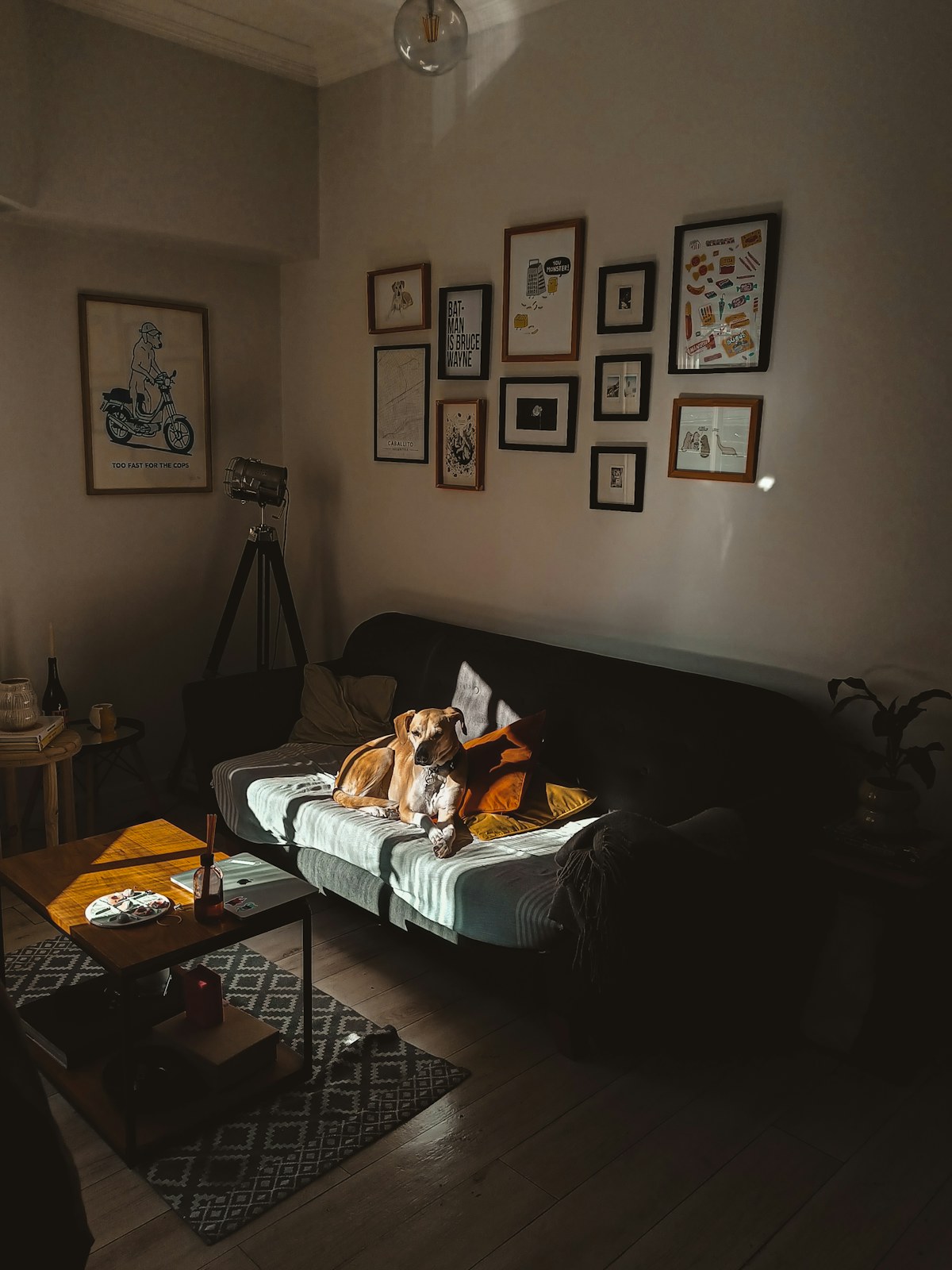
A dog may jump onto the sofa because it has done so every evening for months. The change you want might be quite small. Perhaps you need enough time to put down a hot drink, or you want the dog to wait until there is a clear place beside you. Decide what invitation will mean and where the dog can wait before you practice. A rule is easier to follow if people know whether the sofa is sometimes available, who gives the invitation and what the dog can do during the rest of the time.
Choose a waiting place in the same part of the room. A dog that usually comes over to spend time near people may be willing to settle at the end of the sofa if it can see who is sitting there. Put down a stable mat or use a resting place it already knows. Keep the approach separate from the path to the sofa. If the dog has to step across the seat area to reach its mat, it will pass the place you are asking it to leave alone.
Look at how the dog gets on and off the furniture. Practice only if using the furniture is appropriate for your dog and it can get up and down comfortably. Ask your veterinarian about access if you have concerns about its mobility. If an edge is slippery or there is a narrow landing point, use a floor-level activity instead. The household can still invite the dog to a nearby mat or resting surface without making it jump to join people.
Put the two cues in the order the dog experiences them
Start with the resting option while nobody is sitting on the sofa. Invite the dog to its familiar mat or reward a voluntary step onto it. Give it a few quiet seconds and release it. If the dog is new to a mat, keep that part of the routine simple until it can find the spot without you walking all the way there. A place a dog uses calmly while you stand beside it is an easier foundation than one it has only visited during an exciting sofa game.
Then sit down at the edge of the sofa and watch the dog from a relaxed position. If it remains on the floor, reward that choice at floor level. A treat handed down from just above the cushion can draw its front feet onto the sofa. Set the reward on the mat or hold it near the dog's usual position if that is safe and appropriate. Repeat with different ways of sitting. Moving to the middle of the seat or leaning back can be part of the signal the dog usually follows.
On a separate repetition, give your chosen invitation when the dog is on the floor and there is a clear place to land. Use a short word everyone can say naturally. If you pat the cushion as part of the cue, make the gesture deliberate. People often pat the sofa casually while talking or brushing off a seat. A spoken cue alone may be easier to keep distinct. Wait for the dog to respond without pulling it up or reaching around it.
If the dog jumps onto the sofa before the invitation, do not hurry to repeat the cue while it is already on the cushion. Wait for a safe opportunity to ask for the floor move it knows, then restart from a simpler position. You may need to begin farther from the sofa or reward the dog for staying near its mat while you touch the seat and stand back up. The next repetition should offer a clear chance to wait.
Teach a way back to the floor before it is needed
Practice the next move while the dog is calm and has space. With the route clear, invite it to come back down and reward it on the floor or on its mat. Place the reward where it can reach it after all four feet have landed. Use a short word if you want a separate cue for leaving the sofa. Give the dog room to decide where to place its feet. Avoid reaching for its collar or pushing it sideways to make it move.
Sometimes the best ending is for the dog to settle on the mat after leaving. At first, reward the move to the floor and let the dog go wherever it normally goes. Then ask for a brief mat visit in later practice. If the dog keeps trying to jump back up after reaching the floor, shorten the time on the sofa or make the mat easier to find. The next part of the routine should be clear without needing people to block the cushions physically.
If your dog guards the sofa or objects when approached there, stop practicing direct movement off the furniture and set up safe management. Avoid trying to lift, push or pull a dog that is stiff, growling or otherwise uncomfortable. Keep the sofa inaccessible when practical and ask a qualified behavior professional for an individualized plan. A household furniture cue is appropriate when a dog can choose to move comfortably. A dog that feels unable to give up the space needs a different approach.
Practice the situations that tend to surprise people
A quiet training session may be easy until someone returns from work and sits down quickly. Break that version into parts. First have the person enter and stop away from the sofa. Then let them put down a bag, sit for a moment and stand again. Reward the dog at floor level for waiting where it can see the activity. End after one or two repetitions. Repeat on a different day before adding a visitor, several people or an excited greeting.
Practice also when the available seat changes. If someone has put a laptop or blanket on the usual side, take a second to clear the seat before giving the invitation. When no safe place is available, reward the resting choice on the floor and carry on with what you were doing. A person should not need to wave the dog down while reaching around a pile of things. Keeping the invitation occasional also lets people choose when they actually have room for the dog.
If you have a recliner, sofa bed or moving footrest, check where the dog is before using the mechanism. A floor mat in front of a moving section can bring the dog close while you are paying attention to the handle. Put the resting spot to the side where you can see it. If you are unsure where the dog is, pause before moving the furniture. One advantage of a nearby mat is having a clear place to send the dog before the room changes.
Make it easy for the rest of the household to follow
Tell other people which word means the dog can come up and what to do while it waits. If children are involved, have an adult handle the invitation and supervise. Leave the dog a clear route away from both the sofa and the mat. A person sitting beside it should avoid hugging it or blocking the path with their legs. A dog that moves away is choosing more space, and the household can let that choice stand.
Agree on when visitors can invite the dog up. If the visitor will stay briefly or is carrying something, the easiest plan may be to give the dog access to its usual mat and keep the sofa for people during that visit. Explain this when people arrive, before they sit and pat the cushion. If the dog still jumps up, use the familiar cue for leaving if the dog can follow it safely, then revise the setup for the next visit. A securely separated resting area is useful when the room is too busy to practice.
In a home with two dogs, work on the routine individually first. A single invitation can bring both animals to the same seat. Decide whether you will use a name before the cue, and keep separate floor options available. If both want the same person or cushion, invite one at a time only if they can do so comfortably. Some rooms work better with both dogs on their own resting places when people sit down. The furniture is one option for company.
Keep the result that survives an ordinary evening
After a few sessions, check whether the dog can wait while you sit, whether people remember the cue and whether the dog can get off the sofa without people moving around it. Change the step that is still difficult. Move the mat closer if it is hard for the dog to find, or move it farther away if waiting brings it too close to the seat. Use a clearer verbal cue if several movements already sound like an invitation to the dog.
A useful routine leaves space for someone to sit down and for the dog to decide whether to join when invited. It also gives the dog a comfortable place to stay if the sofa is full. Keep the floor option in use on ordinary days so it remains part of the room. If the dog ends up spending most evenings there, the routine is still working. The dog can be beside people without needing to share the same cushion every time.