Find out how the door gets used
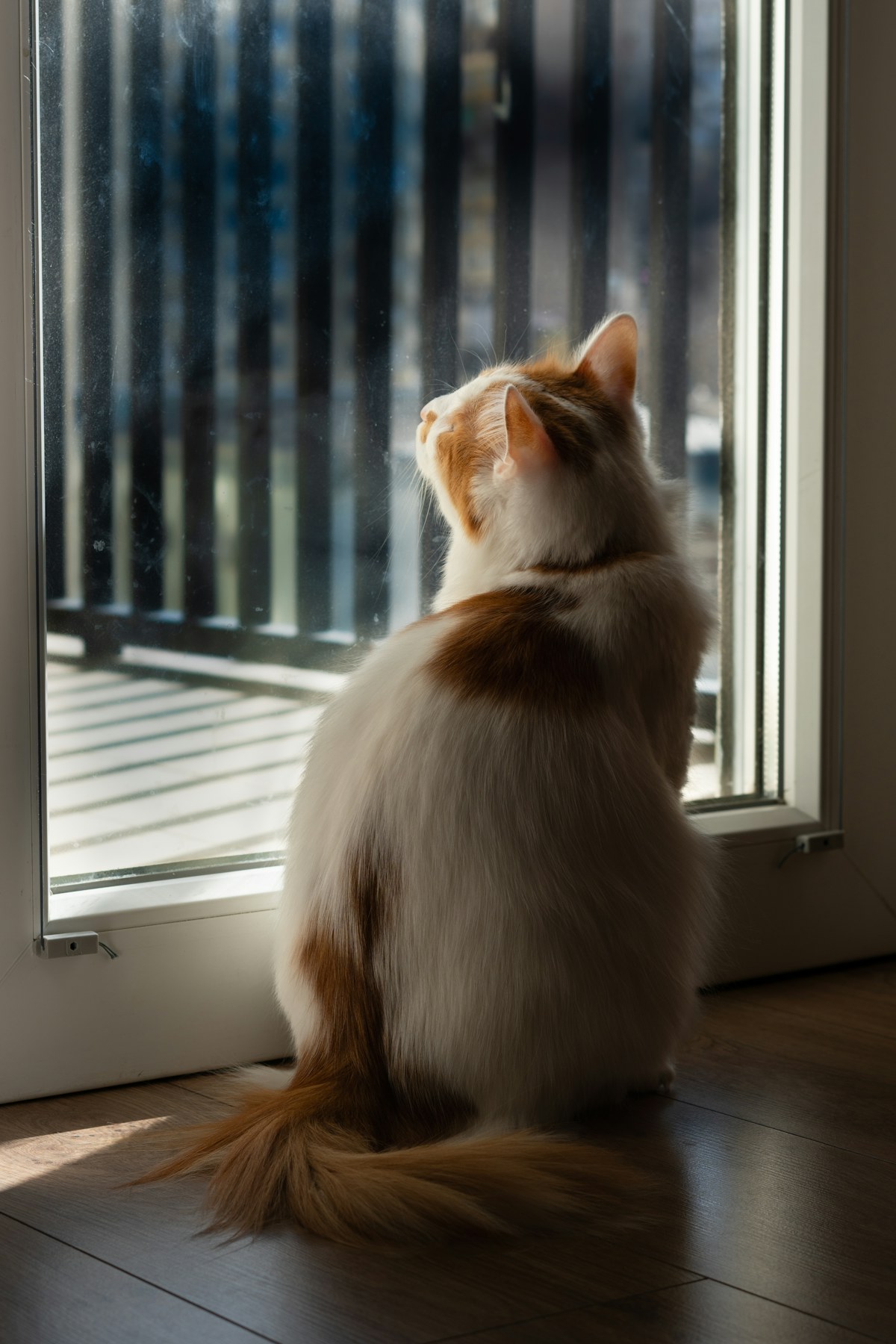
A patio door can stay closed for most of the day and then become the busiest opening in the house. Someone takes a drink outside, returns for a towel, holds the door for another person and leaves a tray on the floor while they look for a light switch. A cat that normally watches from a few feet away may move closer as soon as the opening becomes predictable. Before changing the room, watch where people put their feet and hands the next few times they use the door.
List the moments when a person is likely to leave the door open. Bringing in a bulky chair, letting several guests through and taking out bags all require different movements. If a door must stay open, plan where the cat will be before the first trip. A suitable closed interior room with a familiar place to rest is often the simplest option. If people are making one quick trip, look for a way to check the cat's location while the outside door remains closed. A cat that is already near the threshold can be given space to move away before anyone opens it.
Consider whether the entrance should be used for every task. A second door may be easier when a delivery or several guests are expected. Diverting the busiest trips can leave the patio door available for the usual quiet ones. Give the whole household the same rule for when to switch doors. It helps if the rule is linked to something easy to see, such as whether a person needs both hands to carry an object.
Keep the approach visible
A tall plant, storage box or curtain can hide the space beside a sliding door. Move objects that stop you from seeing the floor near the track. You may still want a chair near the glass where the cat can look out. Set it far enough to one side that the cat can step down and turn away without landing in front of the opening. Watch what happens when the chair is occupied. A bag draped across an arm or a person with a footstool can change the path the cat usually takes.
Check the door from the direction you will approach it. In bright afternoon light, the room side may look dark when you return from outside. A lamp or another change in room lighting can make the threshold easier to see. At night, check whether reflections make a dark cat hard to spot against the glass. A familiar route through the room is useful when people are carrying things, and good visibility gives them a chance to stop before moving the door.
Keep a landing place for whatever you carry. A bench or small table well away from the door gives you somewhere to set down a tray before opening the latch. Move shoes and bags off the track and out of the cat's route to the rest of the house. If people often set something down to operate the handle, give them a clear place to put it. A person trying to hold a bag against a knee has less attention available for the floor.
Treat screens as part of the door assembly
Check how the screen moves and how its latch sits. A screen designed to keep insects out may slide easily or leave a gap the cat can press against. Do not rely on a loose screen or a worn latch to contain an animal. If you want to use a screen as part of an enclosure, verify the product is designed for that purpose and correctly installed, and supervise use as appropriate. Check the entire edge rather than looking only at the center material.
A sliding door can be open when its glass panel looks aligned with a stationary pane. Get into the habit of checking the latch and the edge after you close it. If the panel does not close smoothly, inspect the track with the door secure and have the mechanism repaired if needed. A person who expects a panel to stick may pull it hard or leave it partly open. Reliable hardware makes the household routine easier even if you decide to keep the cat in another room during busy periods.
If you have a balcony or raised deck, consider the space beyond the door as well. A railing can leave gaps and the top edge of a barrier can still be reachable. Keep the indoor cat inside unless there is a suitable secure arrangement for the outside area. A screen on the doorway does not secure the railings or the space near the neighboring property. Tell guests which outside area is available and whether the glass door needs to stay shut behind them.
Make one person responsible for each opening
During an ordinary trip, the person operating the door can check where the cat is and keep the passage brief. When two people are carrying an item, assign the latch and the cat check before they pick it up. The person holding the object should not have to watch a foot, the edge of the door and the cat at the same time. If the item takes more than one pass, move the cat to a familiar closed room first and keep that room secure until the work is finished.
Guests often follow the movement of the person ahead of them. Tell them before they reach the door that it needs to close after each person goes through. If several people will go in and out during a gathering, make the cat's room comfortable before they arrive. Keep its water and other usual necessities available. That can be easier than asking every visitor to look for the cat while balancing a plate. A sign on the room door can help keep that arrangement clear.
When someone is already on the patio, agree where they should stand before the door opens again. A guest leaning close to the glass may not see the cat on the other side. Have them step back so the person inside can see the threshold clearly. If a person outside needs to come back in while the cat is near the door, let them know you are waiting a moment. Choosing who moves first is usually easier than trying to guide people and a cat around the same opening.
Write down the arrangement for a housemate who was not there when you planned it. Include which interior room can close and which door guests should use. On a busy day, this can prevent someone from opening the quiet room to look for a bag just as another person opens the patio door. If you make an exception for a large delivery, explain when the usual routine can resume.
Give the cat another place to look outside
If your cat spends time at the glass, offer another viewing place with a similar view. A low, sturdy chair near a nearby window can keep it in the same room without using the threshold. Arrange a clear approach to the chair and keep the window secured. Put the resting surface where it cannot shift easily when the cat jumps onto it. Some cats prefer to watch from the side of a window, especially if people usually move through the middle of the room.
When the patio is active, the cat may prefer a quieter view or a place with less exposure. Leave a familiar resting spot available away from the glass. If an outside animal visits regularly, closing a curtain before the busy time may give the cat a choice about how much of the activity it sees. Keep the fabric and cords clear of the door track and out of reach where they might catch a paw. A cat can still use another part of the window when the door side is covered.
Practice moving through the room without opening the door. Set a tray down, reach for the latch and move away. A cat that follows those movements may already know what normally happens next. Give it room to walk away, then let it return to watching the room. If you use a familiar cue to invite it to another area, practice while the outside door stays closed. The cue can help the cat find a spot, while the closed door remains the reliable barrier.
Try the routine at its busiest time
Before a gathering, walk through the arrival and the first trip to the patio. Move any new furniture, coolers or bags that will hide the cat's route. Check where the cat can rest with the inside door closed, and tell a second person when they should open or close it if they are helping. If the patio door keeps being left open as people carry things, direct those trips through a different entrance or keep the cat in its separate room during that stretch.
At the end of the day, notice which part of the routine asked most of the household. A chair may be too close to the threshold, or the useful place for setting bags down may be on the wrong side of the path. Change that detail first. A good arrangement is one people can follow when they are carrying things or talking. The cat can keep using the room and watching outside during the quiet parts of the day, with a clear place to move when the door gets busy.